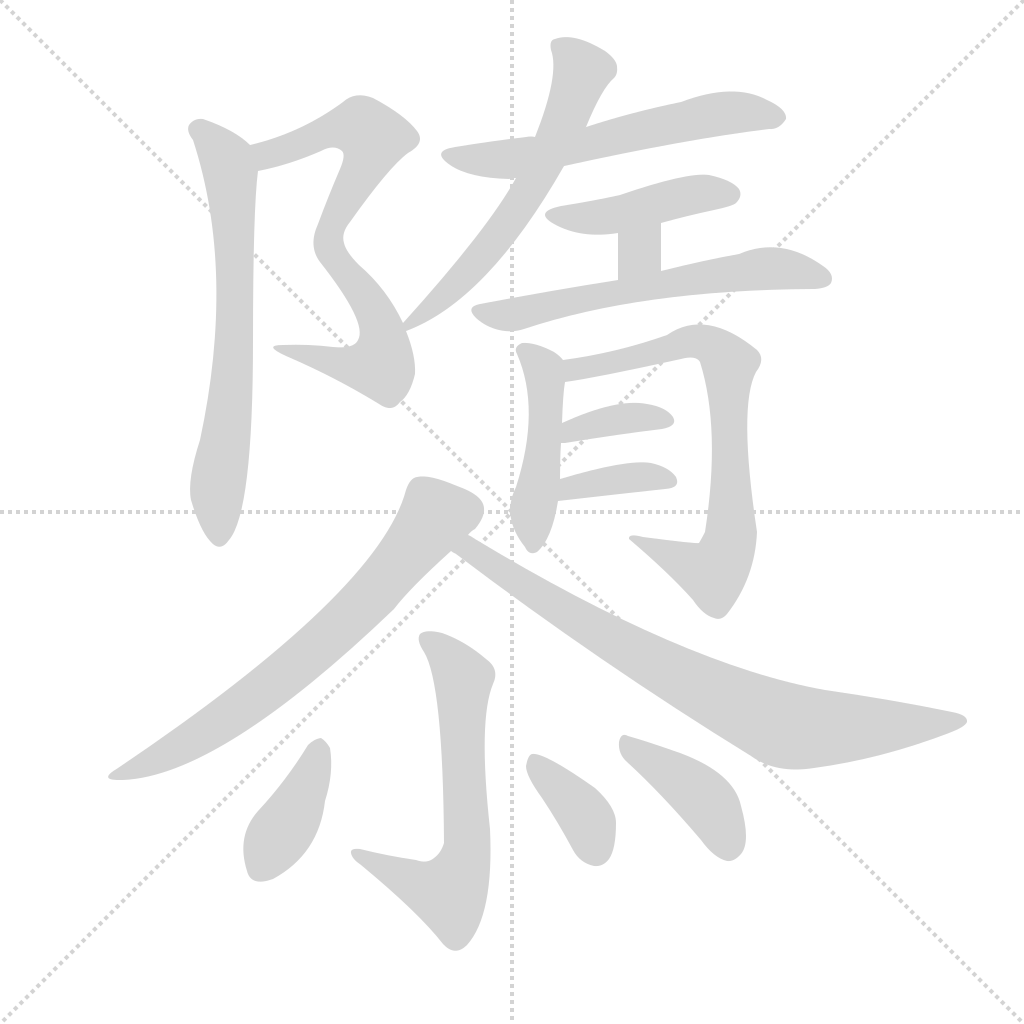
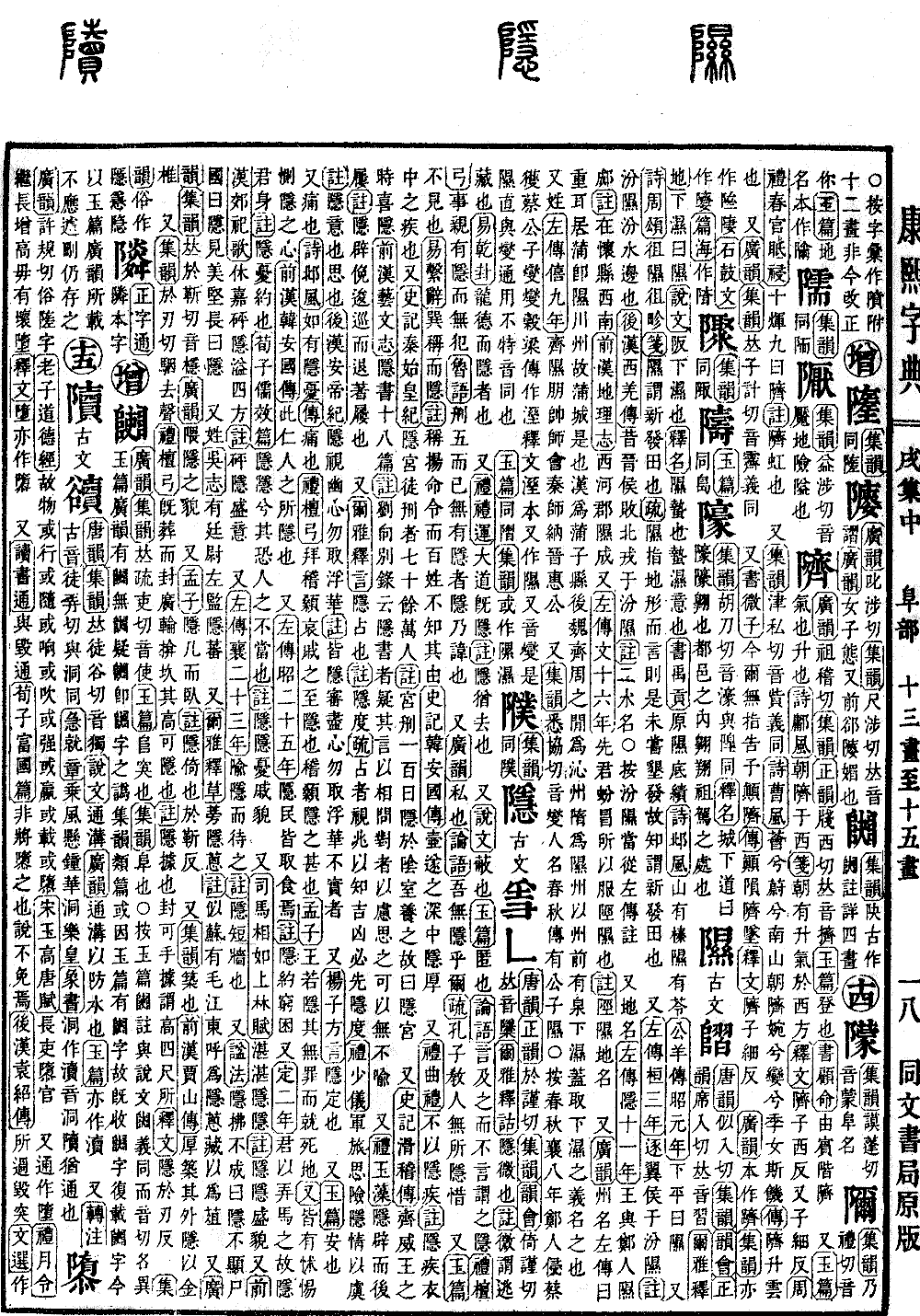
Xu Collection, Middle Volume; Radical: Mound (fù); The character huī. Kangxi strokes: 23; page 1362, entry 22.
Guangyun (Guǎngyùn) gives the pronunciation xǔ guī qiè. This is a common variant character.
Thus, of all things, some lead, some follow, some breathe softly, some blow fiercely, some are strong, some are weak, some are stable, some are destroyed. — Book of the Way and Its Power (Dàodéjīng) by Laozi.
A chief officer who corrupts his office. — Gaotang Rhapsody (Gāotáng Fù) by Song Yu.
Also interchangeable with the character duò.
To continue growing and rising, without destruction. — Monthly Ordinances (Yuèlìng) in the Book of Rites (Lǐjì).
Shìwén states that duò is also written as huī.
Dúshū Tōng states it is interchangeable with huǐ.
Not intending to destroy it, yet discussions inevitably involve it. — "On Enriching the State" chapter in Xunzi (Xúnzǐ).
Wherever he passed, there was destruction and conflict. — "Biography of Yuan Shao" in Book of the Later Han (Hòuhàn Shū).
Wénxuǎn writes it as huī.
Textual criticism: For the quote from Book of the Way and Its Power by Laozi, the character yíng is hereby corrected to léi, according to the original text.