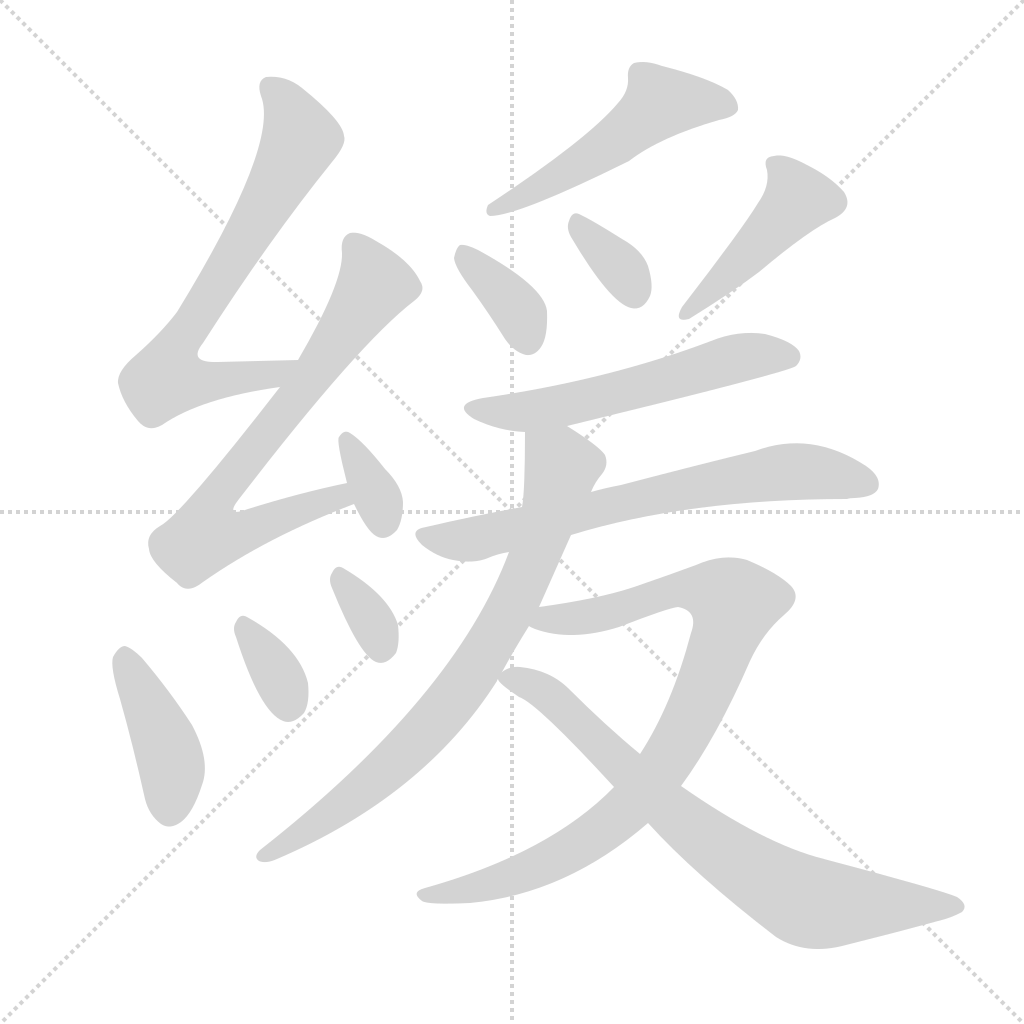
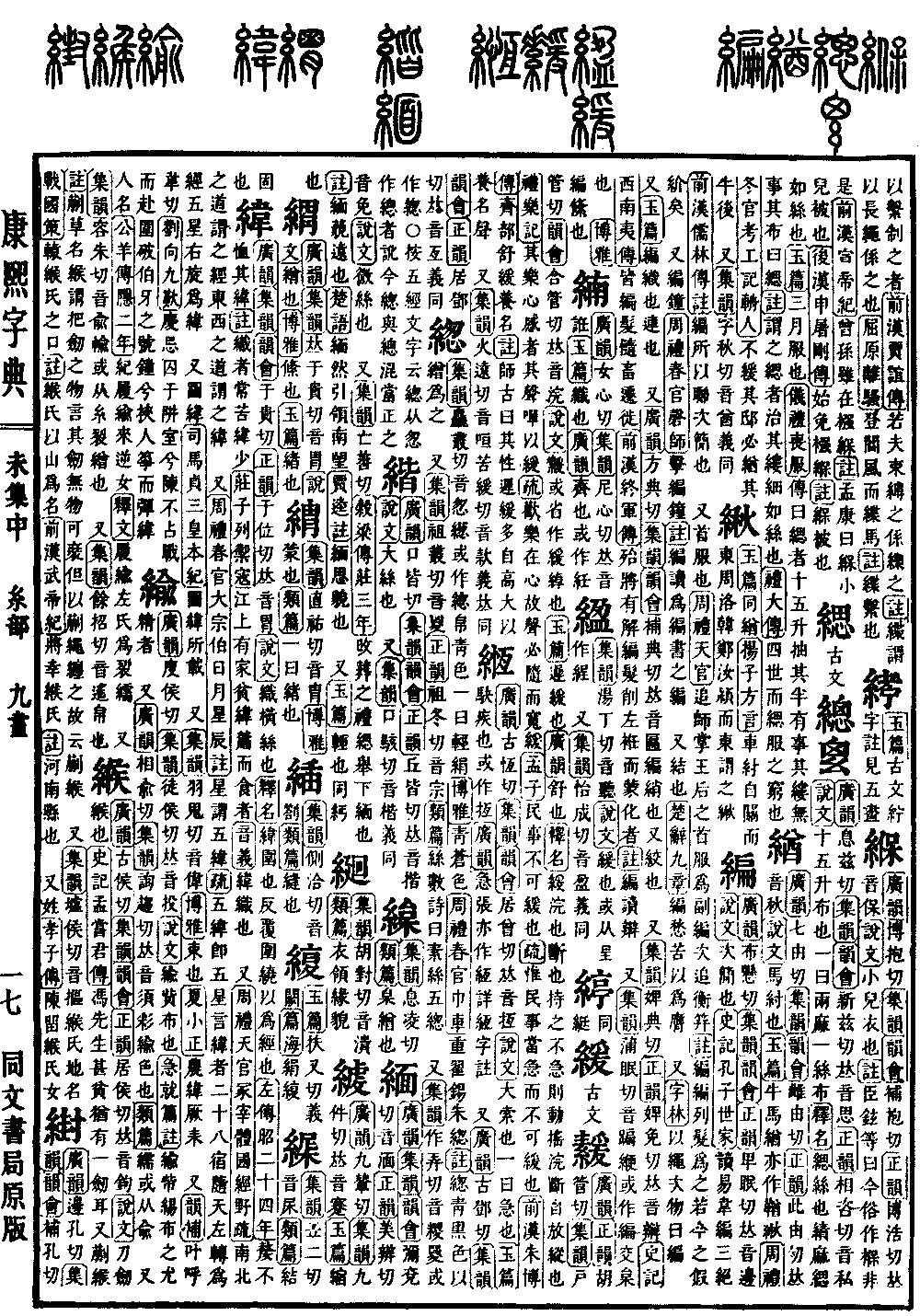
Wei Collection, Middle Volume. Radical: Silk (mì). Kangxi stroke count: 15. Page 931, Entry 12.
Ancient form. According to Broad Rhymes (Guangyun) and Correct Rhymes (Zhengyun), it is pronounced huan (falling tone). According to Collected Rhymes (Jiyun), it is pronounced huan (falling tone). According to Rhyme Compilation (Yunhui), it is pronounced he (entering tone) and huan (falling tone), and sounds like huan (falling tone).
According to Explaining Graphs and Analyzing Characters (Shuowen), it is sometimes written in a simplified variant form. It means to be leisurely or relaxed. According to Jade Chapters (Yupian), it means slow or sluggish. According to Broad Rhymes (Guangyun), it means to relax or stretch. According to Explaining Names (Shiming), it means to wash away or to break. If one holds something without tension, it sways; this implies a loosening or self-indulgence.
Book of Rites (Liji), Record of Music: When the heart is moved by joy, the sound is deep and slow. Commentary: When joy is in the heart, the sound must follow in a relaxed and leisurely manner.
Mencius: The affairs of the people must not be delayed. Commentary: Only the affairs of the people must be treated with urgency and must not be delayed.
Former Han (Qian Han), Biography of Zhu Bo: The people of the Qi region are slow and leisurely to cultivate their reputation. Commentary: Shigu says, their nature is sluggish, and they often assume a lofty air to cultivate a reputation.
Also, according to Collected Rhymes (Jiyun), it is pronounced xuan (rising tone). It is also pronounced kuan (rising tone). The meaning is the same.