Si Collection, Lower Volume
Radical: Dog (quǎn)
10 strokes
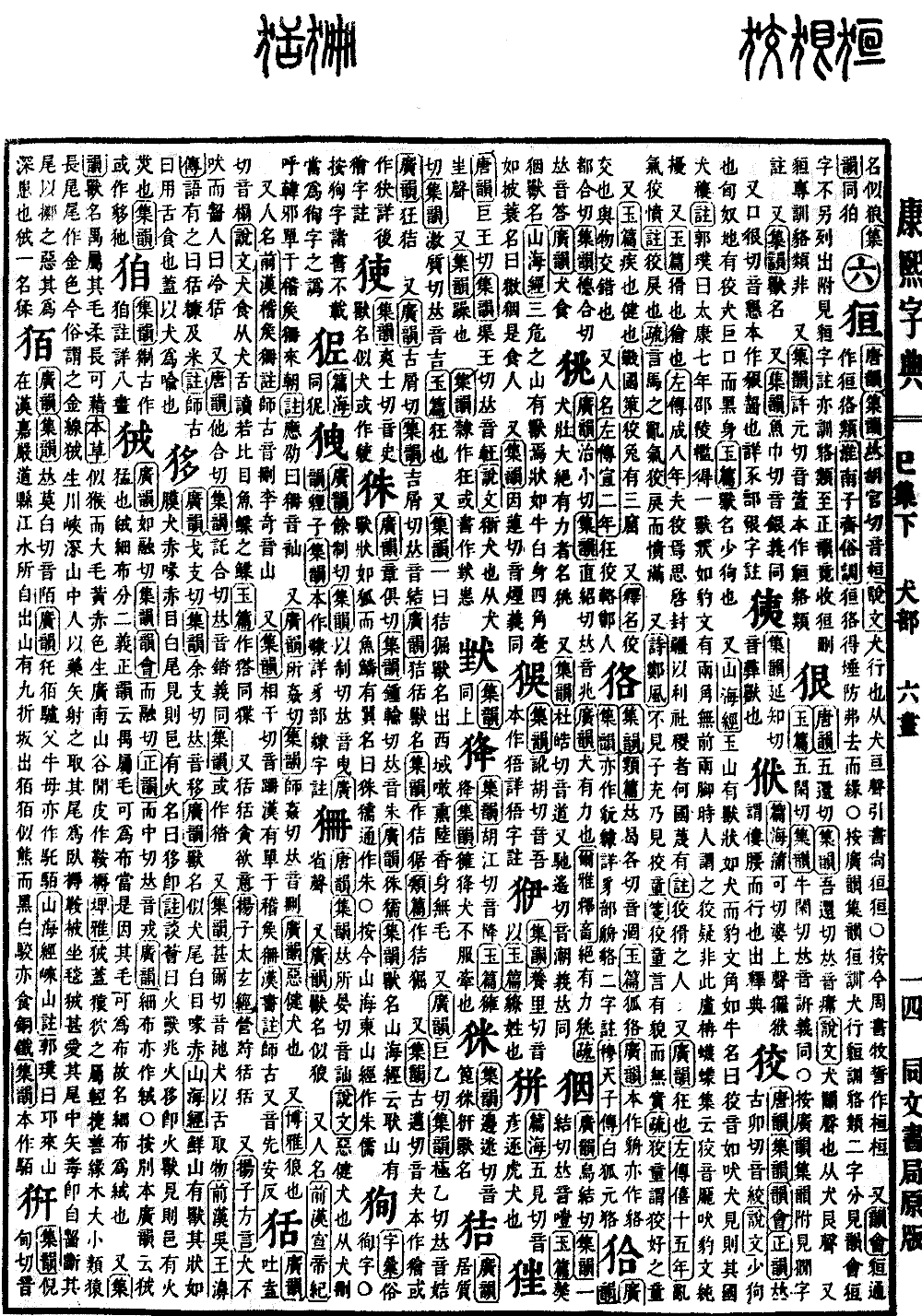
Page 710, Entry 01
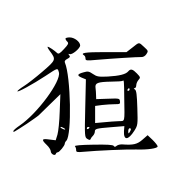
According to Tang Rhymes (Tangyun) and Collected Rhymes (Jiyun), pronounced huan. According to Explaining Graphs and Analyzing Characters (Shuowen Jiezi), it refers to the manner in which a dog walks. The character is composed of the radical for dog and the phonetic component huan. Cited from the Book of Documents (Shangshu): Still walking back and forth (shang huan huan). Note: In the current Book of Documents, Zhou Announcements, Oath at Mu (Shangshu Zhoushu Mushi), it is written as huan huan. According to the Rhyme Collection (Yunhui), the character for a type of badger (huan) is used interchangeably with this character, referring to an animal of the raccoon dog family. The Huainan Masters (Huainanzi), Chapter on Customs of Qi (Qisu Xun) records: Animals such as this and the raccoon dog, when encountering an embankment, will not leave it but will walk along it. Note: In the Broad Rhymes (Guangyun) and Collected Rhymes (Jiyun), this character is defined as a dog walking, and the character for a type of badger is defined as a raccoon dog animal; the two characters are listed separately. In the Rhyme Collection, this character is not listed individually but is appended to the entry for the character meaning badger, and it is also defined as a raccoon dog animal. By the time of the Correct Rhymes (Zhengyun), the character was included while the character for badger was deleted, and it was defined exclusively as a raccoon dog animal, which is incorrect. According to Collected Rhymes (Jiyun), pronounced xuan. The original character is that for a badger, referring to an animal of the raccoon dog family.