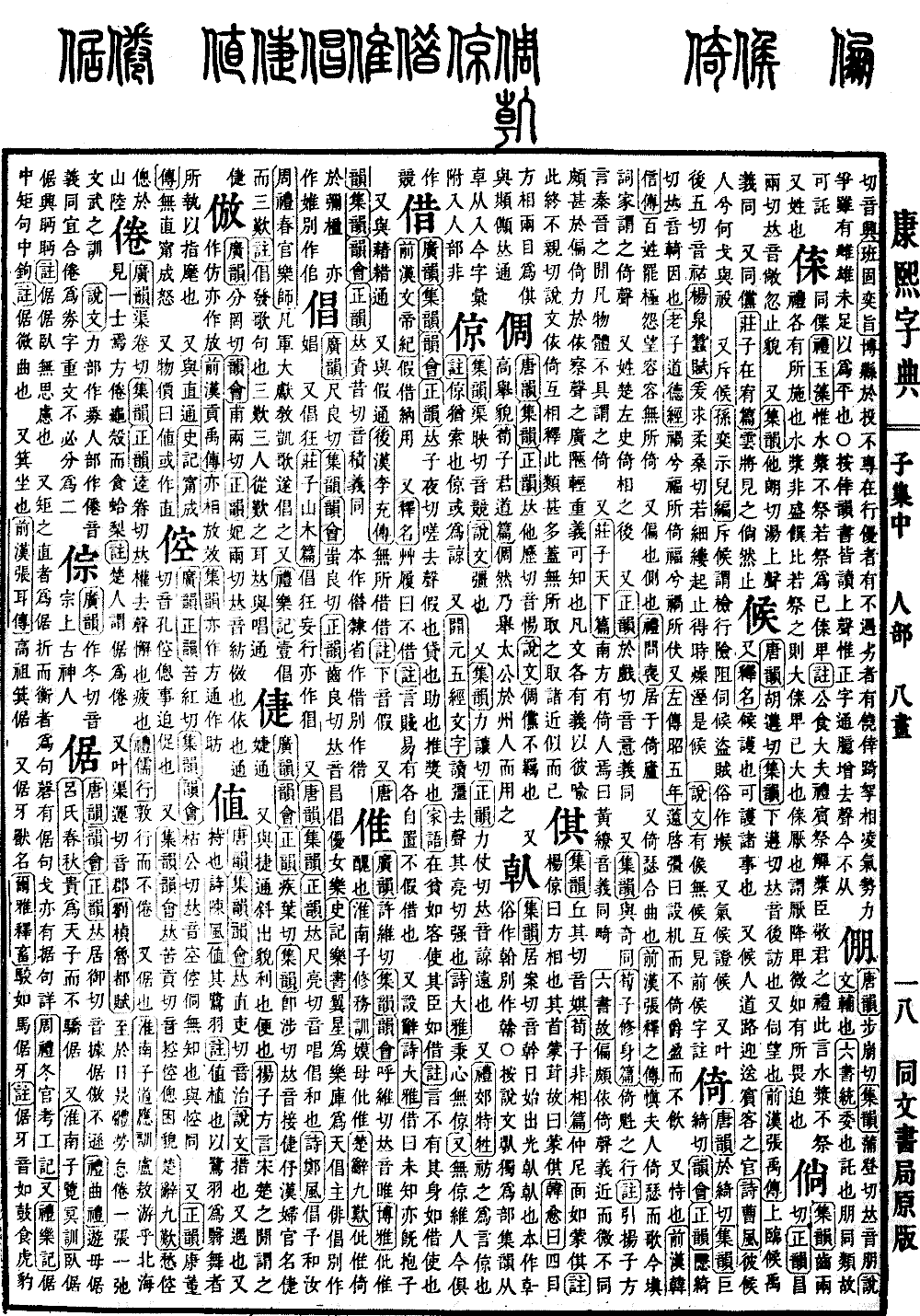
Zi Collection, Middle Volume. Radical: Person (rén). Character: hou. Kangxi Stroke Count: 10. Page 108, Number 04.
According to the Tang Rhymes (Tangyun) and the Collected Rhymes (Jiyun), the pronunciation is hòu. It means to visit or inquire. It also means to watch or wait. In the History of the Former Han (Qian Han Shu), Biography of Zhang Yu, it states that the Emperor personally visited to inquire after the health of Zhang Yu. According to the Explanation of Names (Shiming), hou means to guard, referring to the ability to watch over various matters. It also refers to the term houren, which was an official title for those who welcomed and saw off guests on the road. In the Book of Odes (Shijing), Odes of Cao, it says: Those watchmen on the road, carrying their halberds and staffs. It also refers to chihou, meaning scouts. In Sun Yi's Instruction for Children (Shier Bian), chihou is defined as patrolling dangerous and difficult terrain to watch for bandits or thieves. It is commonly written in a variant form pronounced hòu. It is also used in terms for climate and medical symptoms. It can also be read as an alternative pronunciation yòu. In Yang Quan's Rhapsody on the Silkworm (Can Fu), it says: Thus seeking tender mulberry leaves, cutting them into fine threads; waking and resting at the proper times, while observing the balance of dryness and moisture. According to Explaining Graphs and Analyzing Characters (Shuowen Jiezi), it refers to observing presence or absence. Cross-reference with the notes for the preceding character hou.