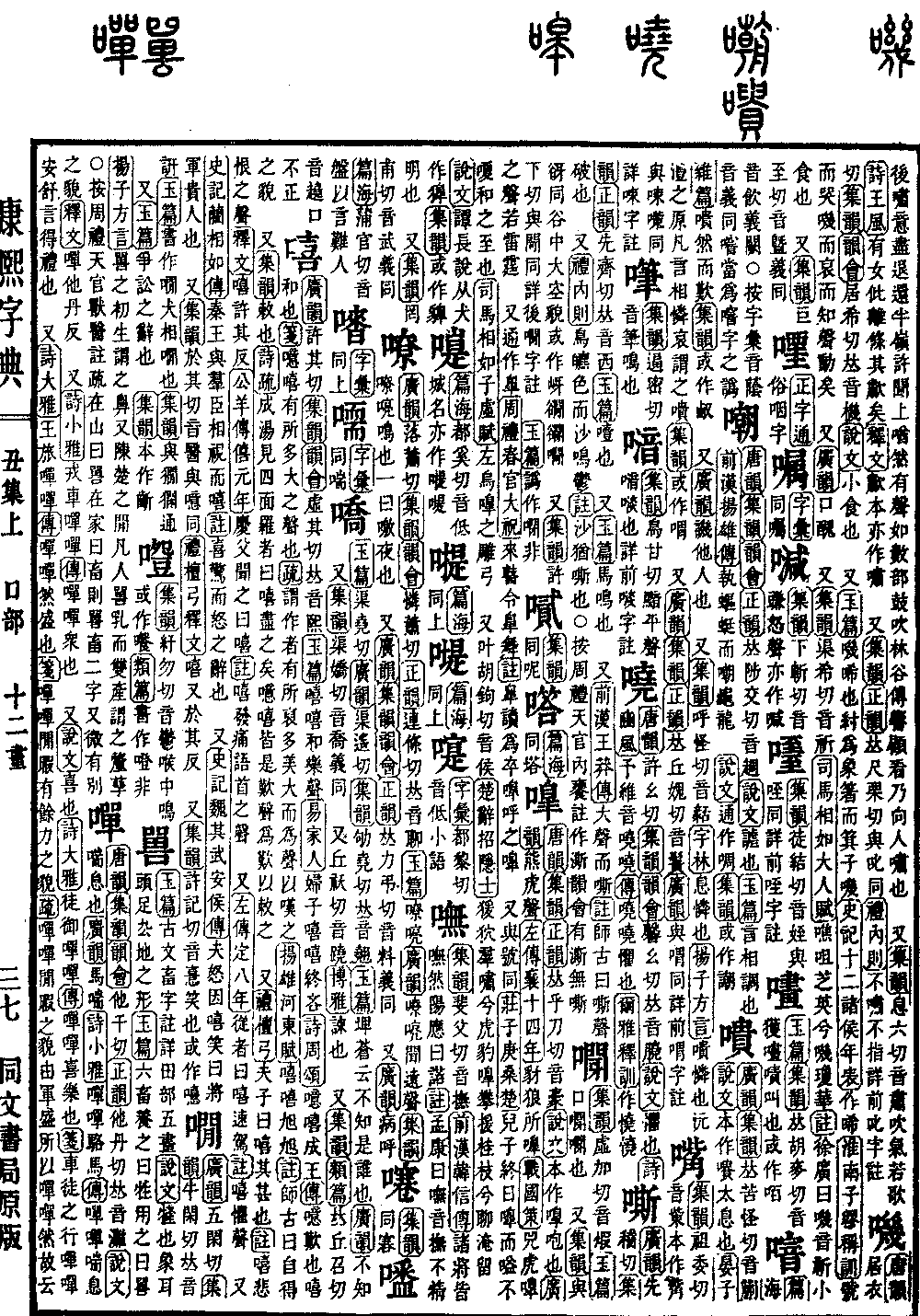
Chou Collection, Upper Volume
Radical: Mouth (kǒu)
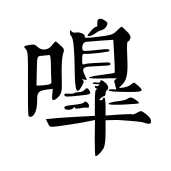
Character: Hao
Kangxi Strokes: 15
Page 207, Entry 18
Pronounced hao.
According to the Explaining Graphs and Analyzing Characters (Shuowen Jiezi), it was originally written as this character, meaning to roar.
According to the Extensive Rhymes (Guangyun), it is the sound made by bears and tigers.
As recorded in the Zuo Commentary (Zuozhuan), Year 14 of Duke Xiang: The roaring of wolves and jackals.
As recorded in the Strategies of the Warring States (Zhanguoce): The roaring sound of rhinoceroses and tigers is like thunder.
It is also commonly written as gao.
As recorded in the Rites of Zhou (Zhouli), Spring Offices, Grand Invocation: The blind musicians are ordered to perform the gao dance. The commentary states that gao is to be read as the roaring sound of shouting.
It is also interchangeable with hao.
As recorded in the Zhuangzi, Geng Sang Chu: An infant cries all day, yet its throat does not become hoarse; this is the height of harmony.
As recorded in Sima Xiangru, Rhapsody on Master Void (Zixu Fu): On the left, a black bow that roars.
It is also rhymed as hou.
As recorded in the Songs of Chu (Chu Ci), Summoning the Recluse: Groups of apes and monkeys shriek, and tigers and leopards roar, climbing up the cinnamon branches, I wish to linger a while.
According to the Explaining Graphs and Analyzing Characters (Shuowen Jiezi), Tan Chang states that it is written with the dog radical as a variant form. According to the Collected Rhymes (Jiyun), it is sometimes written in variant forms.