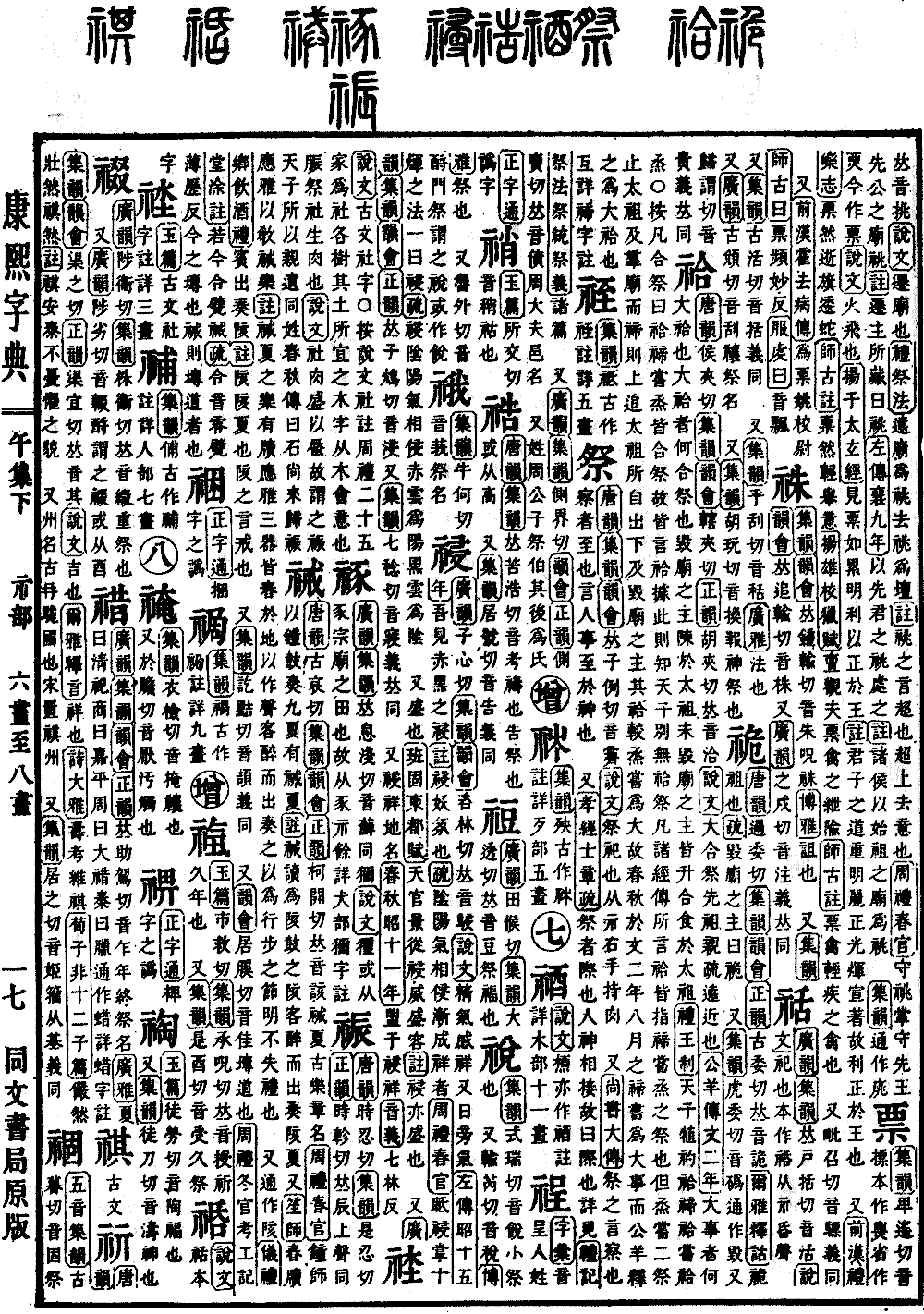
Wu Collection, Lower Volume
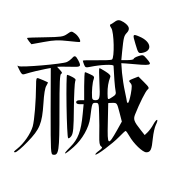
Radical: Spirit (shì)
12 Kangxi strokes
Page 843, Entry 20
Pronounced gai. Gai-xia is the name of an ancient musical movement. Book of Rites (Zhouli), Office of the Spring: The bell master plays the nine xia movements with bells and drums, including the Gai-xia. Commentary: Gai is read as the gai in gai-gu (gai drums). It is played when guests are intoxicated and departing. Also, in the Office of the Reed Pipe Master: In the spring, play the du, ying, and ya instruments to teach gai music. Commentary: This music uses the du, ying, and ya instruments, all of which are struck against the ground to produce sound. It is performed as guests depart when intoxicated, providing a rhythm for walking to indicate that there has been no breach of etiquette.
Also used interchangeably with gai. Book of Etiquette and Ceremonial (Yili), Village Drinking Rites: Played when guests depart. Commentary: Gai refers to the Gai-xia. Gai carries the meaning of exhortation.
Pronounced jie. The meaning is the same.
Pronounced jia. A paved brick path. Book of Rites (Zhouli), Winter Office, Records of Artificers, Commentary on Hall Pathways: Similar to modern brick pathways. Sub-commentary: Ling is pronounced ling. Pi is pronounced bo-li. It refers to modern bricks, and gai refers to the brick path.