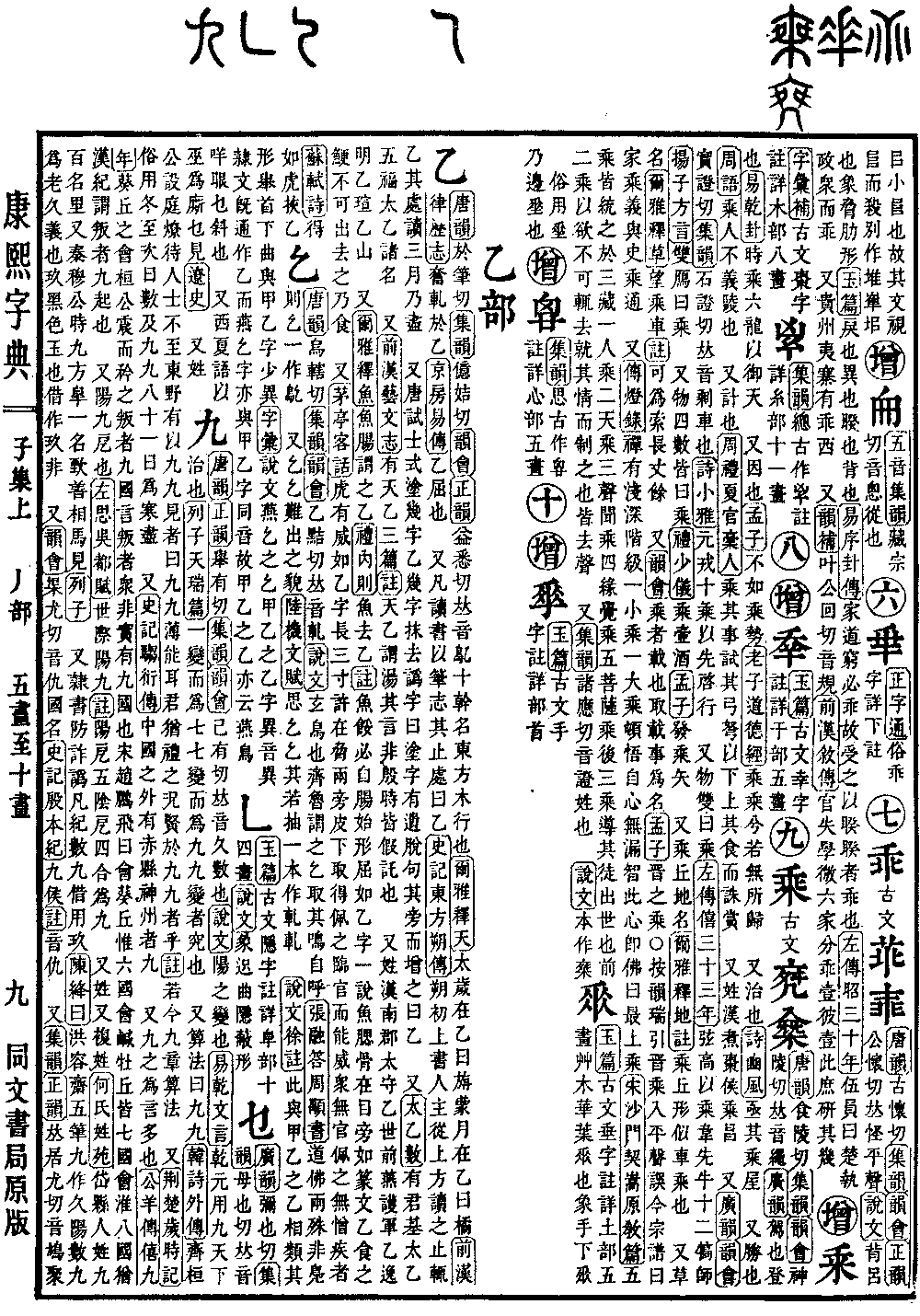
Zi Collection, Page Position: Upper
Radical: Slash (piě)
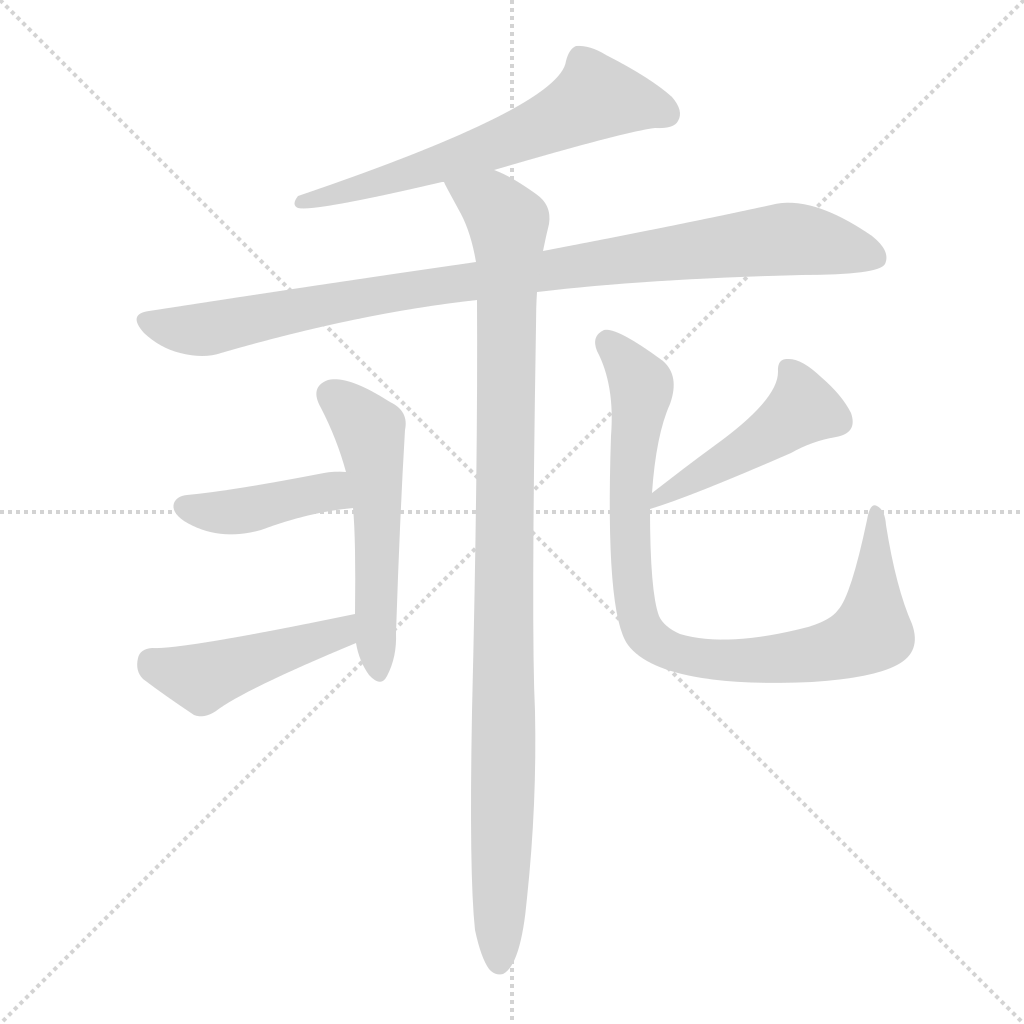
Character: guai
Kangxi strokes: 8
Page 83, Number 03
Ancient script. According to Tang Rhymes (Tangyun), the pronunciation is derived from the characters gu and huai. According to Collected Rhymes (Jiyun), Rhyme Assembly (Yunhui), and Correct Rhymes (Zhengyun), the pronunciation is derived from gong and huai, in the level tone of the rhyme guai. Analytical Dictionary of Characters (Shuowen Jiezi) states it means to turn one's back on the spine, resembling the shape of ribs. Jade Chapters (Yupian) defines it as perverse, different, separated, or turning one's back. The Book of Changes (Yijing), Treatise on the Sequence of Hexagrams (Xugua Zhuan) states that when the way of the family is exhausted, there will surely be discord; therefore, it is followed by the hexagram of Separation (Kui). Separation means discord. The Commentary of Zuo (Zuo Zhuan), in the thirtieth year of Duke Zhao, records that Wu Yuan said the officials in power in the state of Chu are numerous and in disagreement. Furthermore, there is a place called Guaixi in the ethnic minority villages of Guizhou. Additionally, in the Rhyme Supplement (Yunbu), it is a rhyming word derived from gong and hui, sounding like gui. The Book of Han (Hanshu), Postface (Xuzhuan) states that as official positions were lost and learning declined, the six schools of thought diverged and separated; alternating between this and that, one hopes to examine their subtleties.