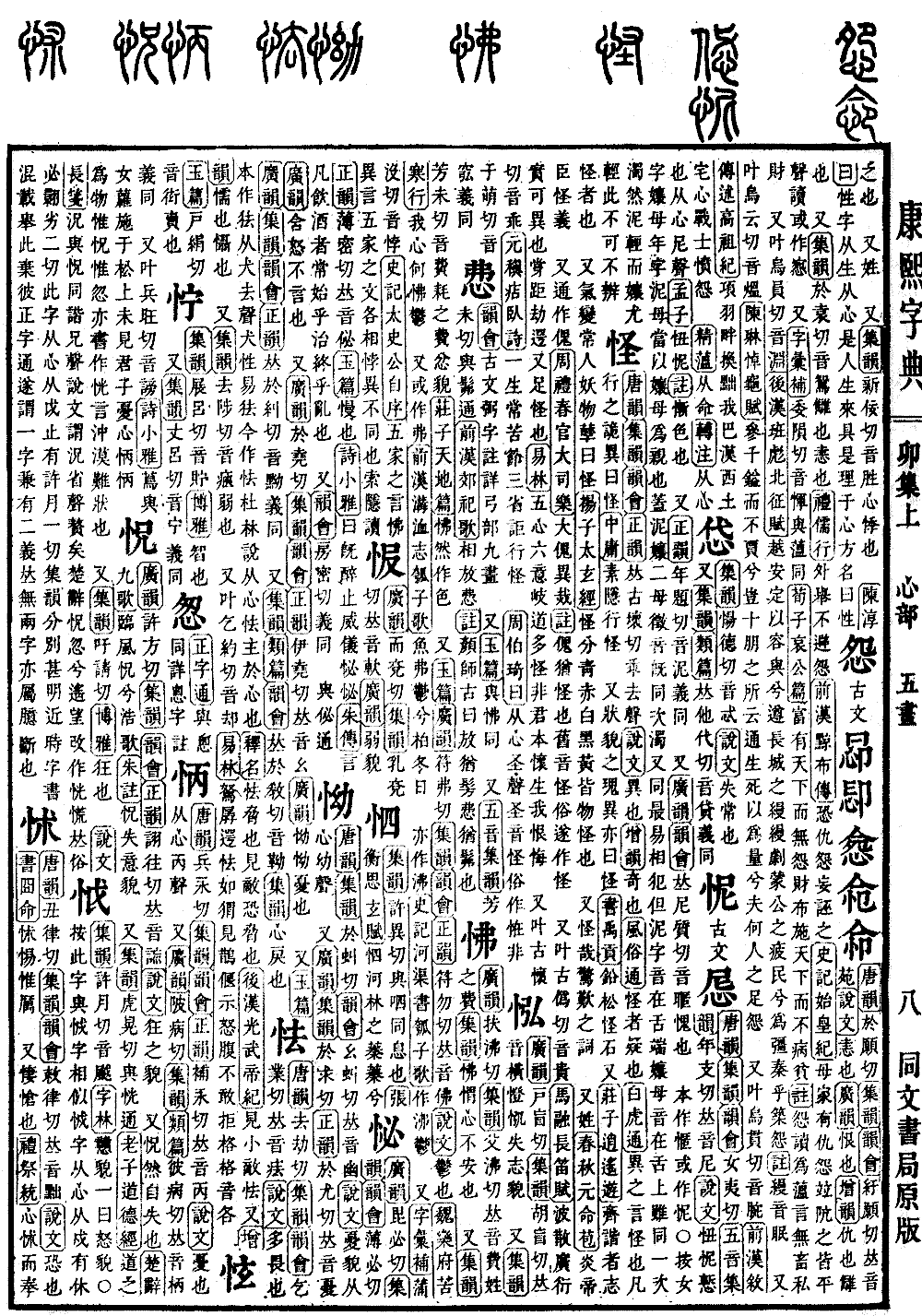
Mao Collection, Upper Volume
Radical: Heart (xīn)
Kangxi stroke count: 9
Page 382, Entry 10
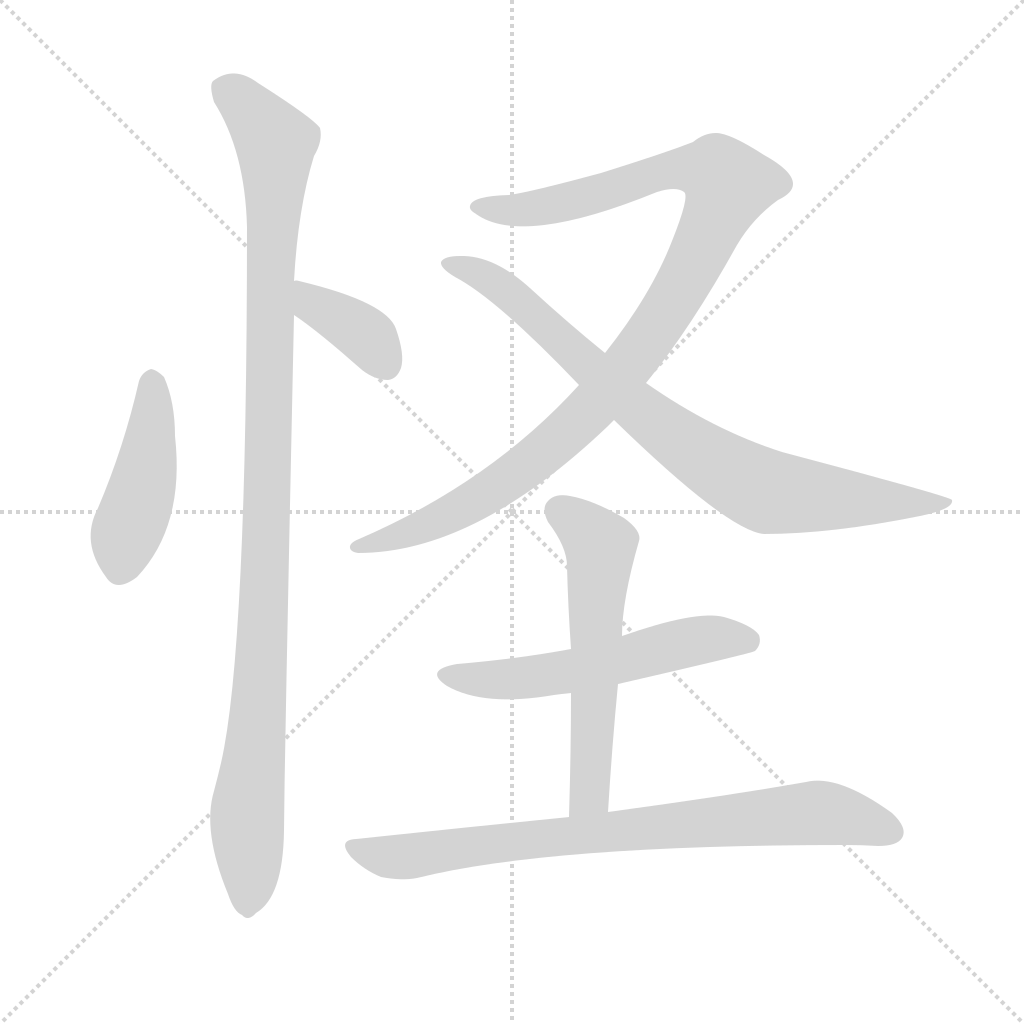
Tang Rhyme (Tangyun), Collection Rhyme (Jiyun), Rhyme Meetings (Yunhui), Correct Rhymes (Zhengyun): Pronounced guai (falling tone).
Shuowen Jiezi (Explanation of Graphs and Analysis of Characters): Different.
Zengyun (Expanded Rhymes): Unusual.
Fengsu Tong (Comprehensive Meaning of Customs): To be strange is to be in doubt.
Baihu Tong (Comprehensive Discussions in the White Tiger Hall): The word strange is the same as different. Anything done that is deceptive or unusual is called strange.
Doctrine of the Mean (Zhongyong): To seek out hidden things and do strange things.
Also, a physical appearance that is extraordinary is also called strange.
Classic of History (Shujing), Tribute of Yu (Yugong): Lead, pine, and strange stones.
Zhuangzi, Free and Easy Wandering (Xiaoyao You): Qi Xie is a record of strange things.
Also, when natural forces deviate from the norm, or when people behave like demons or things manifest as omens, it is called strange.
Yangzi, Great Mystery (Taijing): Strange [phenomena] are divided into green, red, white, black, and yellow; all are strange things.
Also, "Guai zai" is an exclamation of surprise.
Also a surname.
Spring and Autumn Origins of Mandates (Chunqiu Yuanmingbao): A minister of the Flame Emperor named Guai Yi.
Also used interchangeably with the character pronounced gui.
Rites of Zhou (Zhouli), Spring Offices, Grand Master of Music: Great wonders and strange disasters.
Commentary: Gui is the same as strange. The old pronunciation was guai, but popular usage eventually changed it to this character.
Also, rhyming with the sound gui (falling tone).
Ma Rong, Rhapsody on the Long Flute (Changdi Fu): The waves disperse and spread widely, truly it is strange. The supports and obstructions are unexpected, and again, it is worthy of surprise.
Yilin (Forest of Changes): Five hearts and six intentions, the forked paths have many strange things. Not the original intention of the ruler, it brings me resentment and regret.
Also, rhyming with the sound guai.
Yuan Zhen, Poem on Lying in Bed with Malaria (Dianwo shi): In one life I have often suffered from austerity, why would I ever act strangely?
Zhou Boqi says: Formed from the heart radical and the phonetic component sheng. Sheng is pronounced guai. The common form using the character component for strange is incorrect.