
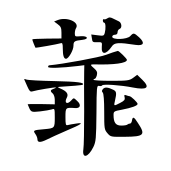
䓙

Pronunciationguāi,kuā
Strokes14 strokes

Basic Info

Pronunciation guāi,kuā
Five Elements None
Fortune None
Radical
Simplified Strokes 11 strokes
Traditional Strokes 14 strokes
Naming Meaning

Kangxi Dictionary

View Original Page 1038
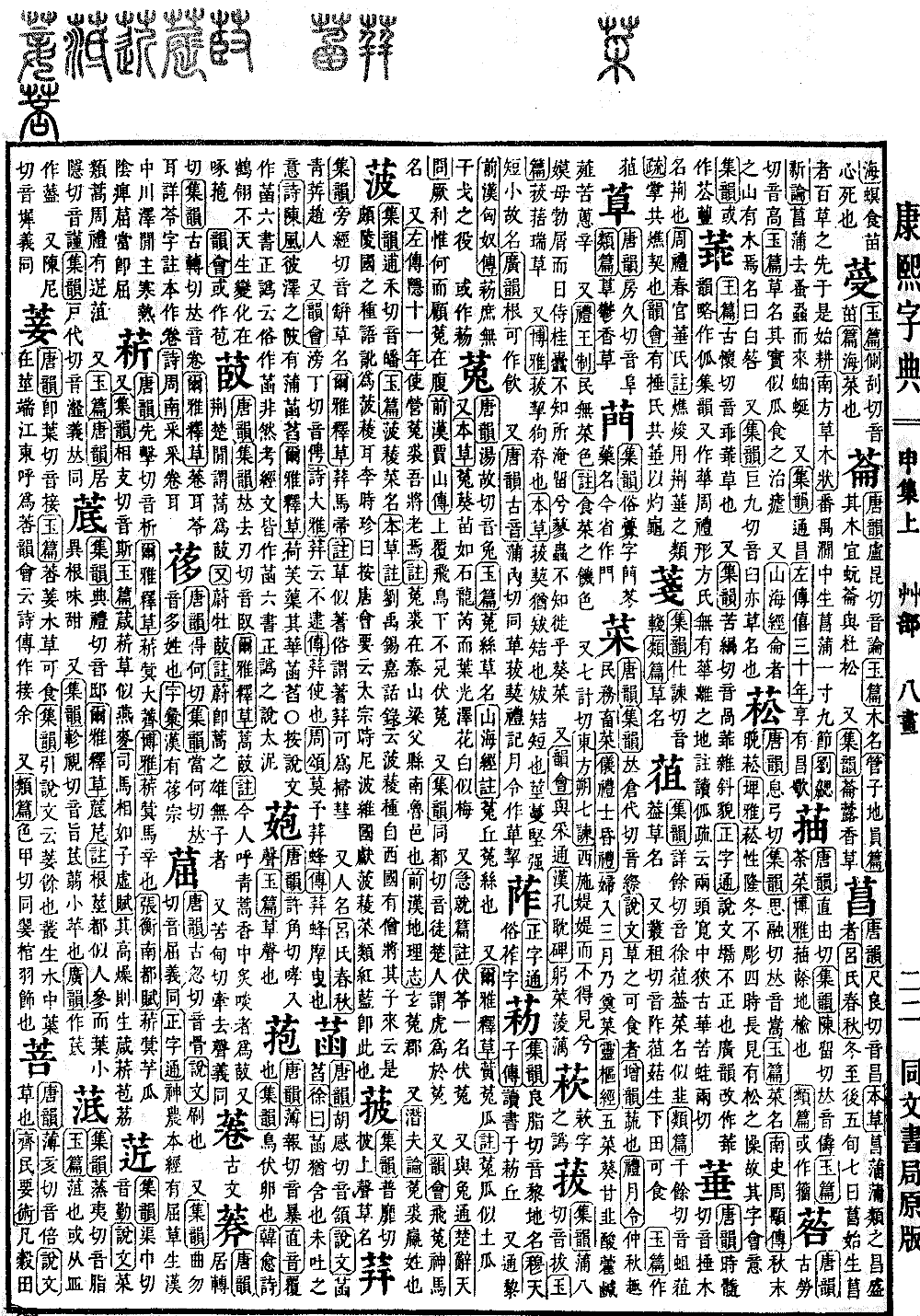
"Yùpiān" (玉篇) uses the ancient pronunciation "huái" to annotate the pronunciation, which is read as "guāi". It is the name of a type of grass. Furthermore, "Jíyùn" (集韵) uses "kǔ kuāi" (苦緺) to annotate the pronunciation, which is read as "guō". "Cǎo zá" (䓙杂) describes a crooked appearance. "Zhèngzìtōng" (正字通) and "Shuōwén Jiězì" (说文解字) state that "wěi" (竵) means "not straight". "Guǎngyùn" (广韵) rewrites it as "cǎo" (䓙), "Yùnlüè" (韵略) writes it as "", and "Jíyùn" (集韵) further writes it as "". In the "Zhou Li - Xíngfāng Shì" (周礼·形方氏), there is the sentence "Wú yǒu lí zhī dì" (无有离之地). The annotation says: read as "". The commentary explains: wide at both ends and narrow in the middle. There are two pronunciations: "gǔ huá" and "kǔ wā".

Kangxi Dictionary Modern Version

扫码使用更多功能

康熙字典小程序

康熙字典小程序

下载 iOS App 下载 Android App
