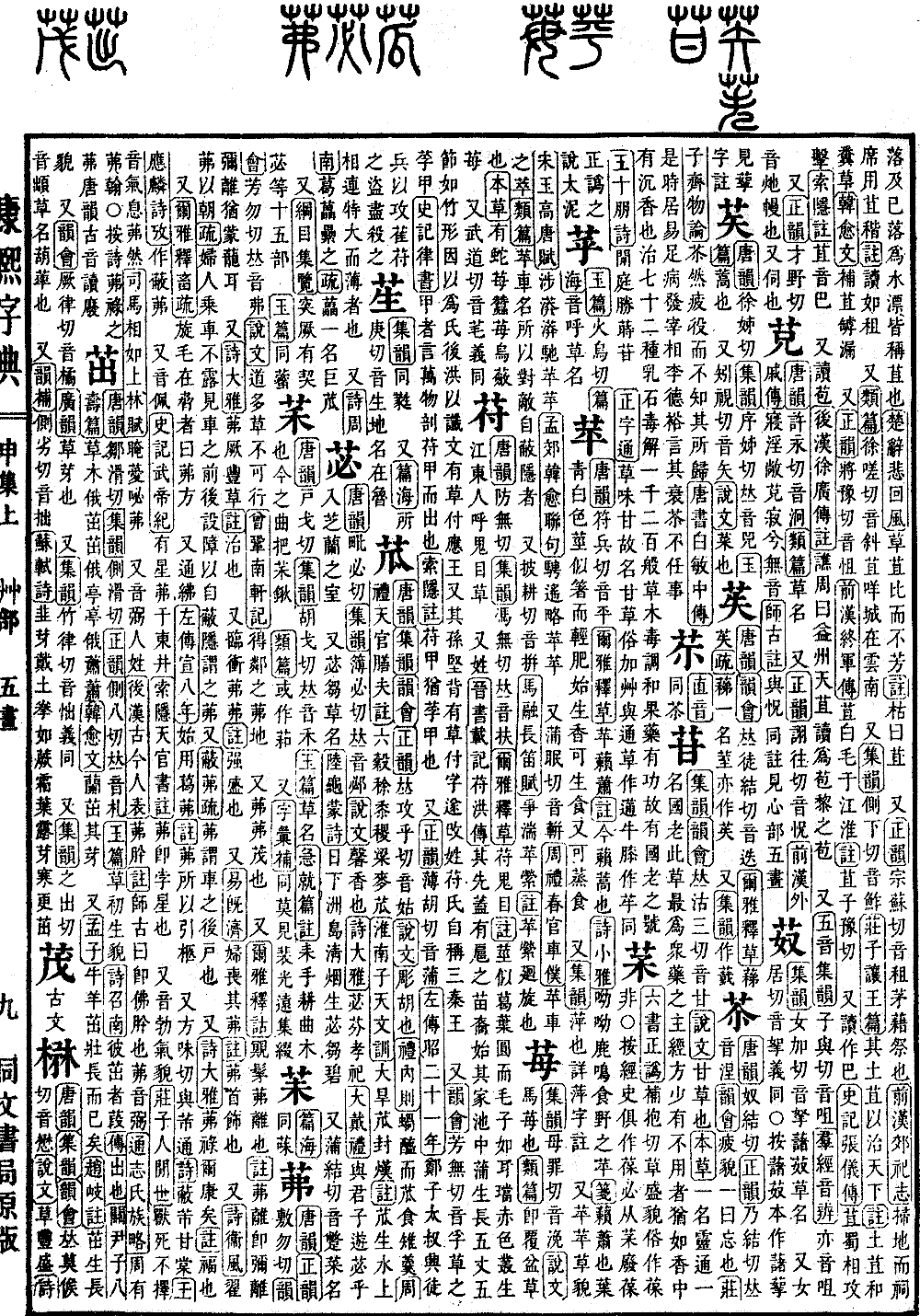
Shen Collection, Upper Volume
Radical: Grass (cǎo)
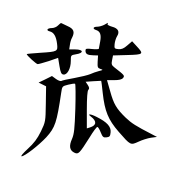
Gu
Kangxi stroke count: 11
Page 1025, Entry 14
Tang Dynasty Rhymes (Tangyun), Collected Rhymes (Jiyun), Rhyme Compendium (Yunhui), and Correct Rhymes (Zhengyun) all provide the spelling gong hu, pronounced gu.
According to the Explaining Graphs and Analyzing Characters (Shuowen), it is wild rice.
Book of Rites (Liji), Inner Principles section: Snail paste served with wild rice and pheasant soup.
Rites of Zhou (Zhouli), Offices of Heaven, Commentary on the Master Chef: The six grains are glutinous rice, broomcorn millet, panicled millet, foxtail millet, wheat, and wild rice.
Book of Huainan (Huainanzi), Teachings on Astronomy: In great drought, wild rice fields become parched.
Commentary: Wild rice grows linked together on the water, with stems as large as cattails.
Also, Book of Odes (Shijing), Zhou South section: Kudzu vines tangled together.
Commentary: The vine is also known as giant wild rice.
Textual Research:
In the Book of Rites (Liji), Inner Principles section, the original text used snail sauce; according to the original text, this has been corrected to snail paste.
In the Book of Huainan (Huainanzi), Teachings on Astronomy, the original note stated the wild rice grows on water linked together, specifically large and thin; based on the Daoist Canon edition, thin has been corrected to cattail.