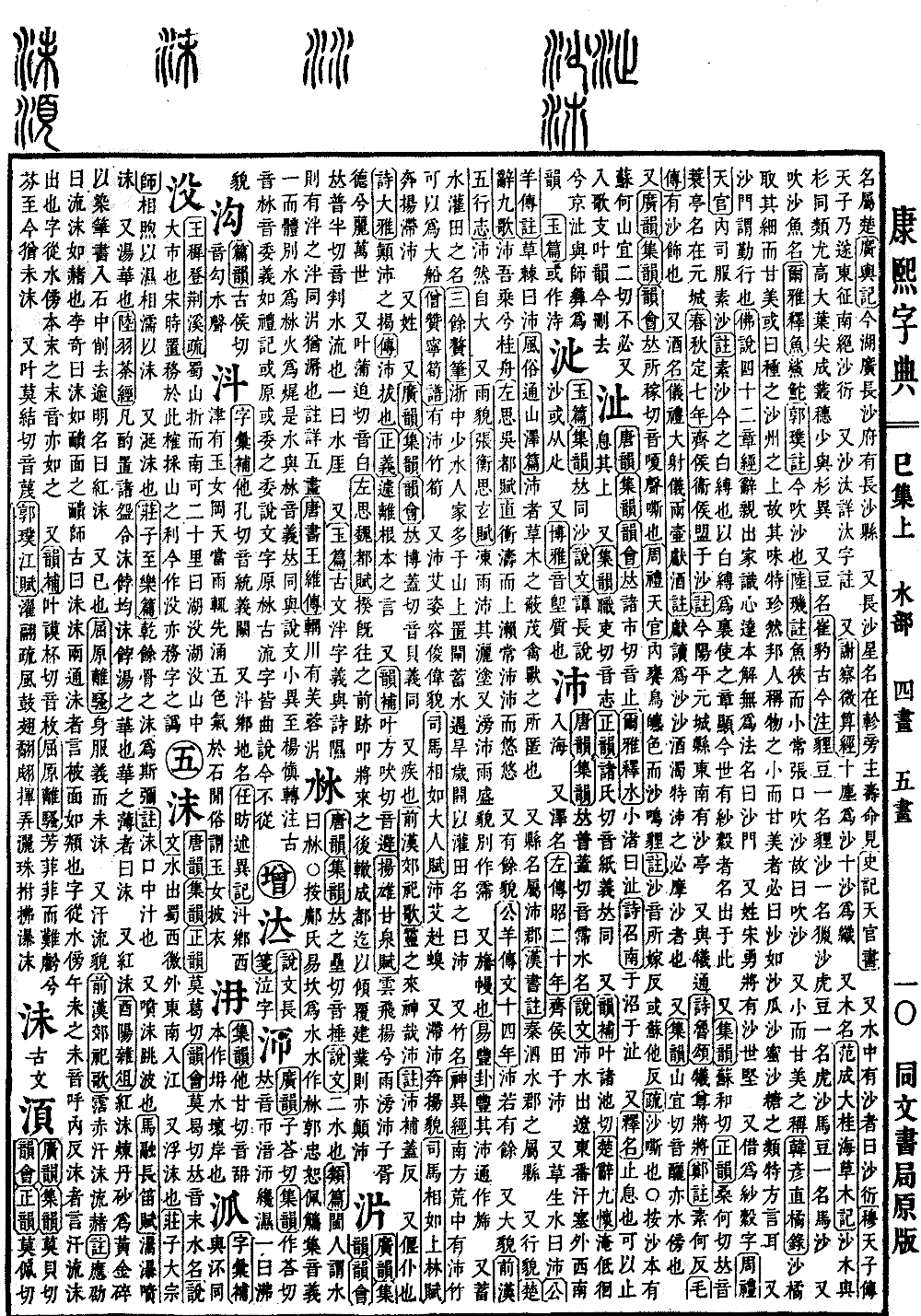
Si Collection, Upper Volume
Radical: Water (shuǐ)
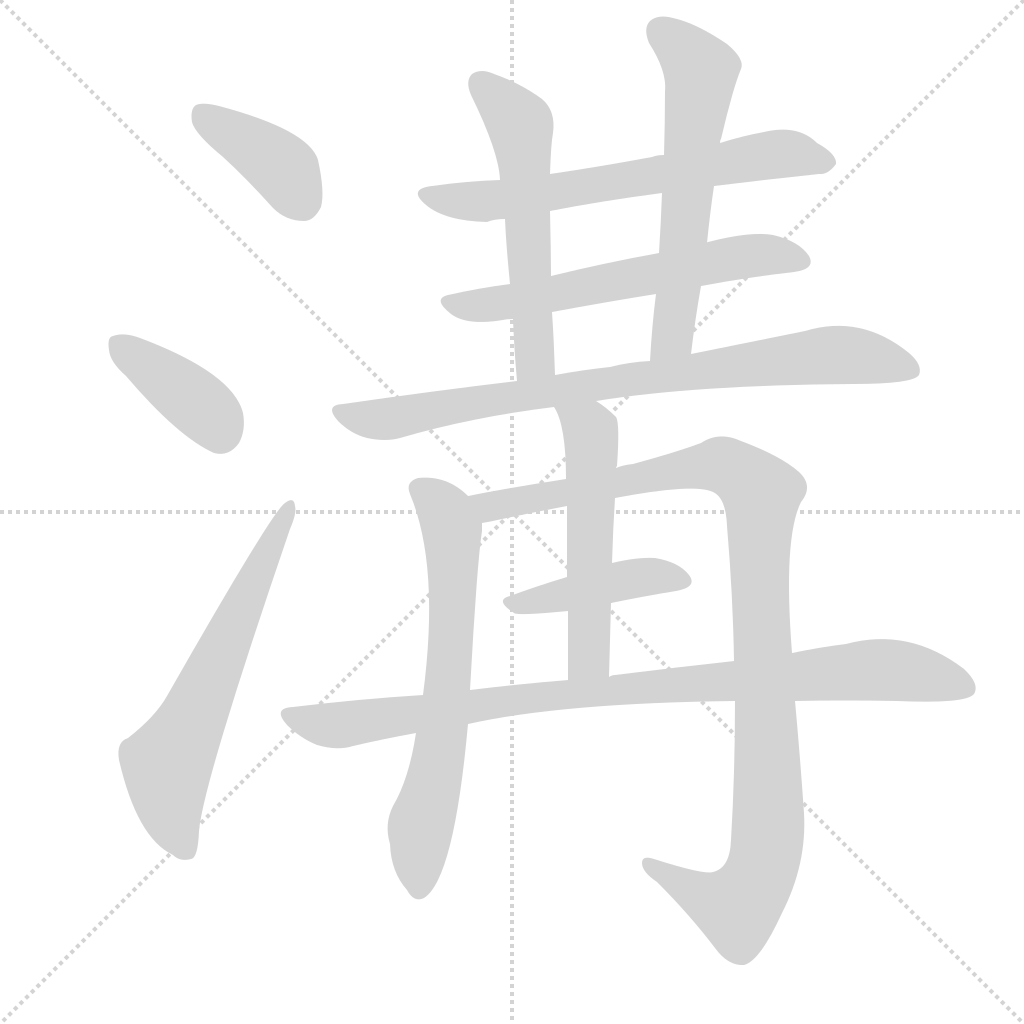
Character: Gou
Kangxi Stroke Count: 14
Page 612, Entry 01
Pronounced gou.
According to the Shuowen Jiezi (Shuowen), a water ditch, four feet wide and four feet deep.
According to the Shiming (Shiming), water between fields is called a gou. Gou means to construct; it refers to the crisscrossing and intersecting of waterways.
According to the Rites of Zhou (Zhouli), the official known as the Suiren oversaw the digging of ditches for every ten households.
According to the Erya (Erya), water flowing into a valley is called a gou.
Also refers to a moat, a defensive trench around a city wall. According to the Book of Rites (Liji), city walls and moats are used for protection.
Also refers to the sweat groove, the depression along a horse's spine. According to the Qimin Yaoshu (Qimin Yaoshu), in the method of judging horses, the sweat groove should be deep.
Pronounced jiang. Similar to the character for harbor (gang). Refers to water flowing in different branches. See the entry for harbor (gang) for details.
Pronounced ju. Matches the rhyme in the Yilin (Yilin) by Jiao Gansi: The horse is startled and the carriage breaks, the royal descendant falls into the ditch, his body dies and his soul departs, leaving behind his home and shelter.