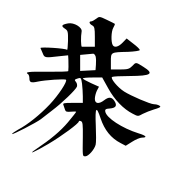
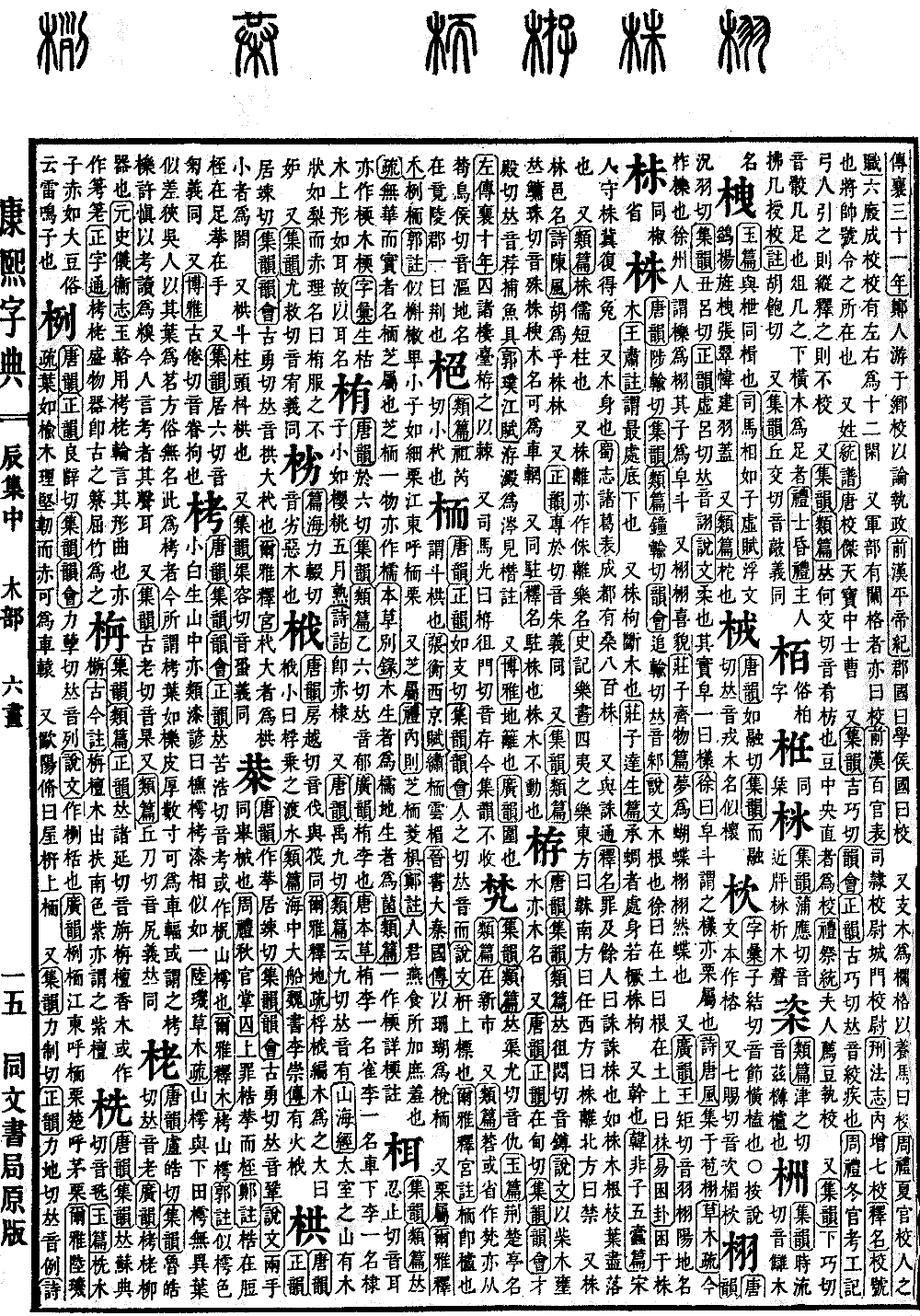
Zi Collection, Upper Volume, Page 11, Entry 03
Written as 拲. Pronounced gu (falling tone) from a fanqie of 居 (jū) and 竦 (sǒng). In the "Jiyun" and "Yunhui," it is recorded as gu (falling tone), pronounced the same as 鞏 (gǒng). The "Shuowen Jiezi" explains it as simultaneously shackling the hands with torture instruments. The "Zhou Li - Qiu Guan - Zhang Qiu" records that those guilty of serious crimes were made to wear three types of torture instruments: the 梏 (gù), the 拲 (gǔ), and the 桎 (zhì). Zheng Xuan annotates that the 梏 (gù) was worn on the neck, the 桎 (zhì) on the feet, and the 拲 (gǔ) on the hands.
Also, in the "Jiyun," it is pronounced ju (rising tone), the same as 匊 (jū). The meaning is the same.
Also, in the "Boyao," it is pronounced gu (falling tone), the same as 眷 (juàn). The meaning is to restrain.