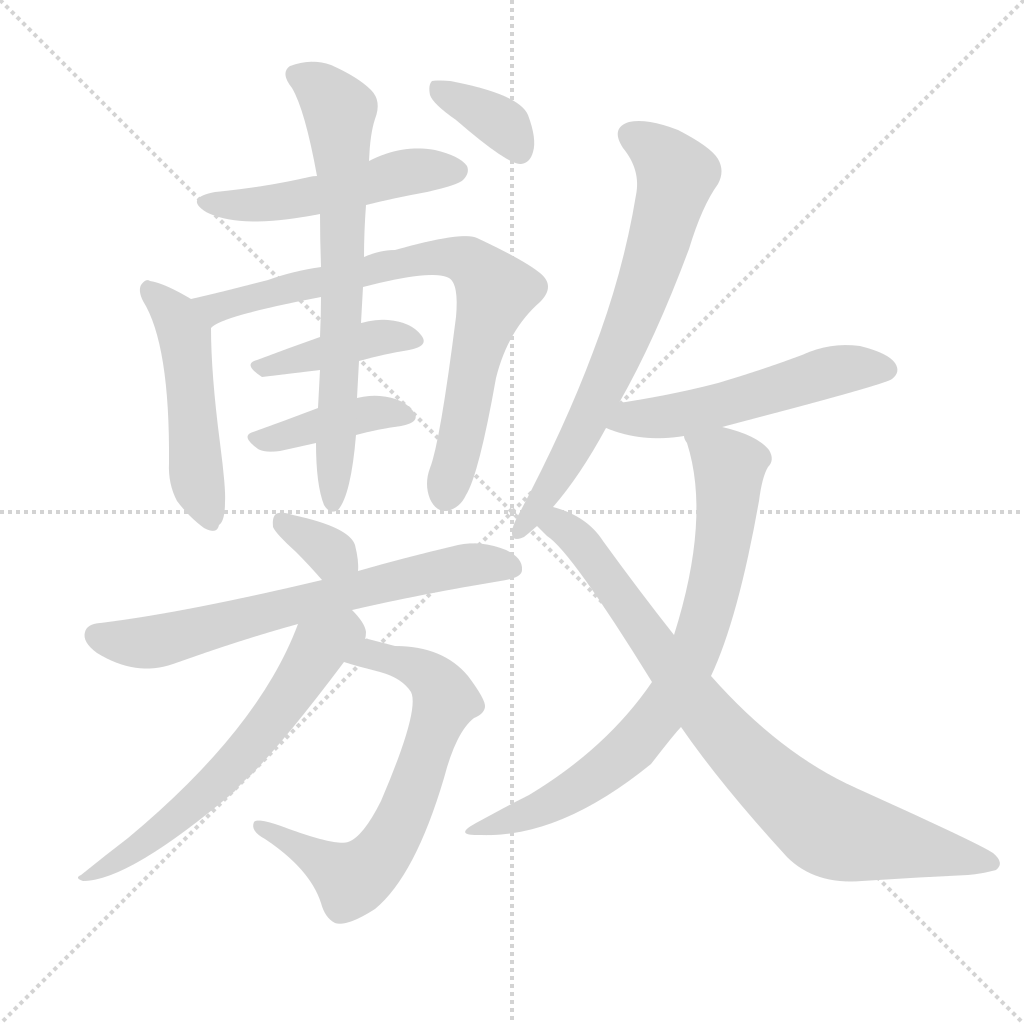
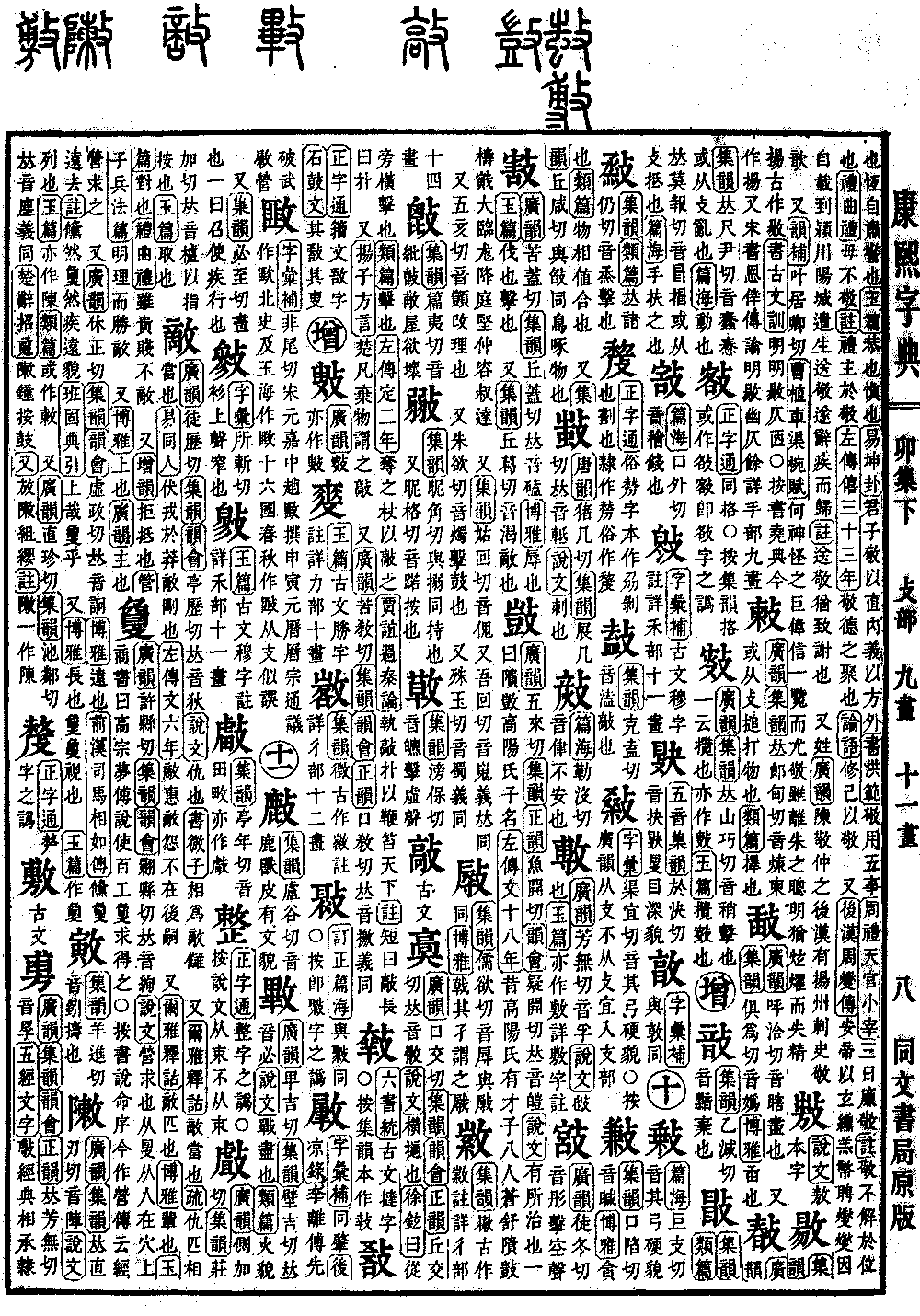
Mao Collection, Lower Volume
Radical: Tap (pū)
Kangxi strokes: 15
Page 474, Entry 53
Ancient form: fū
Pronounced fū
According to Broad Rhymes (Guangyun), Collection of Rhymes (Jiyun), Rhyme Compilation (Yunhui), and Correct Rhymes (Zhengyun), the pronunciation is fu, matching the sound fu.
In Texts of the Five Classics (Wujing Wenzi), it is noted that in the classical tradition, the clerical script was simplified to become fu.
Book of Documents (Shu): Reports were spread through speech.
Commentary: Fu means to display or state.
Book of Documents (Shu): The civilizing instructions were spread to the four seas.
Commentary: This refers to the broad dissemination of civilizing virtues and governing orders.
Book of Documents (Shu): Harmoniously receive and spread it.
Commentary: This refers to the spreading and execution of administrative policies and teachings.
Book of Odes (Shijing): Without broadly seeking the ways of the former kings.
Commentary: This refers to not extensively seeking the ways of the former kings.
According to Broad Rhymes (Guangyun), it also means to scatter.
It is also used interchangeably with the character meaning to apply or transmit (fù).
History of the Former Han (Qianhan): He transmitted his words.
Commentary: Shigu stated that the character for transmit (fù) should be read as fu.