Xu Collection, Upper Volume
Radical: Gate (mén)
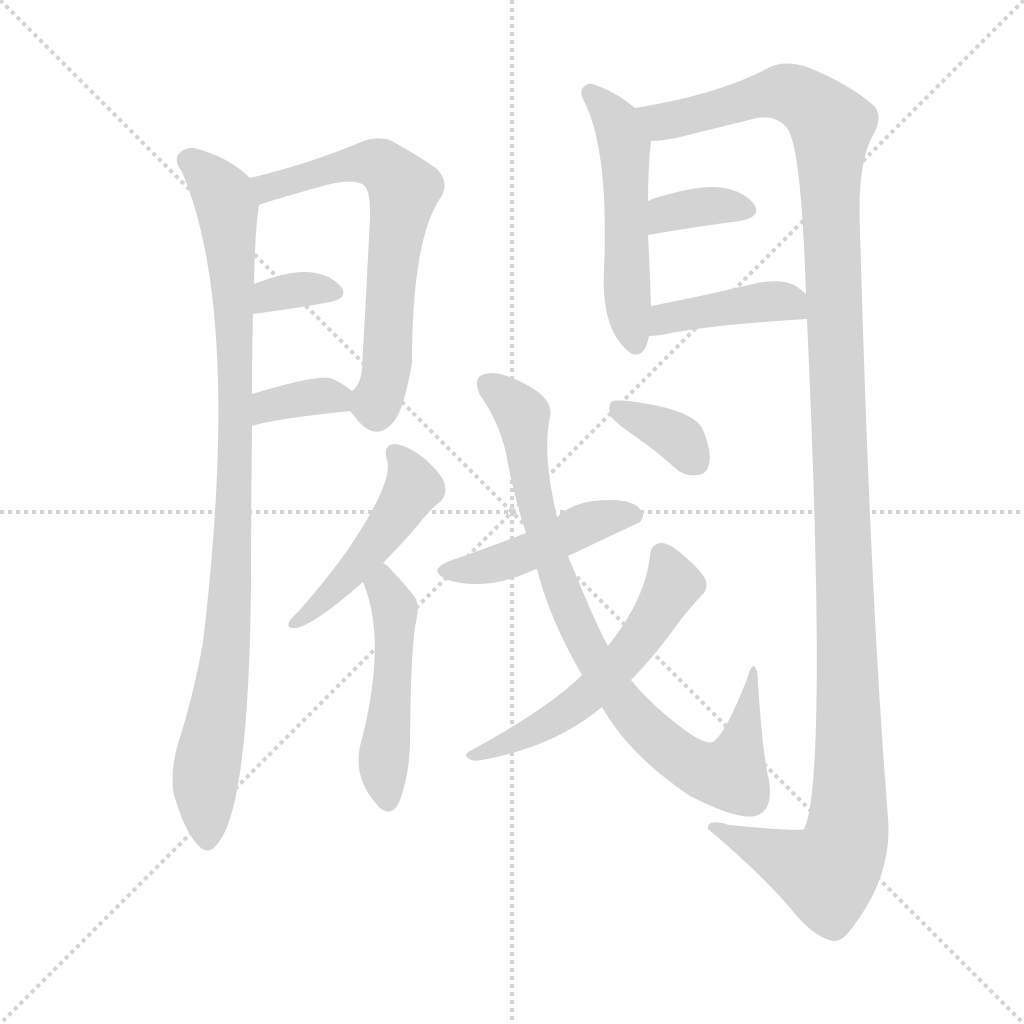
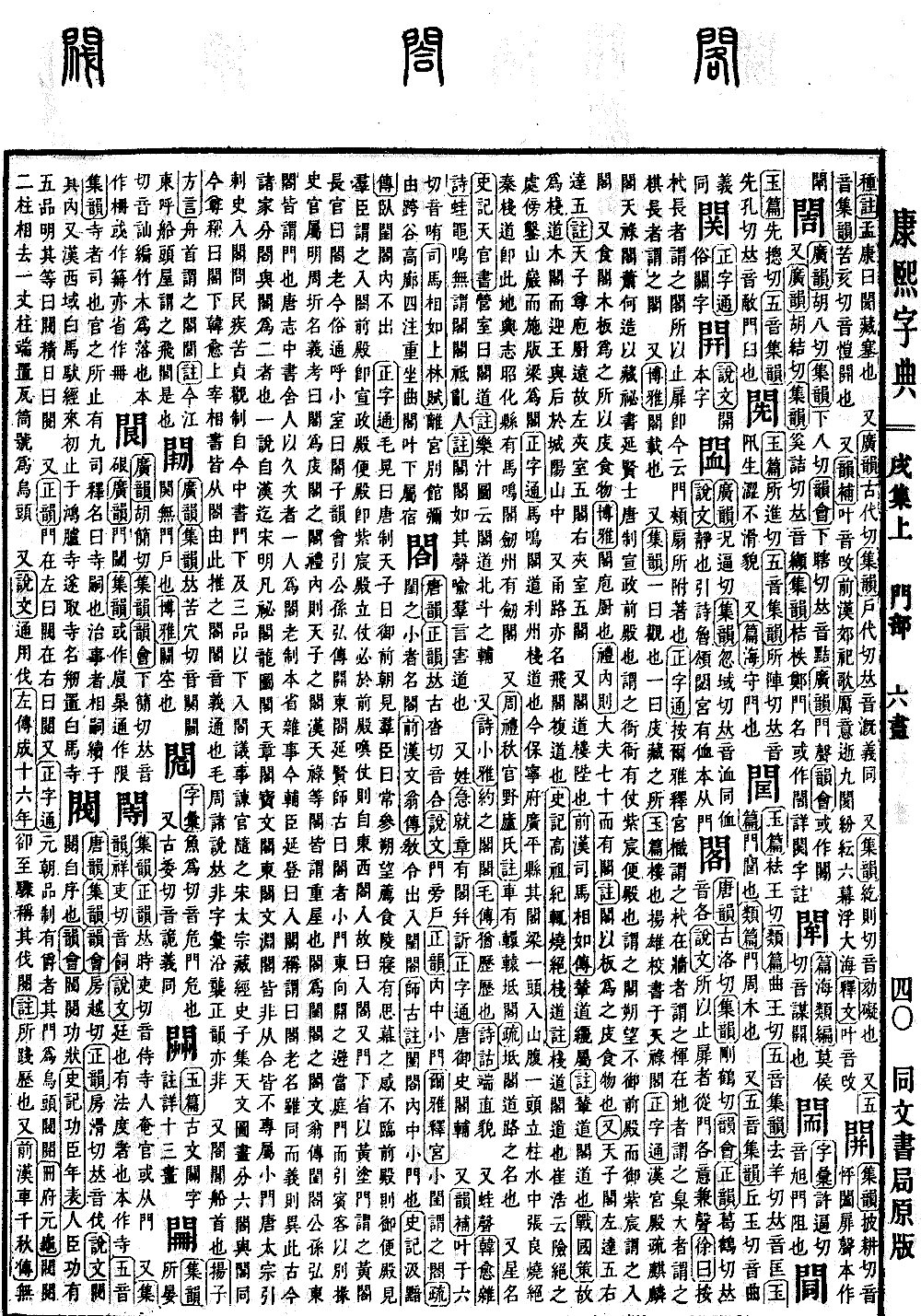
閥
Kangxi stroke count: 14
Page 1334, Entry 19
Pronounced fa
Shuowen Jiezi (Shuowen): Fa-yue refers to an account of one's own meritorious service.
Yunhui: Fa-yue refers to a record of achievements and experience.
Records of the Grand Historian (Shiji), Table of Meritorious Officials: The merits of subjects are divided into five ranks; indicating these ranks is called fa, and the accumulation of qualifications is called yue.
Zheng Yun: A gate on the left is called fa, and on the right is called yue.
Zhengzitong: In the rank system of the Yuan dynasty, the gates of noble families were called wutou fa-yue.
Cefu Yuangui: Fa-yue consists of two pillars spaced one zhang apart, with clay tiles placed atop the pillars, known as wutou.
Shuowen: Commonly used as fa.
Zuo Tradition (Zuo Zhuan), 16th Year of Duke Cheng: Que Zhi repeatedly boasted of his merits.
Du Yu Commentary: Fa means merit.
Book of Han (Qianhan Shu), Biography of Che Qianqiu: Without merit, qualifications, or contributions.
Commentary: Shigu stated: Fa refers to accumulated merit.
Textual Research: Also, Shuowen is used interchangeably with fa. Zuo Tradition, 16th Year of Duke Cheng: Que Zhi repeatedly boasted of his merits and qualifications.
Commentary: Refers to the record of experience. According to the original text, the character yue is deleted, and the original annotation is changed to Du Yu's commentary that fa means merit.