Zi Collection, Page Position: Lower
Radical: Mouth (kǒu)
Page 180, Entry 02
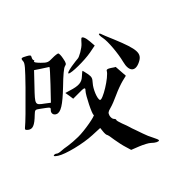
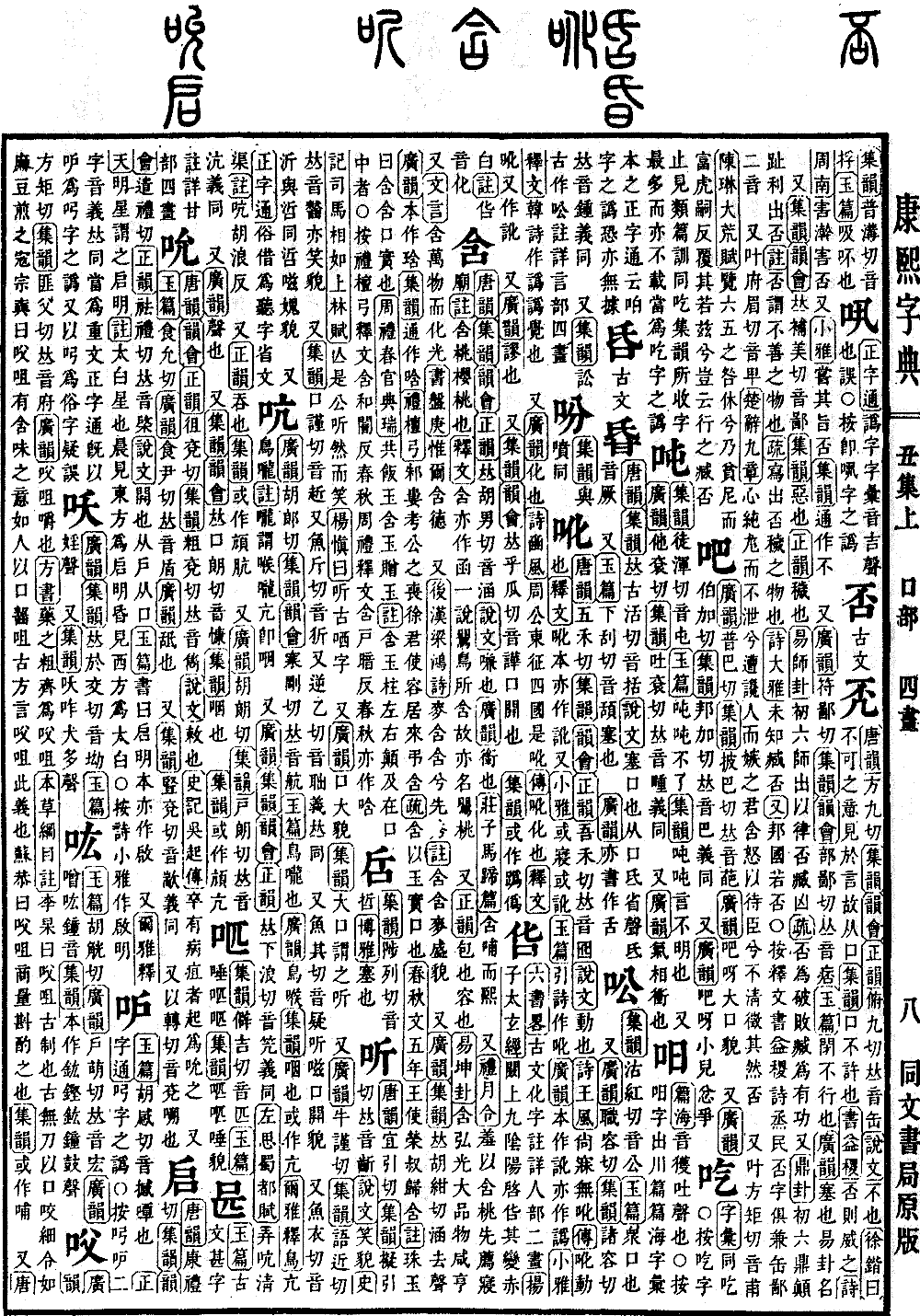
Guangyun (Guangyun) indicates the pronunciation is fu (rising tone). Jiyun (Jiyun) indicates the pronunciation is fu (rising tone), and the sound is the same as fu (rising tone). According to Guangyun, fu means to chew. Records in Fangshu (Fangshu) state that when medicinal materials are roughly cut or broken, it is called fuju. In the Compendium of Materia Medica (Bencao Gangmu) commentary, Li Gao states that fuju is an ancient preparation method. In ancient times, there were no knives, so people used their mouths to bite materials into pieces the size of sesame seeds or beans before decocting them. Kou Zongshi says that fuju carries the sense of tasting with the mouth, similar to how one uses the mouth to gnaw and chew. In ancient dialects, fuju carries this exact meaning. Su Gong states that fuju refers to deliberating and weighing a matter repeatedly. Jiyun notes this character is also written in a variant form (bu).
Furthermore, Tangyun (Tangyun) indicates the pronunciation is fu (rising tone). Jiyun (Jiyun) and Yunhui (Yunhui) indicate the pronunciation is fu (rising tone), and the sound is the same as fu (rising tone).
Furthermore, Jiyun (Jiyun) indicates the pronunciation is fu (rising tone), and the sound is the same as fu (rising tone). The meaning remains the same.