Shen Collection, Lower Volume
Radical: Cover (yà)
Kangxi Strokes: 11
Page 1128, Entry 27
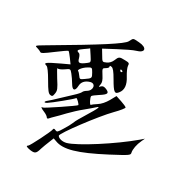
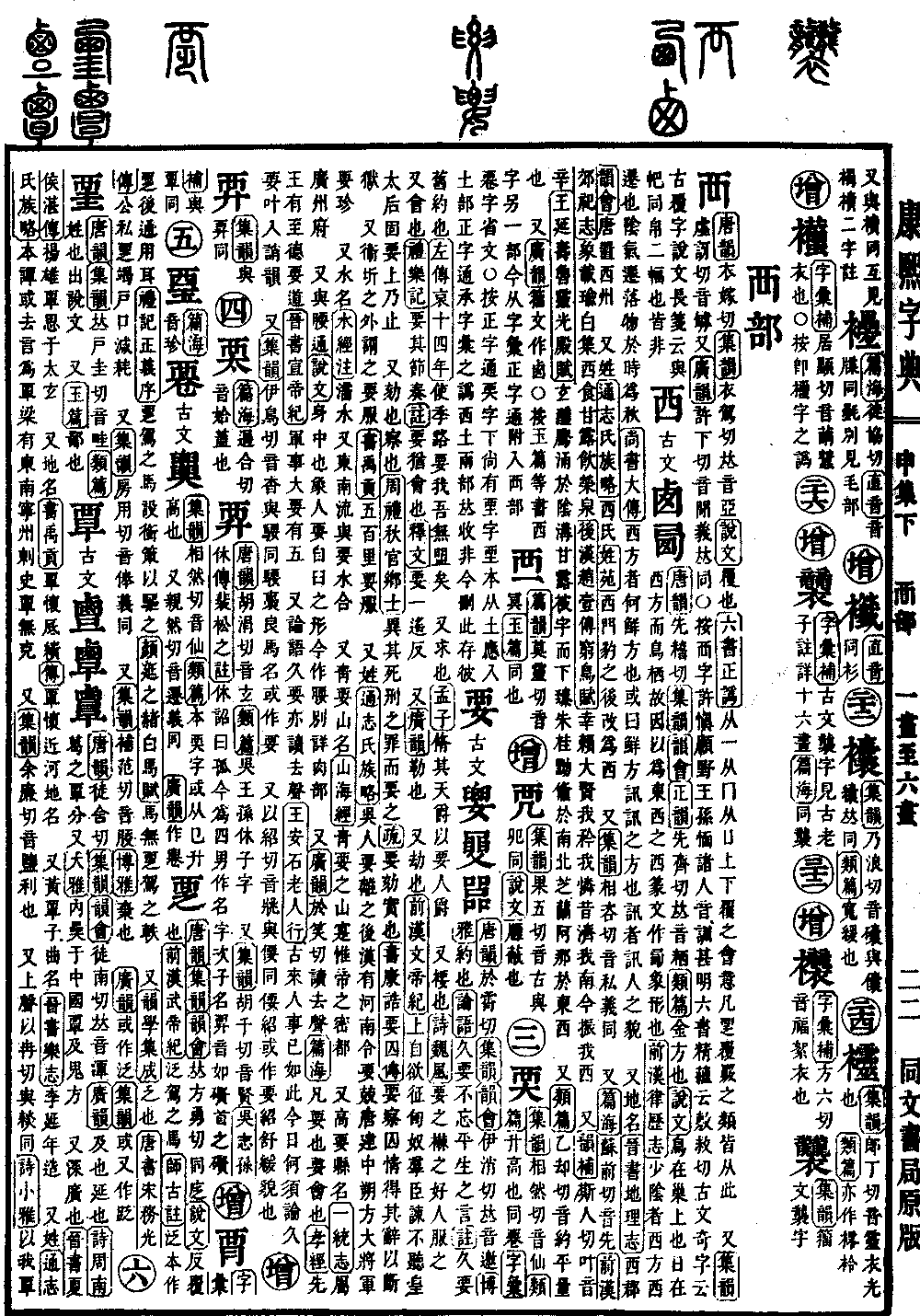
Pronounced fang (falling-rising tone) and yong (falling tone). Same as the character for being overturned. According to the Explanation of Characters (Shuowen), it means to turn over or reverse. In the Annals of Emperor Wu from the History of the Former Han (Qianhan Shu), it refers to a horse that flips its rider. According to the commentary by Yan Shigu, the character was originally written as this entry, but later became used interchangeably. In the Preface to the Correct Meaning of the Book of Rites (Liji Zhengyi), it mentions a horse that flips its rider, and that one must use a bit and whip to drive it. In the Ode to the Red and White Horse by Yan Yanzhi, it mentions a horse without the habit of flipping its rider. Also, according to the Compilation of Rhymes (Yunxue Jicheng), it means to lack or be exhausted. In the Biography of Song Wuguang from the History of the Tang (Tang Shu), it states that public and private resources were exhausted, and households and population decreased. Also, according to the Collection of Rhymes (Jiyun), it is pronounced fang (falling tone) and yong (falling tone), with the same meaning. Also, according to the Collection of Rhymes (Jiyun), it is pronounced fan (falling-rising tone). According to the Erudite Refinements (Boya), it means to abandon. According to the Broad Rhymes (Guangyun), it is sometimes written as the character for floating. According to the Collection of Rhymes (Jiyun), it is also sometimes written as the character for a type of ritual vessel.