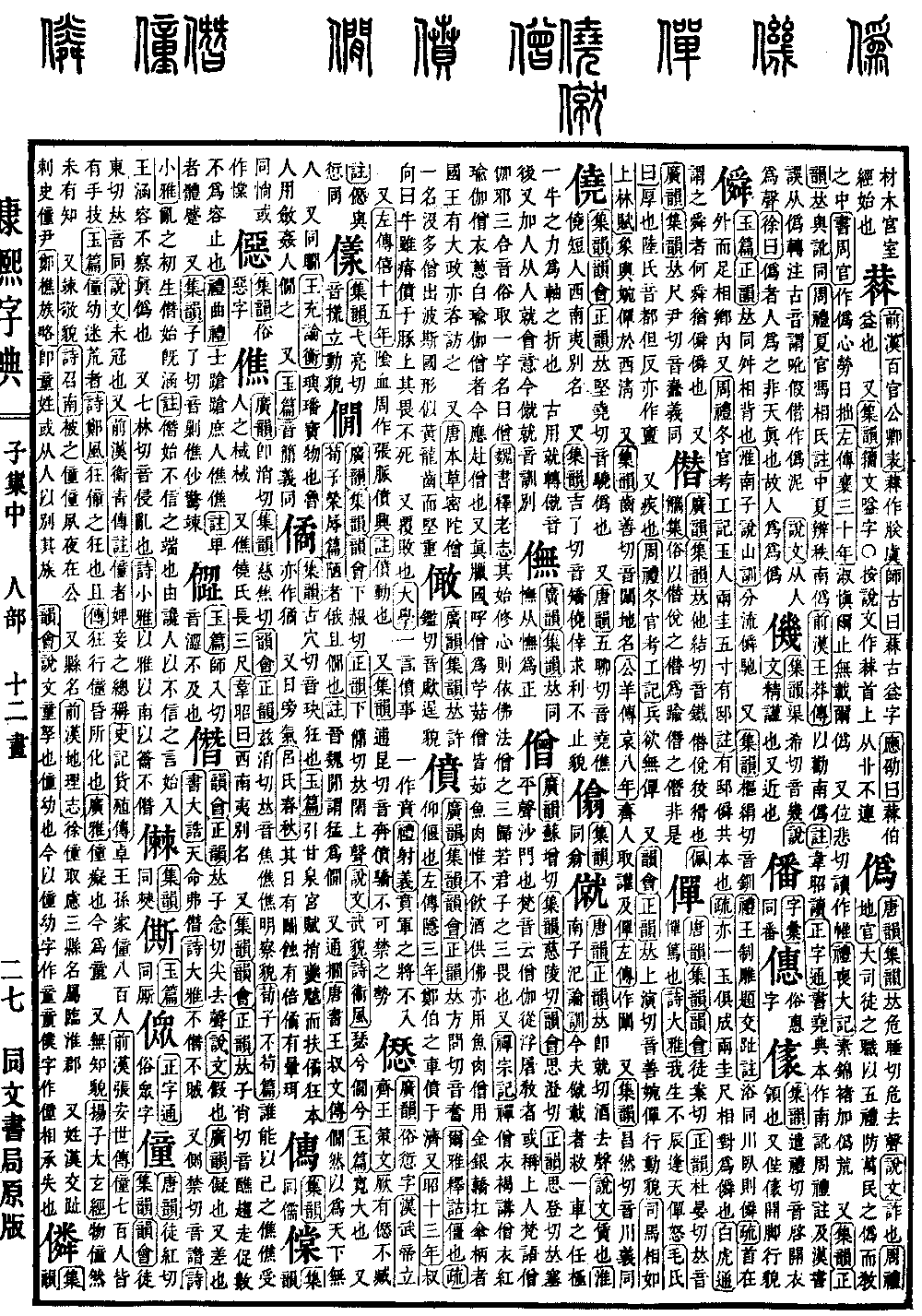
Guangyun, Jiyun, Yunhui, and Zhengyun all provide the pronunciation as fang wen, which is the same as the sound fen. The Erya: Interpretation of Words (Erya) defines it as to fall over. The Commentary further explains it as the act of falling backward. The Zuo Tradition (Zuozhuan), Third Year of Duke Yin, records: The chariot of the Earl of Zheng overturned in the Ji River.
Furthermore, in the Thirteenth Year of Duke Zhao, Shuxiang stated: Even if an ox is lean, if it falls upon a piglet, would the piglet not die?
It also carries the meaning of to overturn or to ruin. The Great Learning (Daxue) states: A single word can ruin a major affair. It is sometimes also written in a variant form (ben). The Book of Rites (Liji), Meaning of Archery, mentions: A general whose army is defeated may not enter.
Additionally, the Zuo Tradition, Fifteenth Year of Duke Xi, records: Dark blood circulates throughout the body, and the veins swell and rise. The Annotation explains: Fen means to move.
Furthermore, Jiyun provides the pronunciation as bu kun, which is the same as the sound ben. It indicates that the character has the aspect of being arrogant and irrepressible. Textual verification: The original text cited Erya: Interpretation of Ancient Words as the source for the definition to fall over; this has been corrected to Interpretation of Words in accordance with the original work.
Page 123, Entry 04