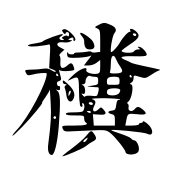
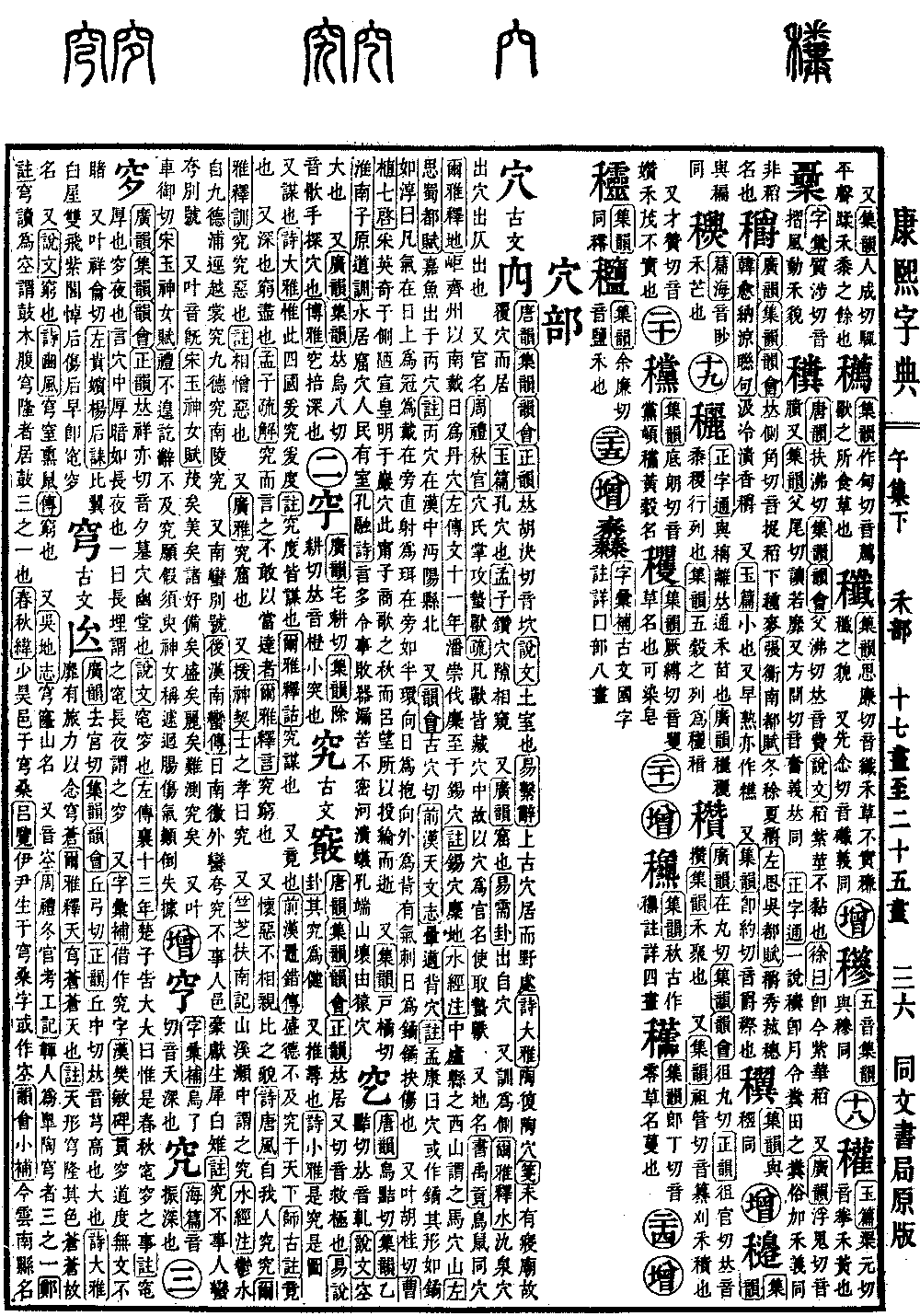
Pronounced fu (falling tone) with the fanqie spelling "fu fei qie" (扶沸切) in the "Tang Yun" (Tang Yun), and pronounced fu (falling tone) with the fanqie spelling "fu fei qie" (父沸切) in the "Ji Yun" (Ji Yun) and "Yun Hui" (Yun Hui), similar to the sound "fei". "Shuowen Jiezi" (Shuowen Jiezi) explains it as a type of rice, with purple stems, and not sticky. Xu Xuan stated that this is what is currently called purple hua rice.
Additionally, the pronunciation in "Guang Yun" (Guang Yun) is fu (falling tone) with the fanqie spelling "fu gui qie" (浮鬼切), similar to the sound "fu".
Furthermore, in "Ji Yun" (Ji Yun), the pronunciation is fu (falling tone) with the fanqie spelling "fu wei qie" (父尾切), similar to the sound "mi", and pronounced fang (falling tone) with the fanqie spelling "fang wen qie" (方问切), similar to the sound "fen". The meaning is the same. "Zhengzitong" (Zhengzitong) offers a view that "䆏" is the character "fen" (粪) in "fertilizing fields" (fen tian) in "Yueling" (Yueling). The common character has been modified with the radical for grain, but the meaning remains the same. It is not a type of rice.