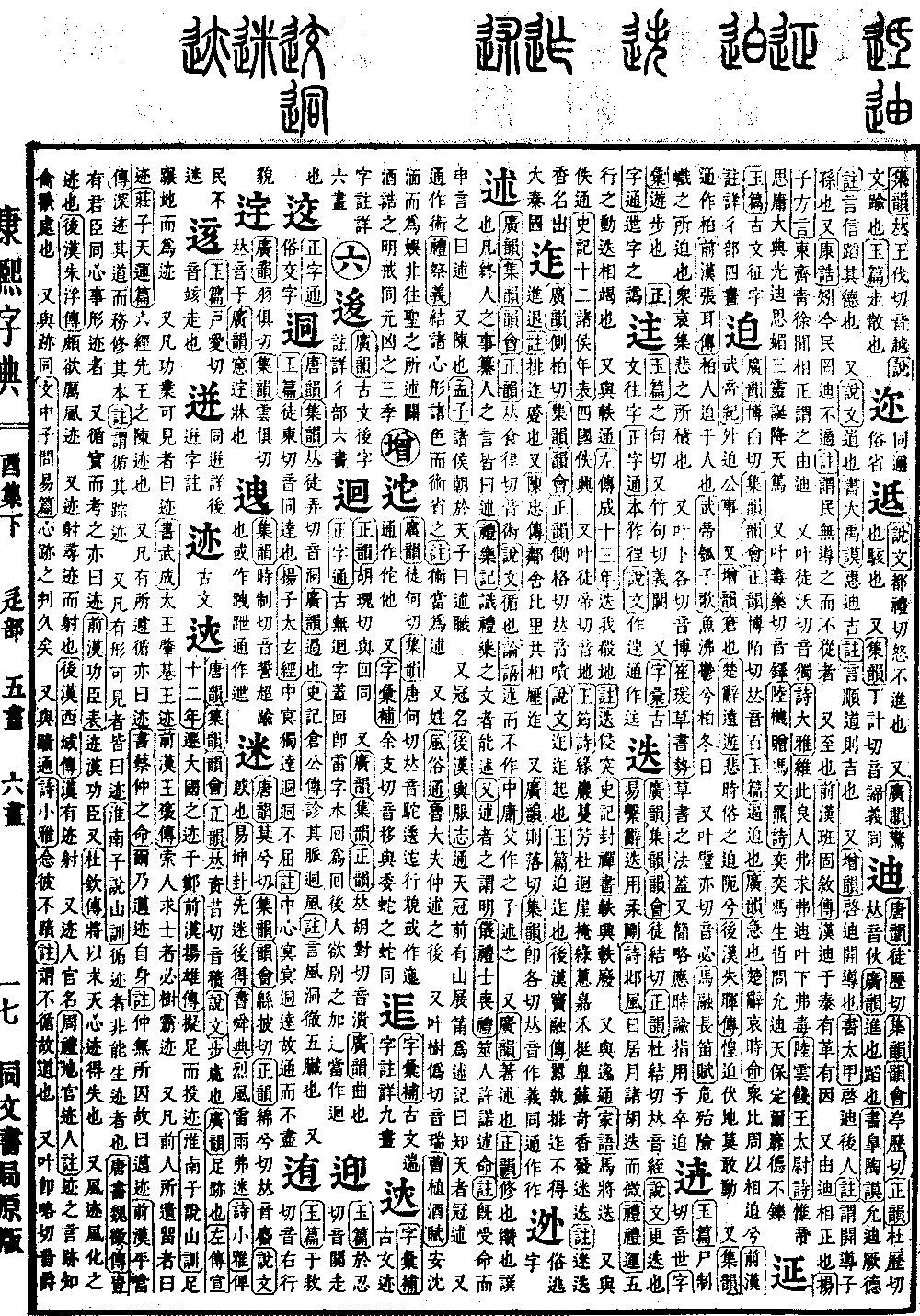
You Collection, Lower Volume
Radical: Dashing (chuò)
Kangxi Strokes: 21
Page 1255, Entry 01
The same as the character for near. It is a simplified vulgar form. The archaic version of this character is as follows. According to the Extensive Dictionary of Sounds (Guangyun), it is pronounced er. According to the Collected Rimes (Jiyun) and the Compendium of Rimes (Yunhui), it is pronounced ren. According to the Corrected Rimes (Zhengyun), it is pronounced ren (rising tone). The pronunciation is the same as the character for you.
Explanation in the Analytical Dictionary of Characters (Shuowen Jiezi): Near.
Book of Documents (Shangshu), Canon of Shun (Shundian): Records that one should pacify those from afar and treat those nearby with kindness.
Book of Odes (Shijing), Zhou Nan: Contains the phrase, your parents are very near to you.
Zuo Tradition (Zuo Zhuan), Seventeenth Year of Duke Wen: Mentions that the State of Cai was in close proximity to the State of Chu.
It is also used as a phonetic loan for the character for you. Book of Odes (Shijing), Greater Odes (Daya): Contains the phrase, do not estrange, treat all as near. A commentary explains the character for you as near.
Book of Etiquette and Ceremonial (Yili), Banquet Rites (Yanli): Records that the ruler faces south, allowing the high ministers to move near; the high ministers face west, using the north as the superior position, allowing the grand masters to move near. A commentary explains that this refers to moving one's position closer through the act of bowing.
The Analytical Dictionary of Characters (Shuowen Jiezi) also records a variant form, which is the simplified vulgar form. The character is composed of the radical for arrival.
Research on the character: Zuo Tradition (Zuo Zhuan), Seventeenth Year of Duke Wen: Regarding the phrase, the close proximity of Chen and Cai. Note: According to the original text, the two characters for at Chu were added after the character for near.