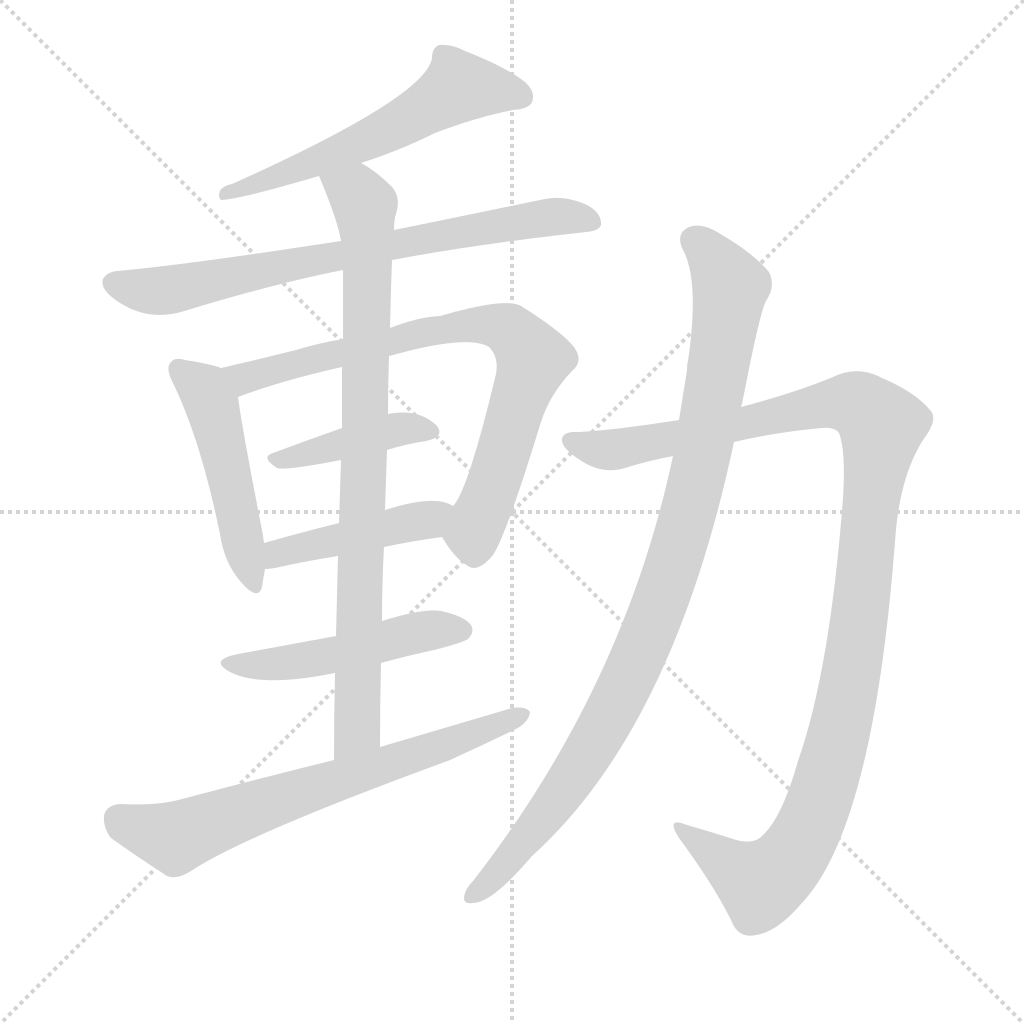
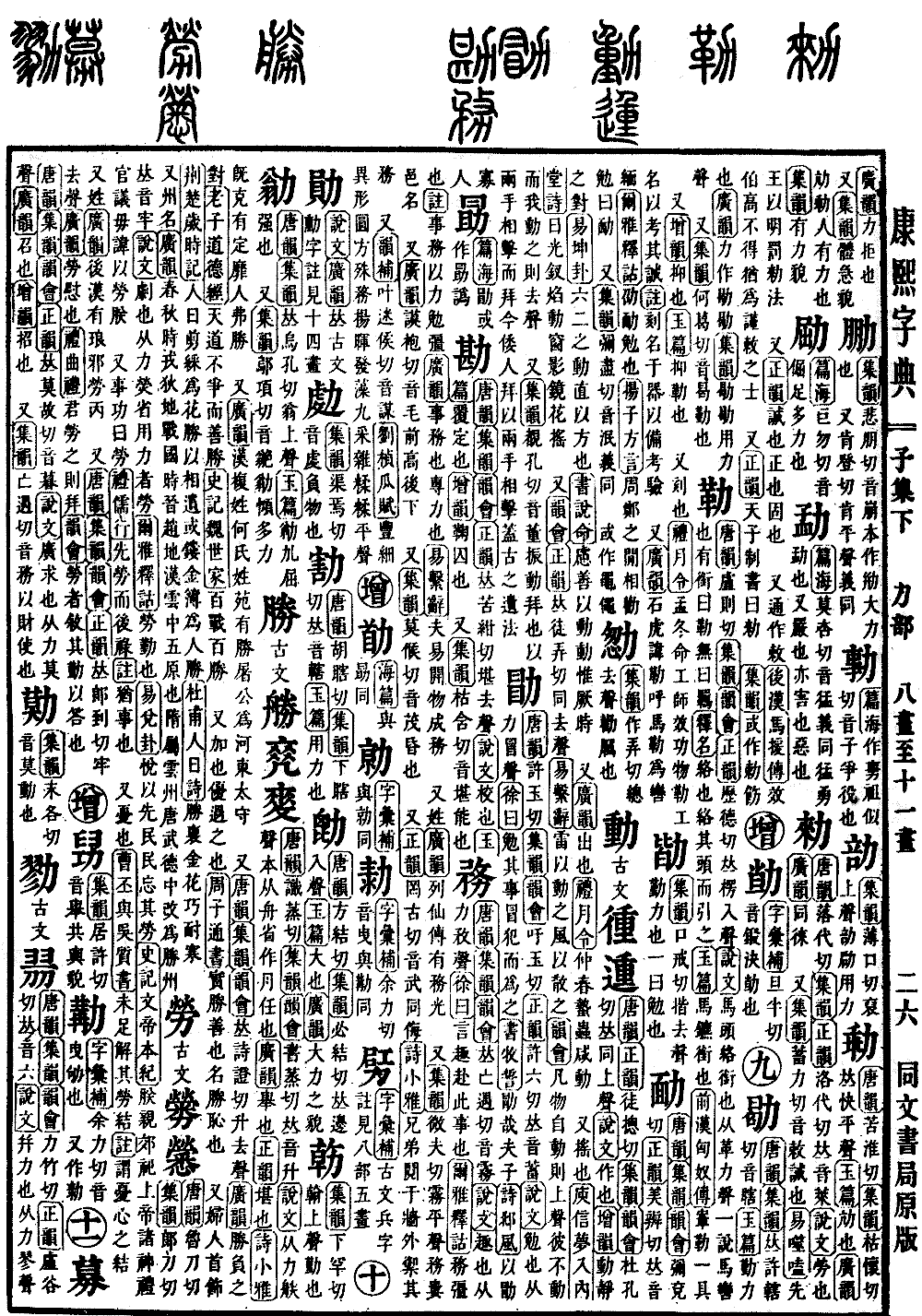
Zi Collection, Page Position: Lower. Radical: Power (lì). Dòng. Kangxi Strokes: 11. Page: 148, Entry 14.
According to ancient phonological sources, in the Tangyun (Tángyùn) and Zhengyun (Zhèngyùn), it is pronounced 'tú zǒng qiè'. In the Jiyun (Jíyùn) and Yunhui (Yùnhuì), it is pronounced 'dù kǒng qiè', both in the rising tone.
The Shuowen Jiezi (Shuōwén Jiězì) explains it as: to act, to move.
The Zengyun (Zēngyùn) explains it as: to move is the opposite of stillness.
The Book of Changes (Yìjīng), Kun Hexagram (Kūnguà) says: The actions of the second line are upright and square.
The Book of Documents (Shàngshū), 'Saying on the Charge' says: Consider thoroughly before acting; actions must choose the appropriate time.
Also, the Guangyun (Guǎngyùn) explains it as: to emerge, to appear.
The Book of Rites (Lǐjì), 'Monthly Ordinances' records: In mid-spring, hibernating insects all begin to stir.
Also explained as: to shake, to sway.
Yu Xin's 'Poem of Dreaming of Entering the Inner Hall' writes: Under the sunlight, the luster of hairpins and bracelets sways; within the window's shadow, the flowers in the mirror tremble.
Also, in the Yunhui (Yùnhuì) and Zhengyun (Zhèngyùn), it is pronounced 'tú nòng qiè', in the departing tone.
The Book of Changes (Yìjīng), 'Appended Remarks' says: Thunder is used to stir all things, wind is used to disperse all things.
The Yunhui (Yùnhuì) explains: Whenever an object moves by itself, it is pronounced in the rising tone. If the other party is still and I make it move, it is pronounced in the departing tone.
Also, in the Jiyun (Jíyùn), it is pronounced 'dǔ kǒng qiè', with the same sound as 'dǒng'. It means to vibrate, referring to a form of bowing ceremony, performed by striking the hands together. The Japanese now strike their hands together when bowing, which is likely a method passed down from antiquity.