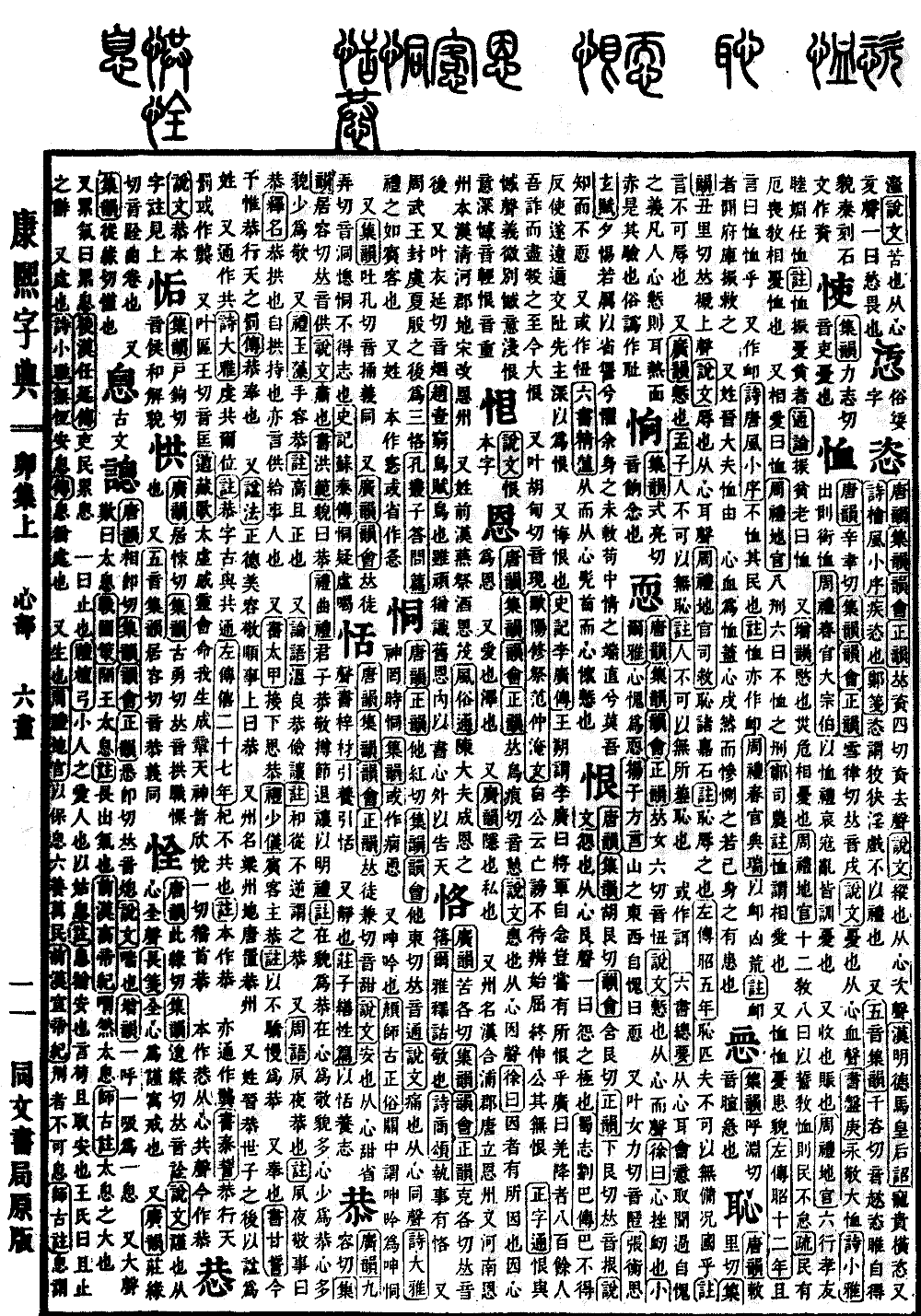
Mao Collection, Upper Volume
Radical: Heart (xīn)
恫
Kangxi stroke count: 10
Page 385, Entry 13
Pronounced tong.
According to the Explaining Graphs and Analyzing Characters (Shuowen Jiezi), it means pain. It is formed from the heart radical with the sound provided by the component meaning same.
In the Book of Odes (Shijing), in the Greater Odes section, it is stated: The spirits do not suffer such pain.
According to the Collected Rhymes (Jiyun), it is sometimes written in the variant form tong. It also refers to moaning.
According to Yan Shigu in Correcting Customs (Zhengsu), in the region of Guanzhong, moaning is referred to as shen-tong.
Also, according to the Collected Rhymes (Jiyun), pronounced tong. The meaning is the same.
Also, according to the Extensive Dictionary of Rhymes (Guangyun) and the Collection of Rhymes (Yunhui), pronounced dong. Used in the term cong-dong, referring to an appearance of being discouraged or frustrated.
In the Records of the Grand Historian (Shiji), Biography of Su Qin: To intimidate with empty threats.