You Collection, Lower Volume
Radical: Walk (chuò)
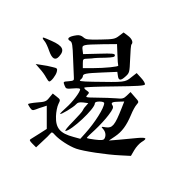
Character: tang
Kangxi Strokes: 16
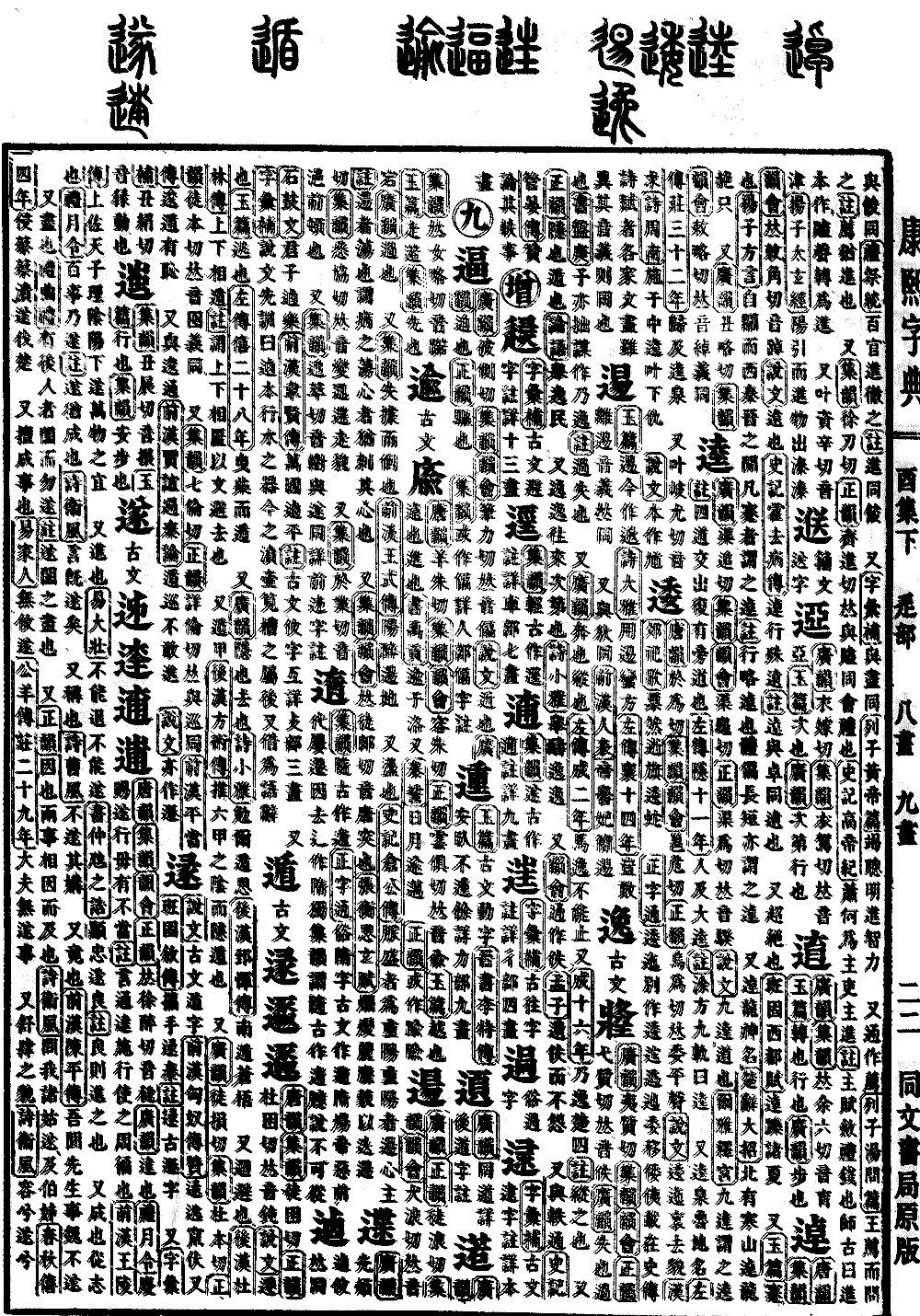
Page 1260, Entry 22
Pronounced dang (falling tone).
Broad Rhymes (Guangyun) and Correct Rhymes (Zhengyun) define it as passing through or crossing over.
Also, Collected Rhymes (Jiyun) defines it as falling due to losing one's support.
In the Biography of Wang Shi from the History of the Former Han (Qianhan Shu), it refers to pretending to be drunk and falling to the ground.
Also, it means to impact or to oscillate.
In the Biography of Master Cang from the Records of the Grand Historian (Shiji), it is written: The pulse being strong is called heavy yang, and heavy yang will impact the heart. The commentary states: Tang means to oscillate. This refers to the disease impacting the heart, as if piercing the heart.
Pronounced tang (level tone).
To collide or to advance suddenly.
In the Rhapsody on Thinking (Si Fu) by Zhang Heng, it describes the light as magnificent, brilliant, and elegant, stretching far and continuing without end.
Textual Research:
In the Records of the Grand Historian (Shiji), Biography of Master Cang, the text reads: The pulse being strong is called heavy yang, and heavy yang is that which tang the heart master. The commentary states: Tang means to oscillate. This refers to the disease oscillating the heart, like piercing the heart. I have carefully corrected the omitted character based on the commentary.
In the Rhapsody on Thinking (Si Yuan Fu) by Zhang Heng, the text reads: Magnificent, brilliant, and elegant, stretching far and continuing to tang. I have carefully corrected the character man in accordance with the original text.