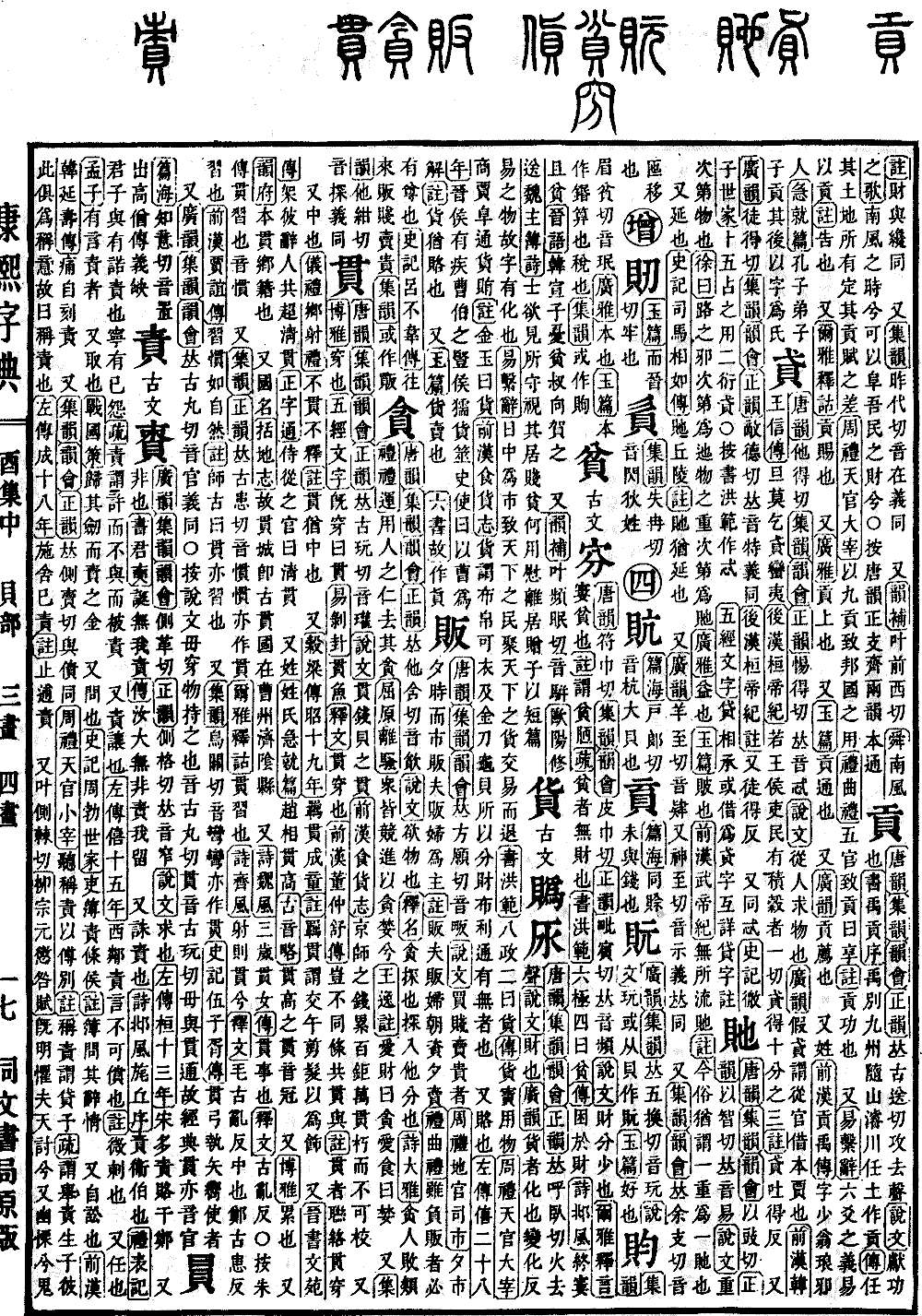
You Collection, Middle Volume
Radical: Cowrie (bèi)
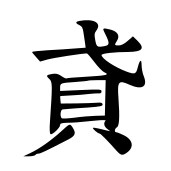
Character: Tuo
Kangxi Stroke Count: 10
Page 1205, Entry 02
Pronounced te.
According to the Explaining Graphs and Analyzing Characters (Shuowen Jiezi), it refers to requesting or taking items from others.
According to the Extensive Rhymes (Guangyun), it means to borrow, referring to taking capital from government offices to conduct business.
Book of Han (Hanshu), Biography of King Xin of Han: Morning and evening, begging and borrowing from the barbarians.
Book of the Later Han (Houhanshu), Annals of Emperor Huan: If princes, marquises, officials, or common people have accumulated grain, it is permitted for all to borrow three tenths of it. Commentary states: Tuo is pronounced tu de (falling tone).
Also, according to the Extensive Rhymes (Guangyun), pronounced te. Meaning is the same.
Book of the Later Han (Houhanshu), Annals of Emperor Huan, Commentary: Also pronounced tu de (falling tone).
Also synonymous with te (error). Records of the Grand Historian (Shiji), Hereditary House of the Count of Wei: Used five methods of divination, among which two deductions were in error. Note: In the Book of Documents (Shangshu), Great Plan (Hongfan) chapter, it is written as te.
Text of the Five Classics (Wujing Wenzi): The character for loan (dai) is traditionally sometimes used interchangeably with the character for tuo. Please refer to the entry for the character for loan (dai) for cross-reference.