Yin Collection, Middle Volume
Radical: Mountain (shān)
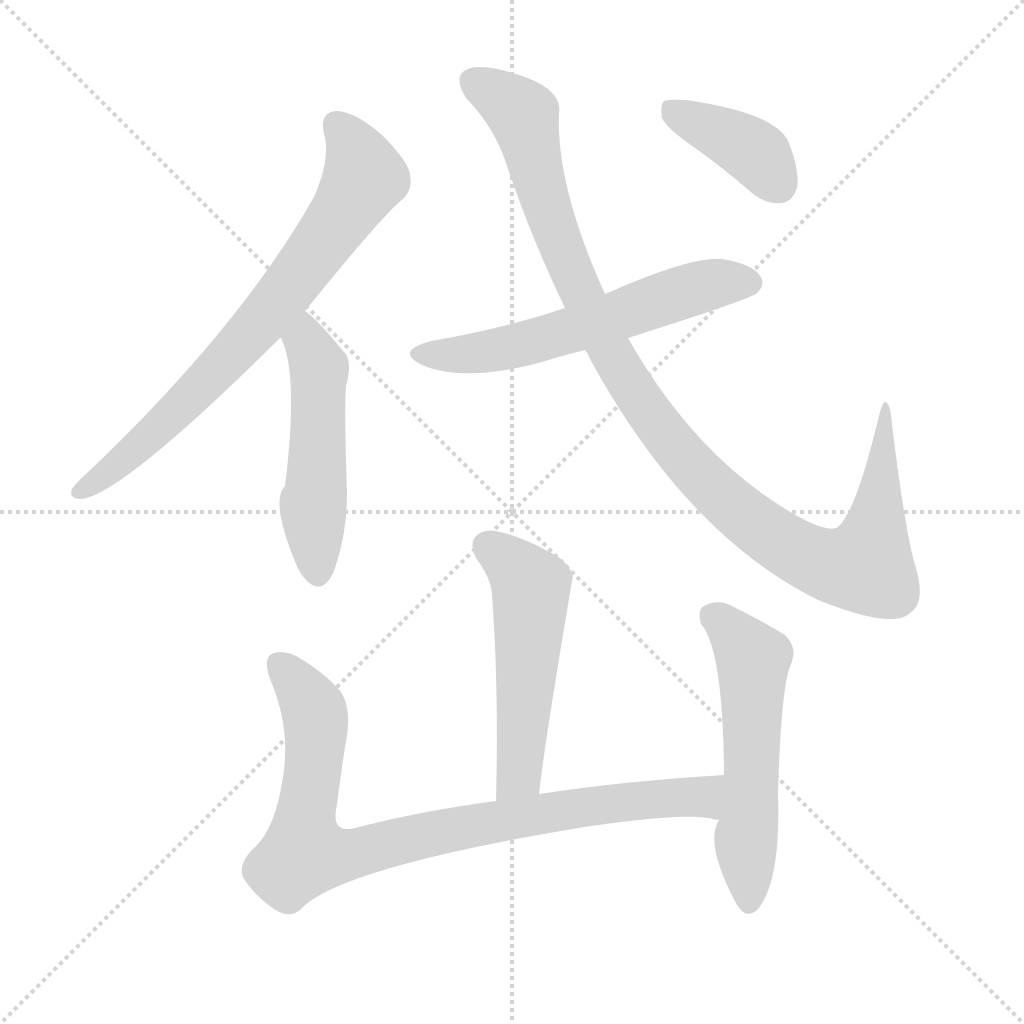
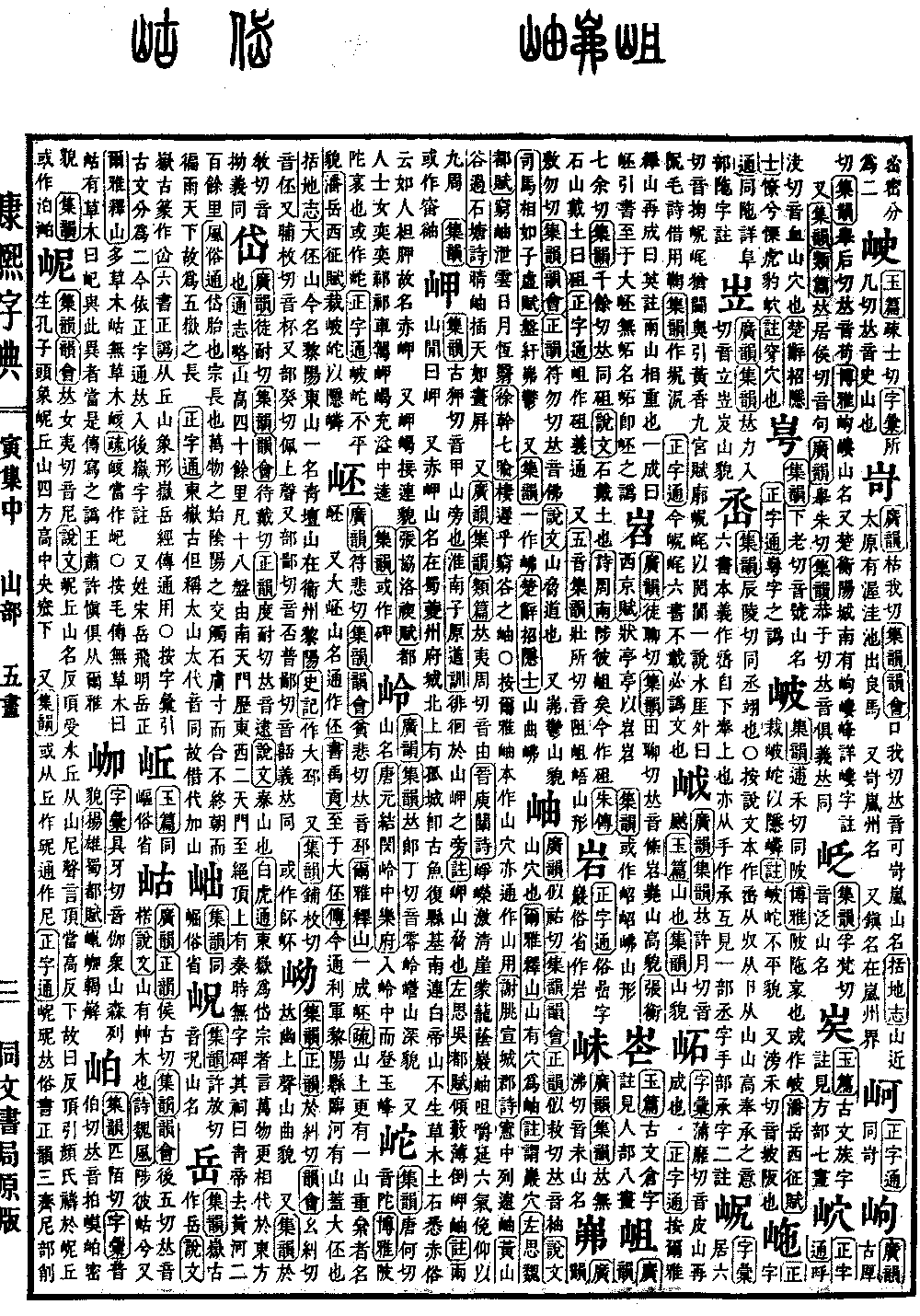
Dai
Kangxi strokes: 8
Page 309, Entry 28
Pronounced dai (falling tone)
According to the Explaining Graphs and Analyzing Characters (Shuowen Jiezi), it refers to Mount Tai.
According to the Comprehensive Discussions in the White Tiger Hall (Baihu Tong), the Eastern Peak is called Dai Zong, meaning that all things alternate and replace one another in the east.
According to the Comprehensive Treatises (Tongzhi Lue), the mountain is over forty miles high, with eighteen winding mountain paths leading from the South Heaven Gate through the East and West Heaven Gates to the highest peak. There is a blank stele dating from the Qin Dynasty, and the temple is called the Azure Emperor Temple, located two hundred miles from the Yellow River.
According to the Comprehensive Customs (Fengsu Tong), Dai signifies gestation. Zong signifies an elder or honored one. This is the origin of all things and the place where yin and yang intersect; when clouds touch the mountain rocks, they gather as soon as they are an inch thick, and in less than a morning, they can cause rain to fall across the world, which is why it is the chief of the Five Sacred Peaks.
According to the Correct Meaning Mastered (Zhengzitong), in ancient times the Eastern Peak was only called Mount Tai. Because Tai and Dai share the same pronunciation, the character Dai was borrowed and the mountain radical was added.