Chou Collection, Lower Volume
Radical: Woman (nǚ)
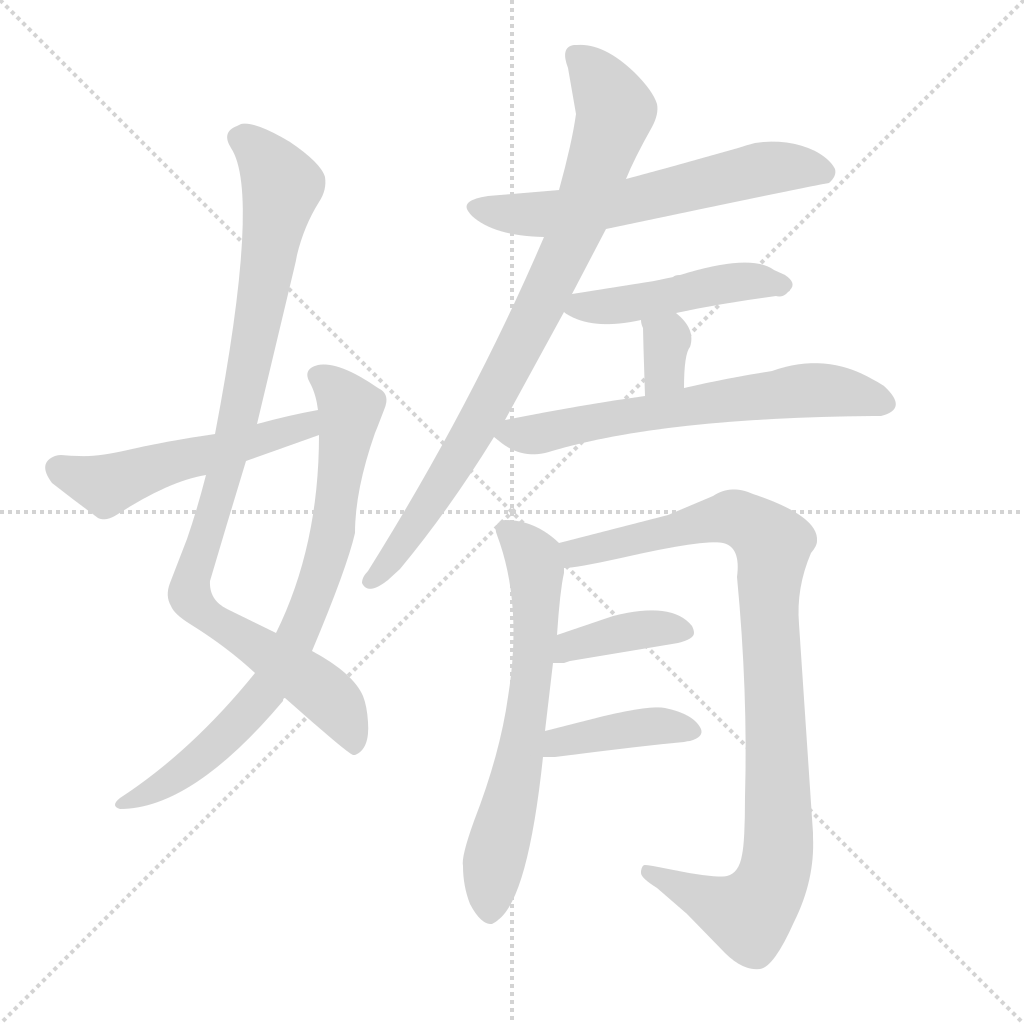
Character: Tuo
Kangxi stroke count: 12
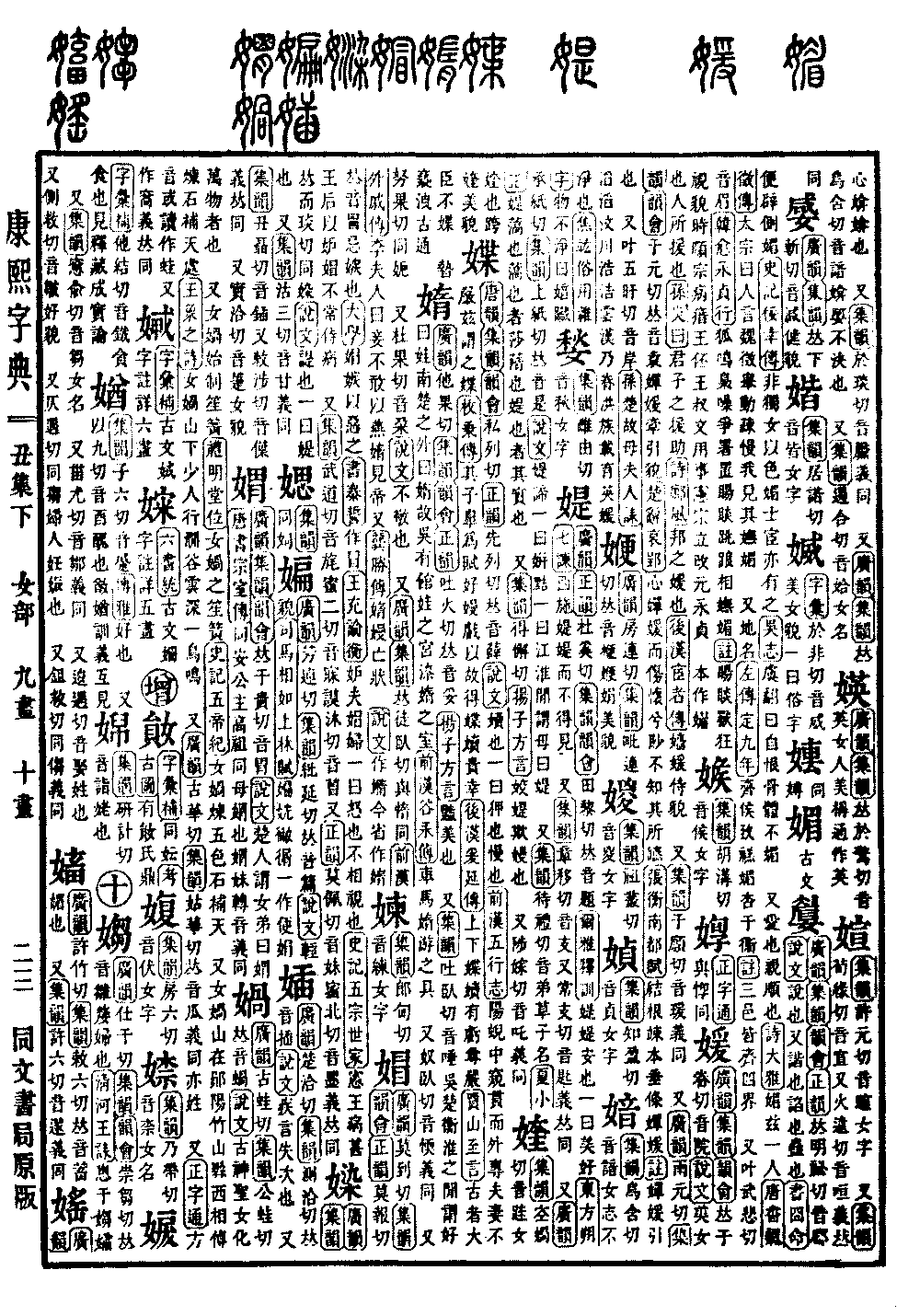
Page 267, Entry 20
Pronounced tuo.
Broad Rimes (Guangyun): Pronounced tuo. Gathered Rimes (Jiyun), Rime Compendium (Yunhui), and Orthodox Rimes (Zhengyun): Pronounced tuo.
From the Yangzi dialect dictionary (Fangyan): Signifies a beautiful appearance.
Also, according to the Gathered Rimes (Jiyun): Pronounced tuo. In the regions of Wu, Chu, Heng, and Huai, to say something is beautiful is referred to as wa, while beyond southern Chu it is referred to as tuo. Thus, in the state of Wu, there is the Palace of the Beautiful Wa and the Chamber of the Lacquered Tuo.
From the History of the Former Han (Qianhan shu), Biography of Gu Yong: Refers to the trappings of carriages and horses used for pleasure and idle travel.
Also pronounced nuo. Same meaning.
Also pronounced duo.
According to the Explaining Graphs and Analyzing Characters (Shuowen jiezi): Signifies a lack of respect.
Also, according to the Broad Rimes (Guangyun) and Gathered Rimes (Jiyun): Pronounced duo. Equivalent to lazy.
From the History of the Former Han (Qianhan shu), Biography of the Consorts: Consort Li stated, I would not dare to see the Emperor in a state of idle disarray.
Also, from the Biography of Gong Sheng: Idle, arrogant, and without proper form.
According to the Explaining Graphs and Analyzing Characters (Shuowen jiezi), it is written as the variant form tuo. It is now simplified as tuo.