Zi Collection, Page Position: Lower
Radical: Knife (dāo)
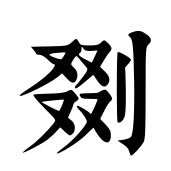
Cì
Kangxi Stroke Count: 10
Page 141, Entry 28
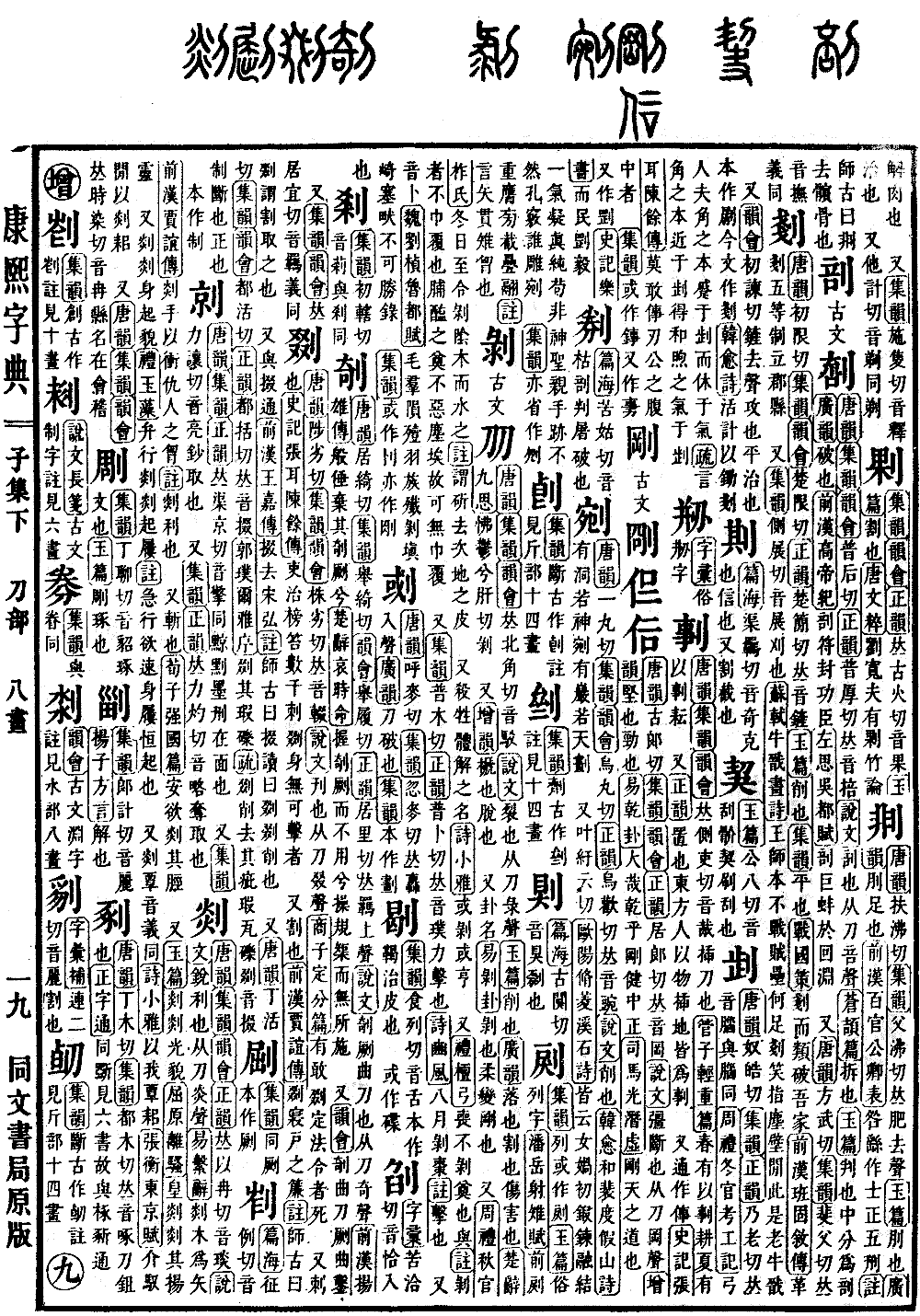
Pronounced zhuó (falling tone) — Zhì liè cut, Zhū liè cut. Meaning: To carve. From "dāo" (knife), with "zhuó" as the phonetic component. Example: "Those who dare to carve and fix the laws shall die." — Shāngzǐ, Chapter on Fixing Divisions. Also means to stab. Example: "Officials punished with rods and whips, thousands of stabs and cuts, leaving no part of the body unstricken." — Shǐjì, Biography of Zhāng Ěr and Yú. Also means to cut off. Example: "Cut off the curtains of the sleeping quarters." — Qiánhàn, Biography of Jiǎ Yì. Annotation by Shī Gǔ: "Cì means to cut off." Also interchangeable with "duō". Example: "Removed Sòng Hóng." — Qiánhàn, Biography of Wáng Jiā. Annotation by Shī Gǔ: "Duō is read as cì. Cì means to cut."
Pronounced duō (falling tone) — Dīng huó cut, Dū huó cut, Dū kuò cut. Meaning: To pick up or remove. Example: "Remove the pebbles and debris." — Guō Pú, Preface to Ěryǎ. Explanation: "Cì means to remove flaws and debris." Cì is pronounced duō.