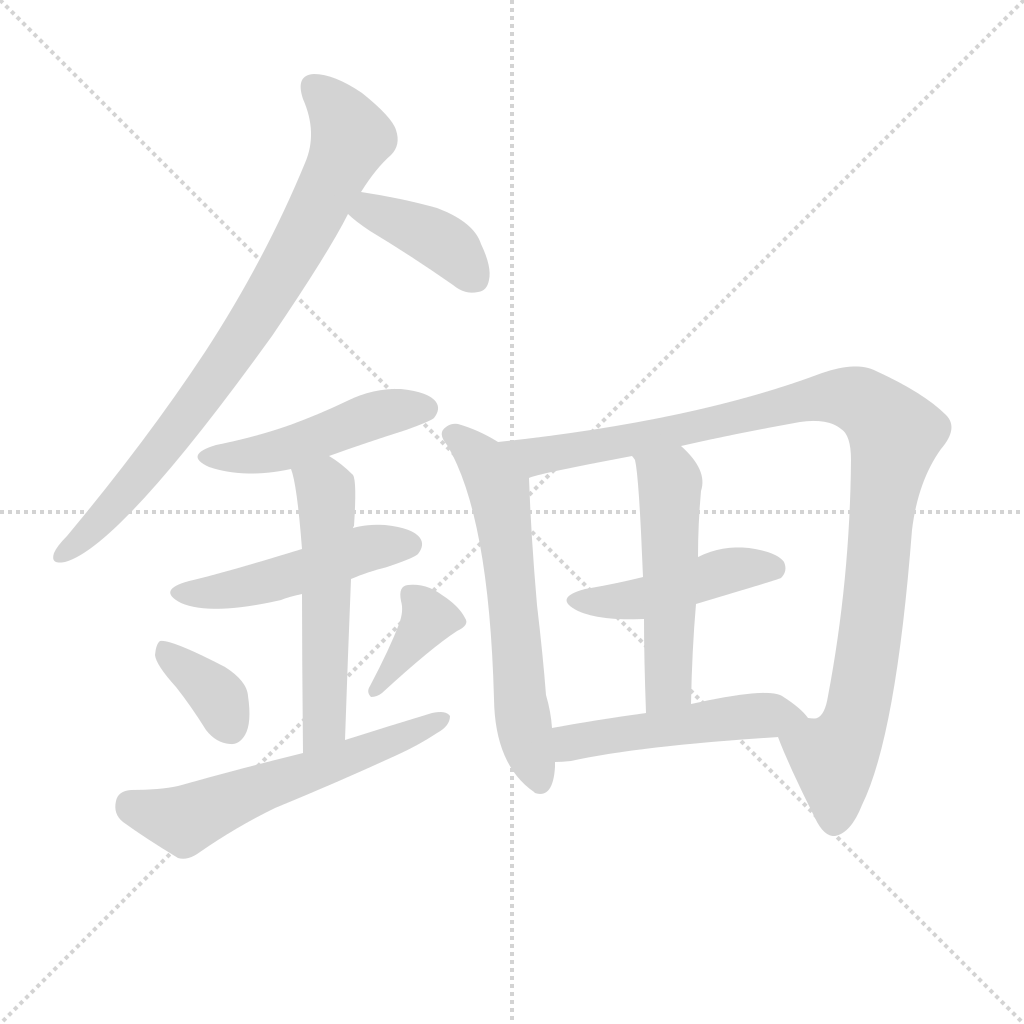
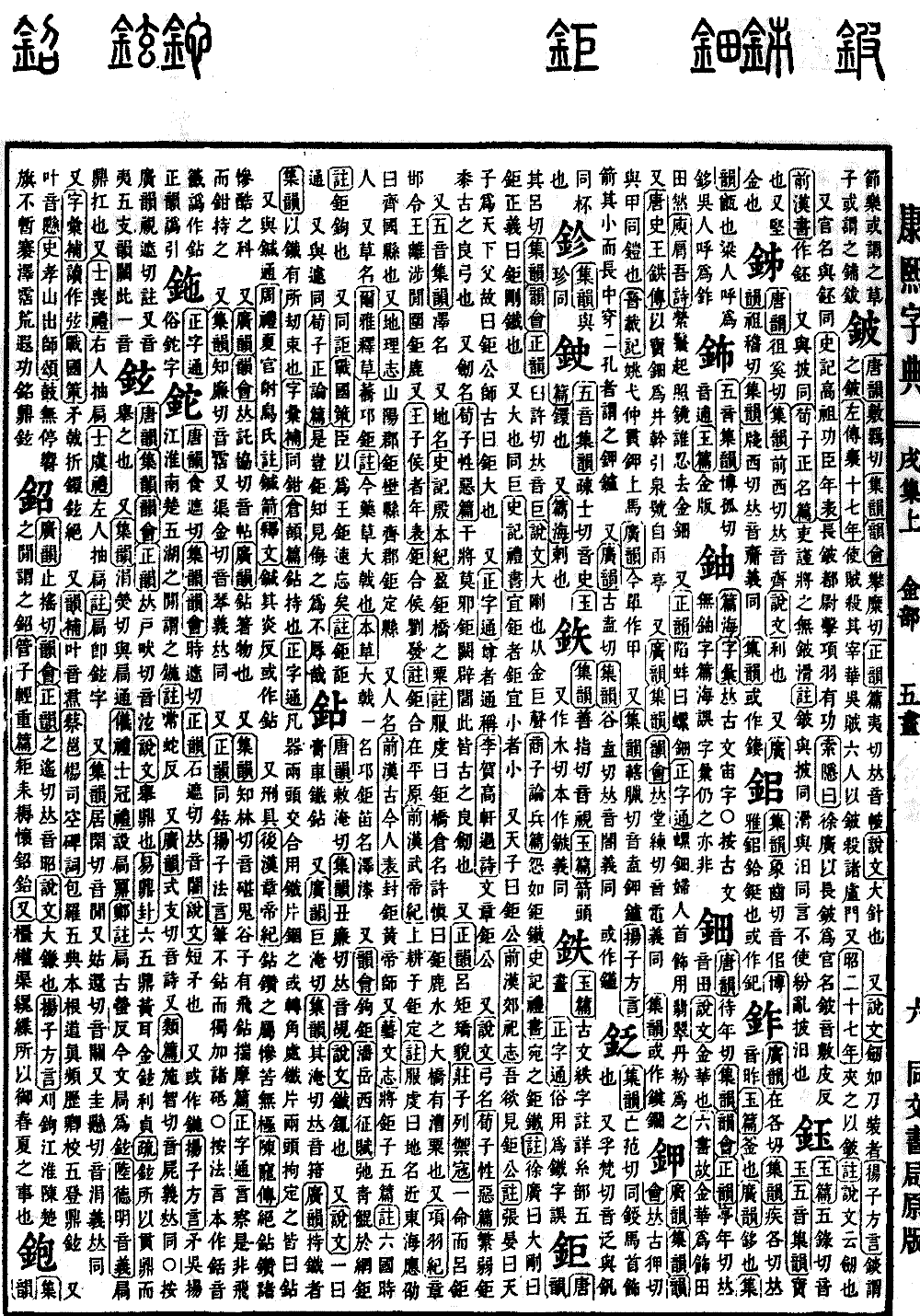
Xu Collection, Upper Volume
Radical: Metal (jīn)
Dian
Kangxi strokes: 13
Page 1300, Entry 08
According to the Tang Dynasty Rhyme Dictionary (Tangyun), pronounced tian; according to the Collected Rhymes (Jiyun), the Rhyme Collection (Yunhui), and the Correct Rhymes (Zhengyun), pronounced tian.
According to the Explaining Graphs and Analyzing Characters (Shuowen), it refers to gold ornamentation. According to the Essential Origins of the Six Writings (Liushugu), it describes gold ornamentation as appearing densely clustered.
In the poetry of Yu Jianwu: With hair gathered in tufts like horns while looking into a mirror, who could bear to remove the golden hairpins.
According to the Correct Rhymes (Zhengyun), inlaying shells is called luodian.
According to the Correct Meaning of Characters (Zhengzitong), luodian refers to women's head ornaments, made using kingfisher feathers and vermilion powder.
According to the History of the Tang Dynasty (Tangshi), Biography of Wang Hong, the term refers to the use of precious ornaments to create a well-frame structure for drawing water, known as the Self-Rain Pavilion.
According to the Broad Rhymes (Guangyun), the Collected Rhymes (Jiyun), and the Rhyme Collection (Yunhui), pronounced dian. The meaning is the same.
According to the Collected Rhymes (Jiyun), it is also written in a variant form.