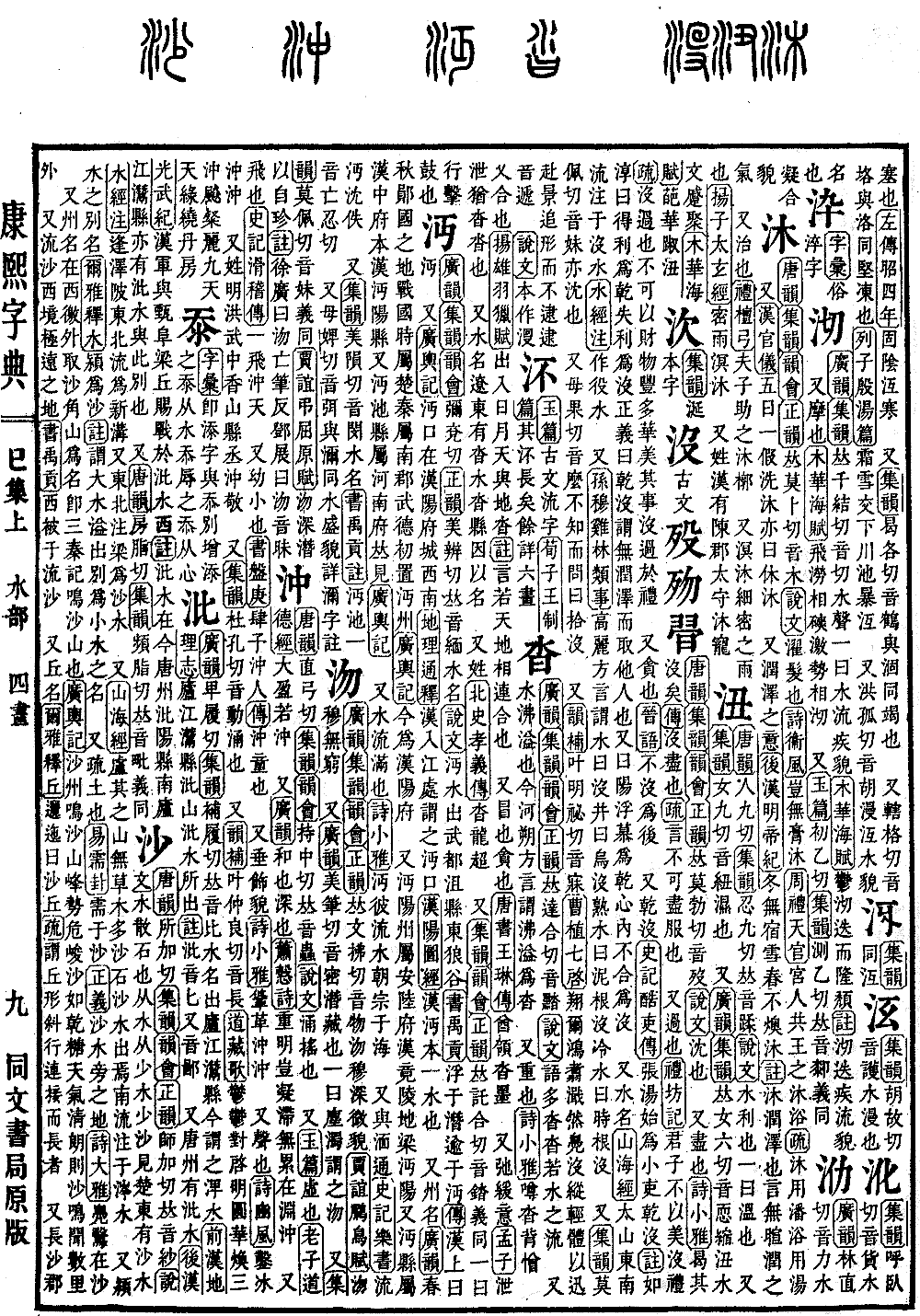
Si Collection, Upper Volume
Radical: Water (shuǐ)
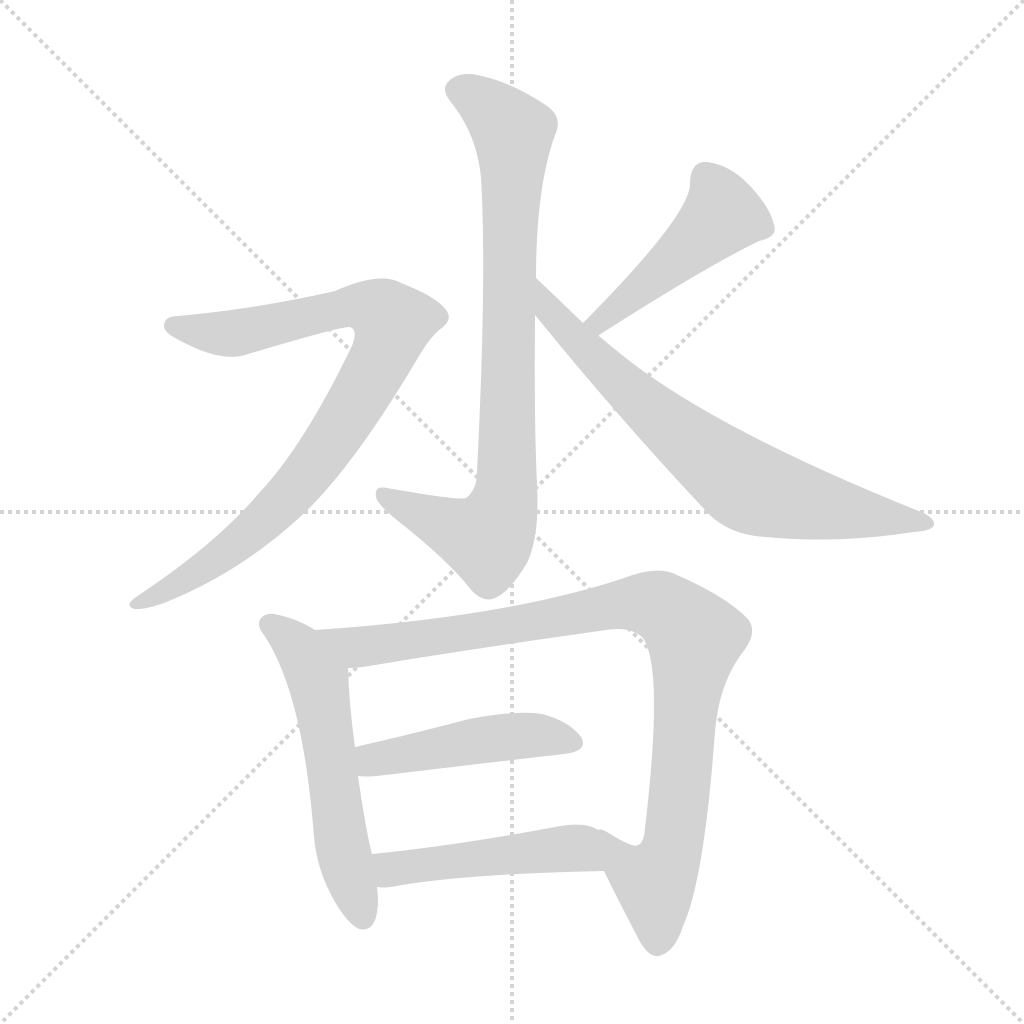
Da
Kangxi strokes: 17
Page 611, Entry 15
Pronounced da
According to the Explaining Graphs and Analyzing Characters (Shuowen Jiezi), it refers to speaking much and continuously, like flowing water. It also refers to water boiling and overflowing. In current dialects of the Hebei region, boiling and overflowing are called da. It also means to repeat or overlap. As cited in the Book of Odes (Shijing), Xiaoya: To congregate and agree to one's face, while hating one another behind one's back. It also denotes meeting or connecting. As cited in the Feather Hunt Rhapsody (Yulie Fu) by Yang Xiong: Passing in and out between the sun and the moon, heaven and earth connected. The commentary explains this as heaven and earth joining and meeting. It also denotes greed or covetousness. In the History of Tang (Tangshu), Biography of Wang Lin: The tribal leaders were greedy and muddled. It also denotes laxity or slowness. As cited in Mencius (Mengzi): Laxity is like being da. It is also the name of a river. There is a Da River in Liaodong, and Da County derives its name from this water. It is also a surname. As cited in the History of Northern Dynasties (Beishi), Biography of Filial Piety: Da Longchao.
Pronounced ta
The meaning is the same as above. One interpretation suggests it refers to beating drums while marching.