Si Collection, Upper Volume
Radical: Water (shuǐ)
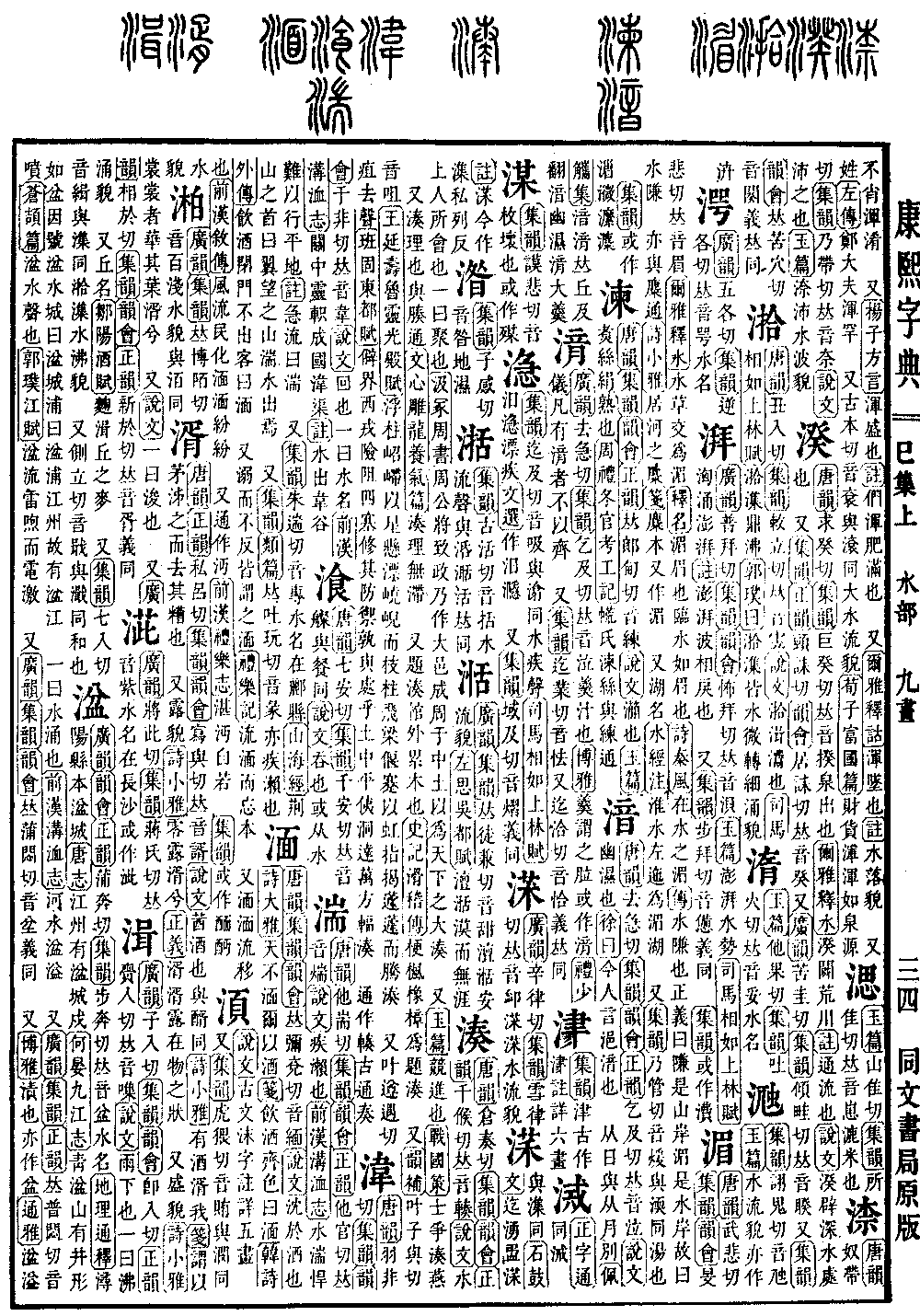
湊
Kangxi Strokes: 13
Page 636, Entry 22
Pronounced còu.
According to the Explaining Graphs and Analyzing Characters (Shuowen Jiezi), it refers to a place where people gather on the water. Another meaning is to assemble. In the Zhou Documents from the Jizhong Tomb (Jizhong Zhoushu), it is written: When the Duke of Zhou was about to return the government, he built the great city of Chengzhou in the central region to serve as the great gathering place of the world.
According to the Jade Chapters (Yupian), it also means to compete or advance. In the Strategies of the Warring States (Zhanguoce), it is written: Scholars vied to gather in Yan.
It also refers to the pores of the skin, synonymous with the term for skin pores. In The Literary Mind and the Carving of Dragons (Wenxin Diaolong), in the chapter on Cultivating Energy (Yangqi Pian), it says: The pores are unobstructed.
It also refers to a timber structure outside a coffin, known as dicuo. In the Records of the Grand Historian (Shiji), in the Biographies of the Jesters (Huaji Zhuan), it is written: Using catalpa, maple, oak, and camphor wood to construct the dicuo.
According to the Rhyme Supplement (Yunbu), it is also pronounced zǔ. In Wang Yanshou’s Rhapsody on the Lingguang Palace in Lu (Lu Lingguang Dian Fu), it is written: Floating pillars tower like stars suspended, rising high and branched. Flying beams arch like a rainbow pointing, rising and soaring in a throng.
It is also rhymed with the sound jù. In Ban Gu’s Rhapsody on the Eastern Capital (Dongdu Fu), it is written: Occupying the borders of the Western Rong, with dangerous terrain on four sides. Repairing their defenses, how can it compare to dwelling in the central land, level, broad, and accessible, where ten thousand directions converge. Commonly written as the character for wheel spokes. In ancient times, it was also interchangeable with the character for report.
Textual Research: In the Records of the Grand Historian (Shiji), Biographies of the Jesters (Huaji Zhuan), the text mentions catalpa (pián) wood for the dicuo. The original text has been corrected from the incorrect character to catalpa (pián).