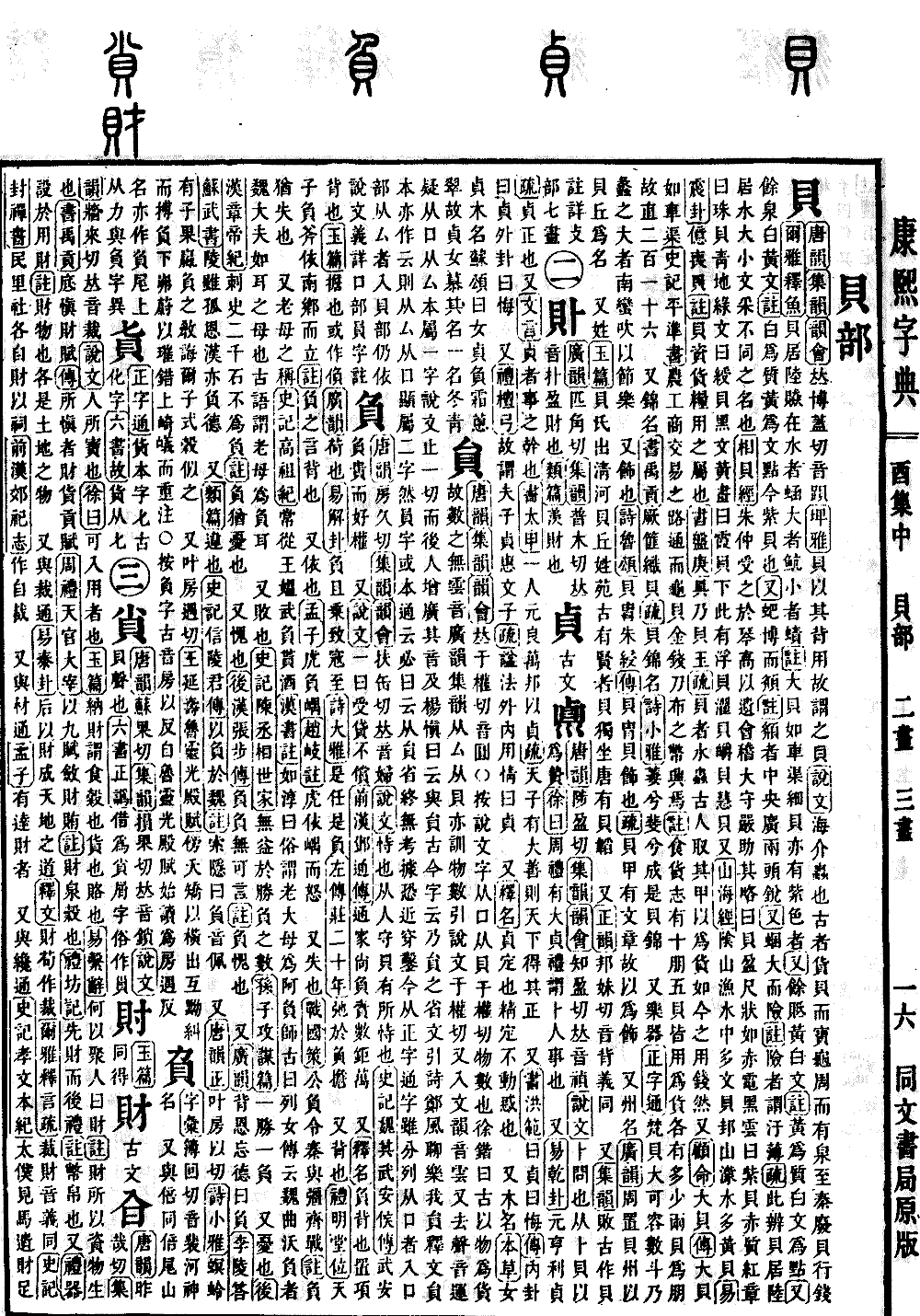
You Collection, Middle Volume
Radical: Cowrie (bèi)
Kangxi stroke count: 10
Page 1204, Entry 11
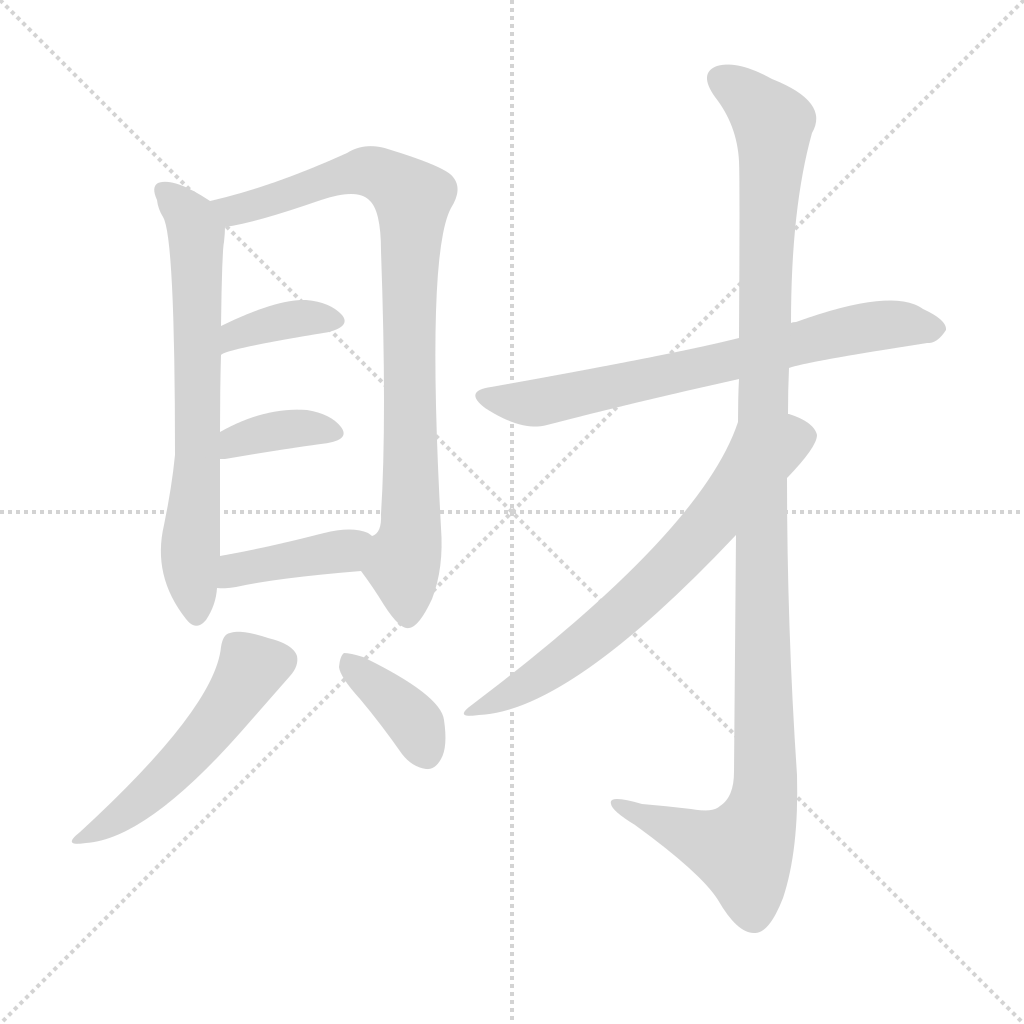
Archaic form. Pronounced cai.
According to the Tang Rhyme (Tangyun), the pronunciation is cai. According to the Collected Rhymes (Jiyun), the pronunciation is cai.
Shuowen Jiezi says it is that which people treasure.
Xu says it is that which can be brought into use.
Yupian says to accept wealth, meaning to consume grain, or it refers to goods or bribes.
Book of Changes (Yijing), section on Appended Judgments (Xici) says what is used to gather people is called wealth. The commentary says wealth is the means by which things sustain life.
Book of Documents (Shangshu), section on Tribute of Yu (Yugong) says to be cautious regarding wealth and taxes. The commentary says this refers to wealth, goods, and tax tributes.
Rites of Zhou (Zhouli), section on Officials of Heaven (Tianguan), Office of the Grand Administrator (Dazai) says to collect wealth and property through nine types of taxes. The commentary says wealth refers to currency and grain.
Book of Rites (Liji), section on Guidelines (Fangji) says to put wealth before propriety. The commentary says this refers to currency and silks.
Also, in the section on Ritual Vessels (Liqi), it says to set up earthly wealth. The commentary says wealth refers to things, meaning the products of the land.
It is also used interchangeably with the character for regulating (cai).
Book of Changes (Yijing), Tai hexagram says the sovereign uses this to regulate the ways of heaven and earth. The Explanation of Text (Shiwen) notes that Xun wrote it as the character for regulate.
The sub-commentary to the Erya (Erya Shiyan Shu) says the sound and meaning of regulate and wealth are the same.
Records of the Grand Historian (Shiji), section on Feng and Shan Sacrifices (Fengshan Shu) says the people of the villages each provide their own wealth to perform sacrifices.
History of the Former Han Dynasty (Qian Hanshu), section on Suburban Sacrifices (Jiaosi Zhi) writes it as self-regulate.
It is also used interchangeably with the character for material (cai).
Mencius (Mengzi) says there are those who achieve success through material.
It is also used interchangeably with the character for just (cai).
Records of the Grand Historian (Shiji), Annals of Emperor Wen (Xiaowen Benji) says the grand carriage keeper saw the horses and the remaining just-enough of the feet. The commentary says the character for wealth is the same as the character for just.
According to the Collected Rhymes (Jiyun), pronunciation is zai. The meaning is the same.
According to the Rhyme Supplements (Yunbu), it rhymes with the character for west (xi).
The Song of the South Wind (Nanfeng zhi ge) by Emperor Shun says, during the time of the south wind, we can increase the wealth of our people.
Note: In the Corrected Tang Rhyme (Tangyun Zheng), the rhymes of zhi and qi are considered to be in harmony.
Textual Research: In the section on Ritual Vessels (Liqi), it says set up for use of wealth. We have corrected the character for use to the character for earth in accordance with the original text.