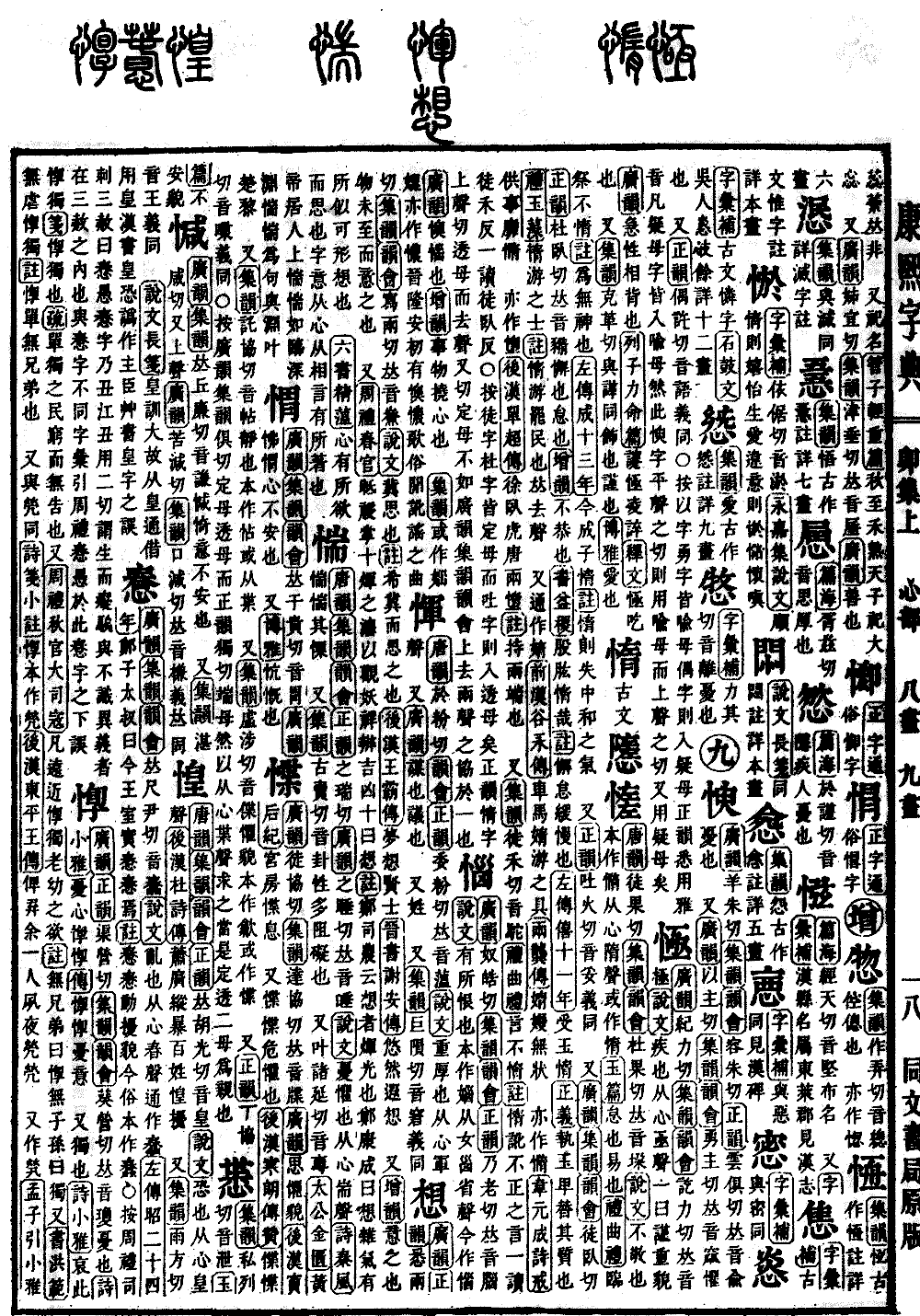
Mao Collection, Upper Volume
Radical: Heart (xīn)
Strokes: 13
Page 392, Entry 33
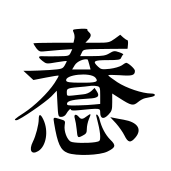
Guangyun (Guangyun), Jiyun (Jiyun), and Yunhui (Yunhui) record the pronunciation as chun (rising tone).
Shuowen (Shuowen) states it means disorder. It is composed of the radical heart and the phonetic element spring. It is commonly written in the variant form chun (rising tone).
Zuo Zhuan (Zuo Zhuan), Year 24 of Duke Zhao: Zheng Zi Taishu said: Now the royal house is truly in disorder. The commentary notes that this describes a state of disturbance and agitation. Common editions now use the variant form chun (rising tone).
According to the Rites of Zhou (Zhouli), under the Office of the Registrar of Punishments, the three pardons include the foolish. The character used there is chou (rising tone) or chou (falling tone), referring to those born with cognitive impairments, which differs from the meaning of not knowing. It falls within the category of the three pardons. This is different from the character chong (falling tone). Zihui (Zihui) mistakenly cites the Rites of Zhou (Zhouli) entry for the foolish under this character. The character chong (falling tone) means foolish.