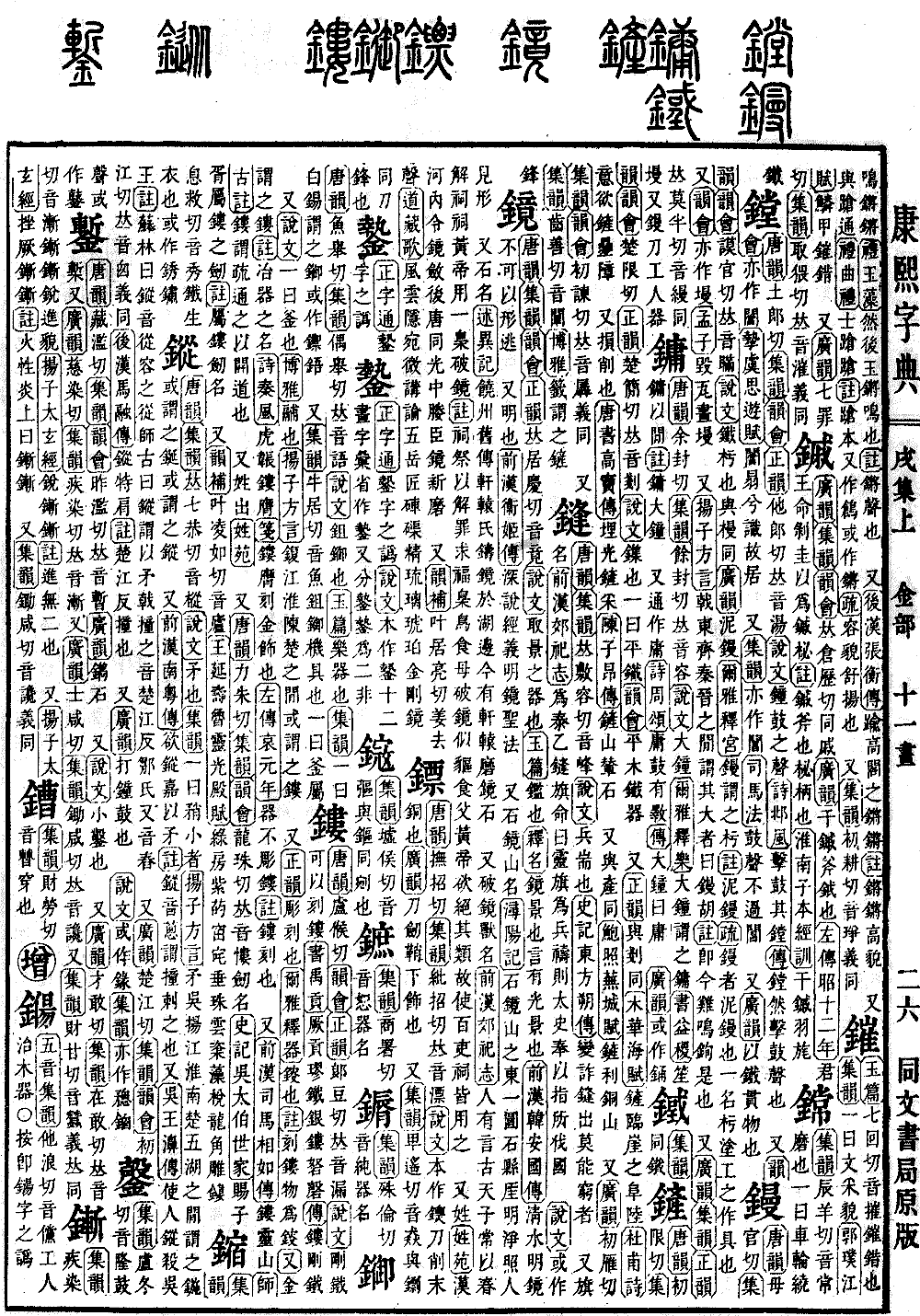
Xu Collection, Upper Volume
Radical: Metal (jīn)
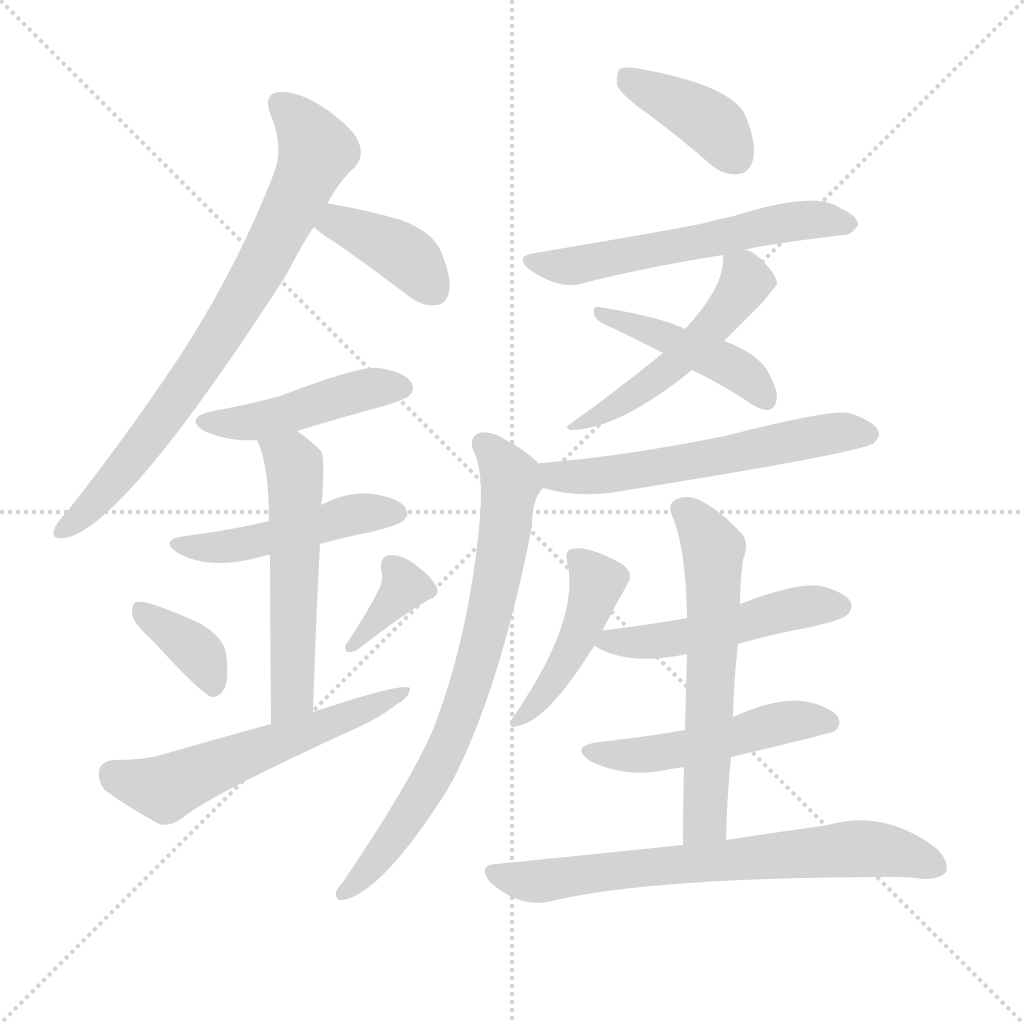
铲
Kangxi strokes: 19
Page 1320, Entry 08
According to the Tang Dynasty Rhymes (Tangyun), the sound is cha (falling-rising tone); according to the Collected Rhymes (Jiyun) and the Rhyme Collection (Yunhui), the sound is chu (falling-rising tone); according to the Correct Rhymes (Zhengyun), the sound is chu (falling tone), pronounced chan (falling-rising tone).
According to the Explaining Graphs and Analyzing Characters (Shuowen), it means to chisel or carve. Another definition is a tool used for leveling or scraping. According to the Rhyme Collection (Yunhui), it is an iron tool for smoothing wood.
It is also written in a variant form (chan) according to the Correct Rhymes (Zhengyun).
In the Sea Rhapsody (Haifu) by Mu Hua, it is used as: to level the earth mounds along the cliff. In the poetry of Du Fu, it is used as: intending to clear away obstacles. It also refers to reducing or eliminating. In the History of Tang (Tangshu), Gao Dou Biography, it is used as: to bury one's brilliance and eliminate literary refinement. In the Zi'ang Biography, it is used as: to level mountain rocks and transport them by carriage.
It is also synonymous with (chan) meaning to produce. In the Rhapsody of the Ruined City (Wuchengfu) by Bao Zhao, it is used as: to exploit the profit of the copper mountains.
According to the Broad Rhymes (Guangyun), the sound is cha (falling-rising tone); according to the Collected Rhymes (Jiyun) and the Rhyme Collection (Yunhui), the sound is cha (falling-rising tone), pronounced chan (falling-rising tone). The meaning is the same.
According to the Collected Rhymes (Jiyun), the sound is shan (falling-rising tone), pronounced chan (rising tone). According to the Collection of Refined Words (Boya), a stylus or skewer is called a chan.