You Collection, Upper Volume
Radical: Speech (yán)
Kangxi Strokes: 23
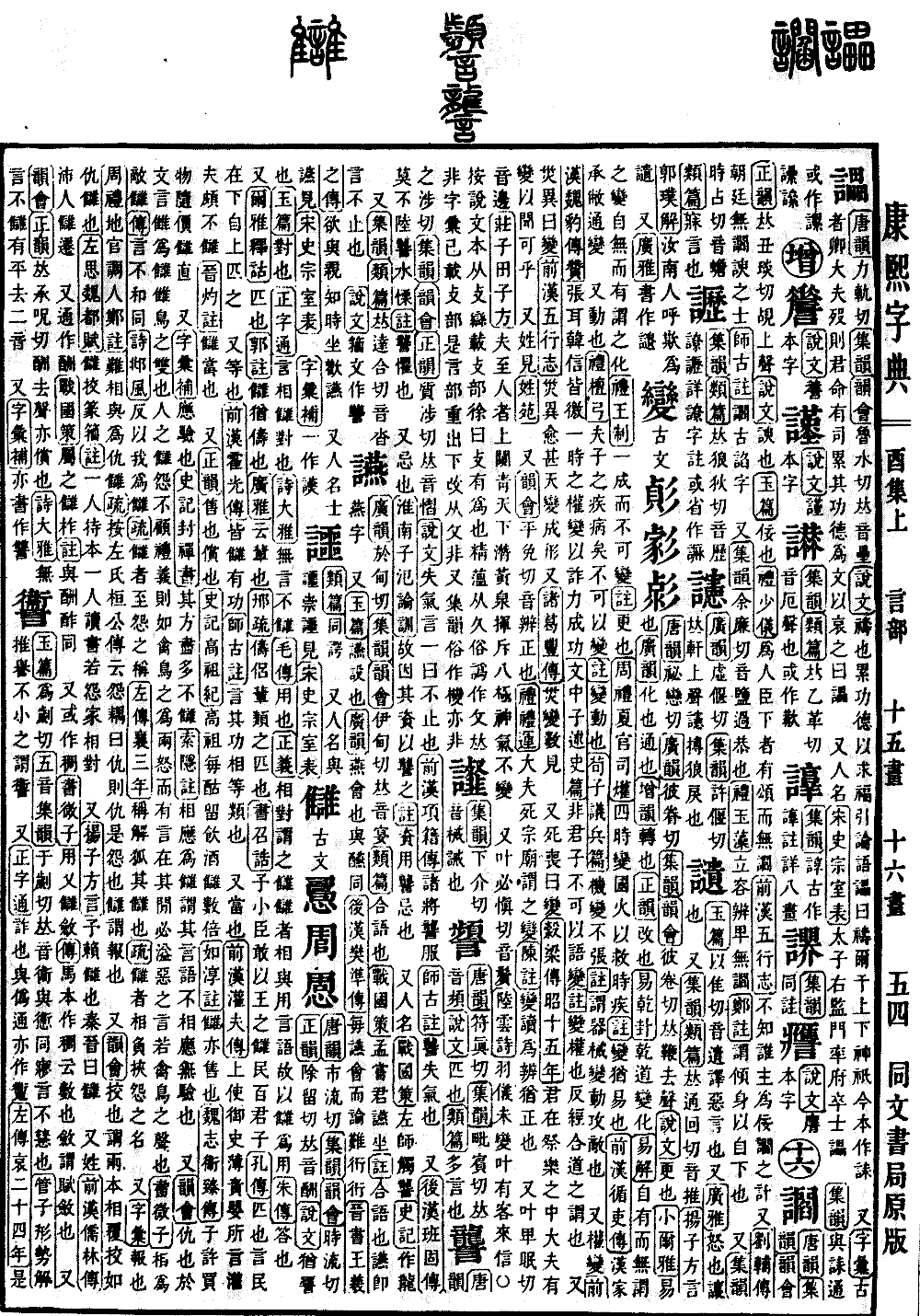
Page 1186, Entry 08
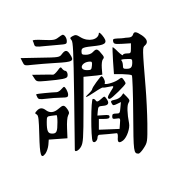
Tang Rhymes (Tangyun), Collection Rhymes (Jiyun), Rhyme Compendium (Yunhui), Correct Rhymes (Zhengyun): Pronounced chan (rising tone).
Explaining Graphs and Analyzing Characters (Shuowen): To flatter.
Jade Compendium (Yupian): To be fawning.
Book of Rites (Liji), Minor Rituals (Shaoyi): For those who are subjects and subordinates, offer praise but do not flatter.
History of the Former Han (Qian Hanshu), Record of the Five Elements (Wuxingzhi): Do not know who was the architect of the fawning and flattering schemes.
Also, Biography of Liu Fu (Liu Fu Zhuan): There are no fawning or flattering scholars in the imperial court.
Commentary by Shigu: Chan is the ancient form of the character for flattery.
Also, Collection Rhymes (Jiyun): Pronounced yan. Excessively respectful.
Book of Rites (Liji), Jade Pattern (Yuzao): In the appearance of one standing, there should be no flattery.
Commentary by Zheng: This refers to inclining the body to lower oneself.
Also, Collection Rhymes (Jiyun): Pronounced chan.
Categorized Compendium (Leipian): Talking in one's sleep.
Textual research: Book of Rites (Liji), Minor Rituals (Shaoyi): For those who are subjects and subordinates, there is praise but no flattery. Adjusted according to the original text which includes the character for there is before praise.