You Collection, Upper Volume
Radical: Speech (yán)
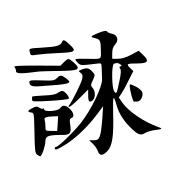
Character: Tai
Kangxi strokes: 15
Page 1166, Entry 01
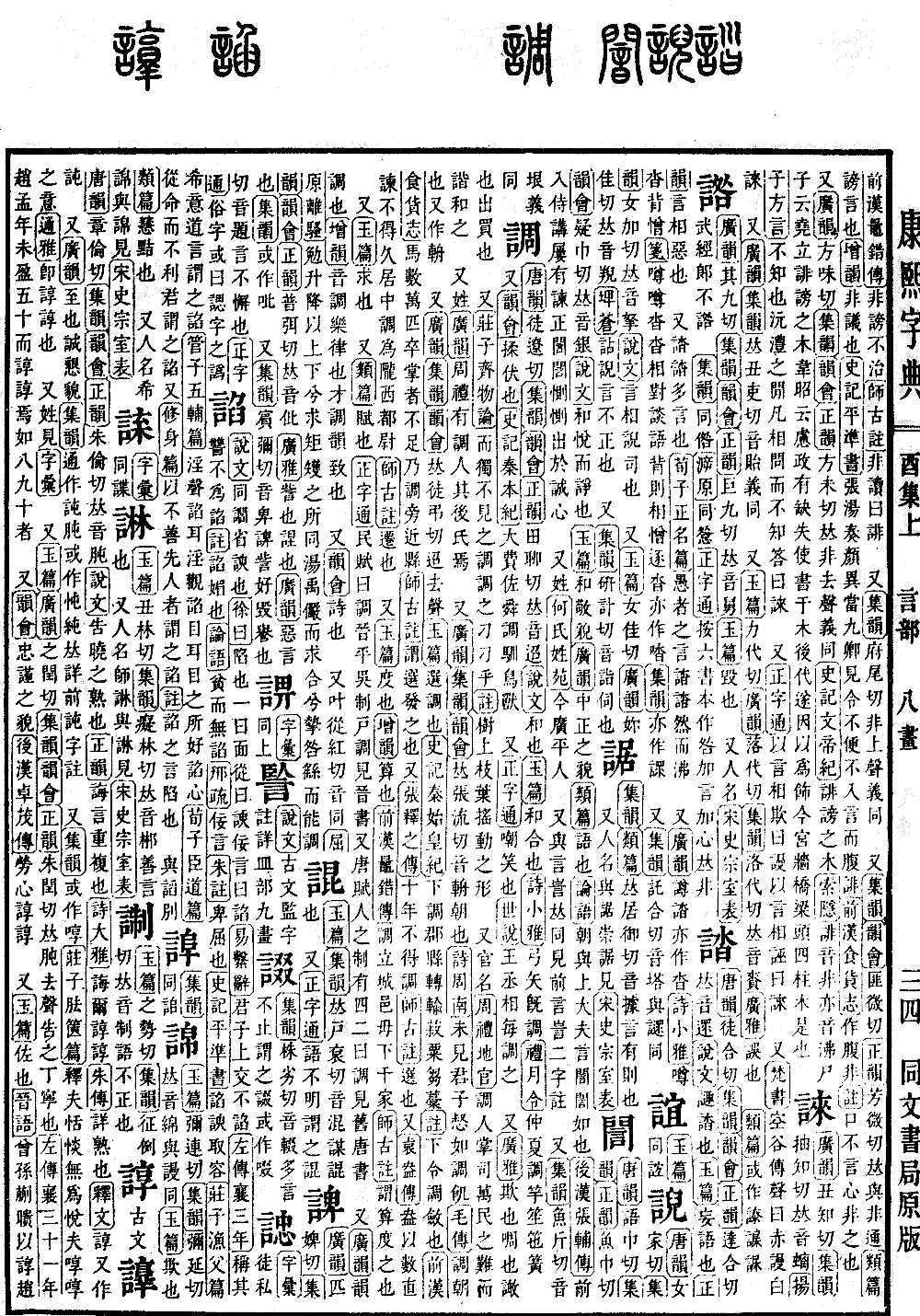
Broad Rhymes (Guangyun): Pronounced chi.
Collected Rhymes (Jiyun): Pronounced chi. Same sound as chi.
Exemplar of Dialects (Fangyan): Means to not know. In the regions of the Yuan and Li rivers, when someone asks a question and one does not know the answer, one says tai.
Furthermore, Correctness Guide (Zhengzitong): To use speech to deceive others is called man; to use speech to falsely accuse others is called tai.
Furthermore, Sanskrit Texts (Fanshu): The sound echoing in an empty valley is called chi man bai tai.
Furthermore, Broad Rhymes (Guangyun) and Collected Rhymes (Jiyun): Pronounced yi. The meaning is the same.
Furthermore, Jade Chapters (Yupian): Pronounced lai. Broad Rhymes (Guangyun): Pronounced lai. Collected Rhymes (Jiyun): Pronounced lai.
Broad Refinement (Guangya): Means to make a mistake.
Categorized Chapters (Leipian): Sometimes written in a variant form.