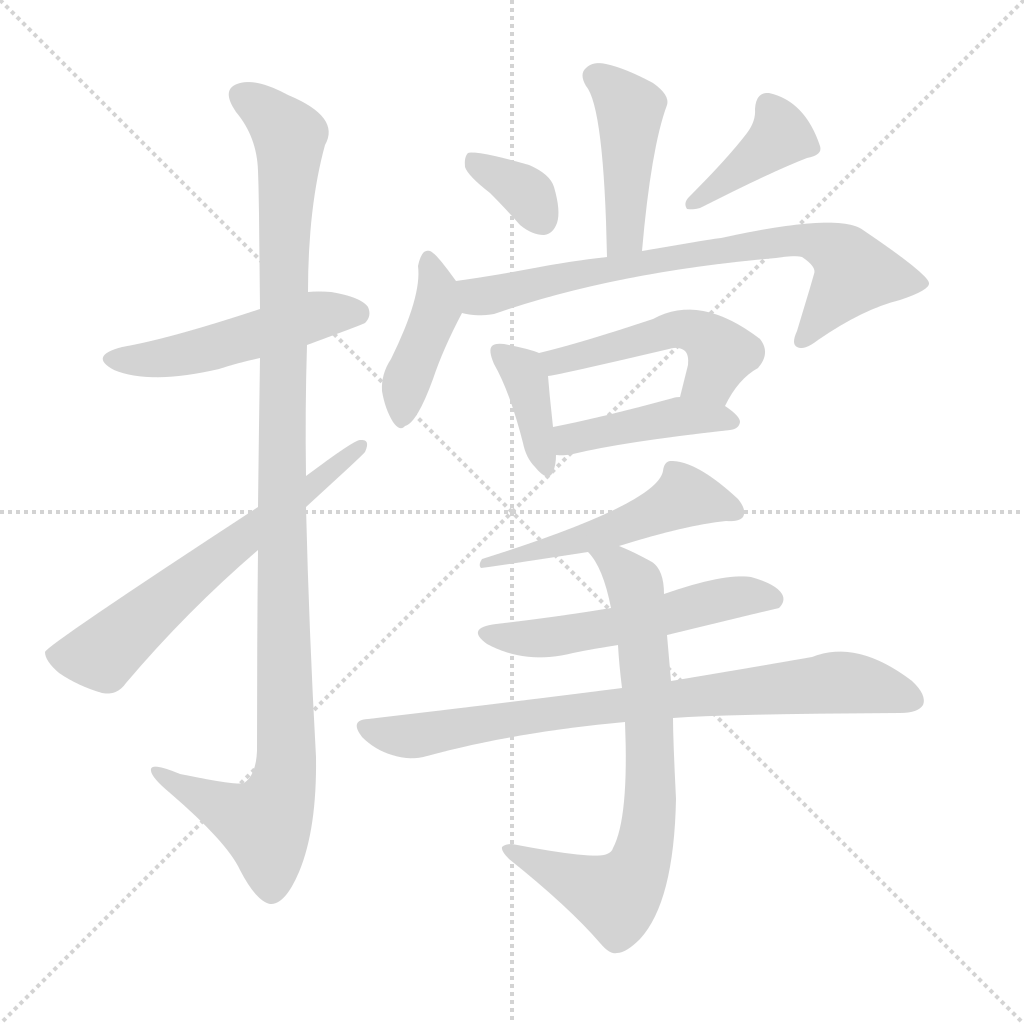
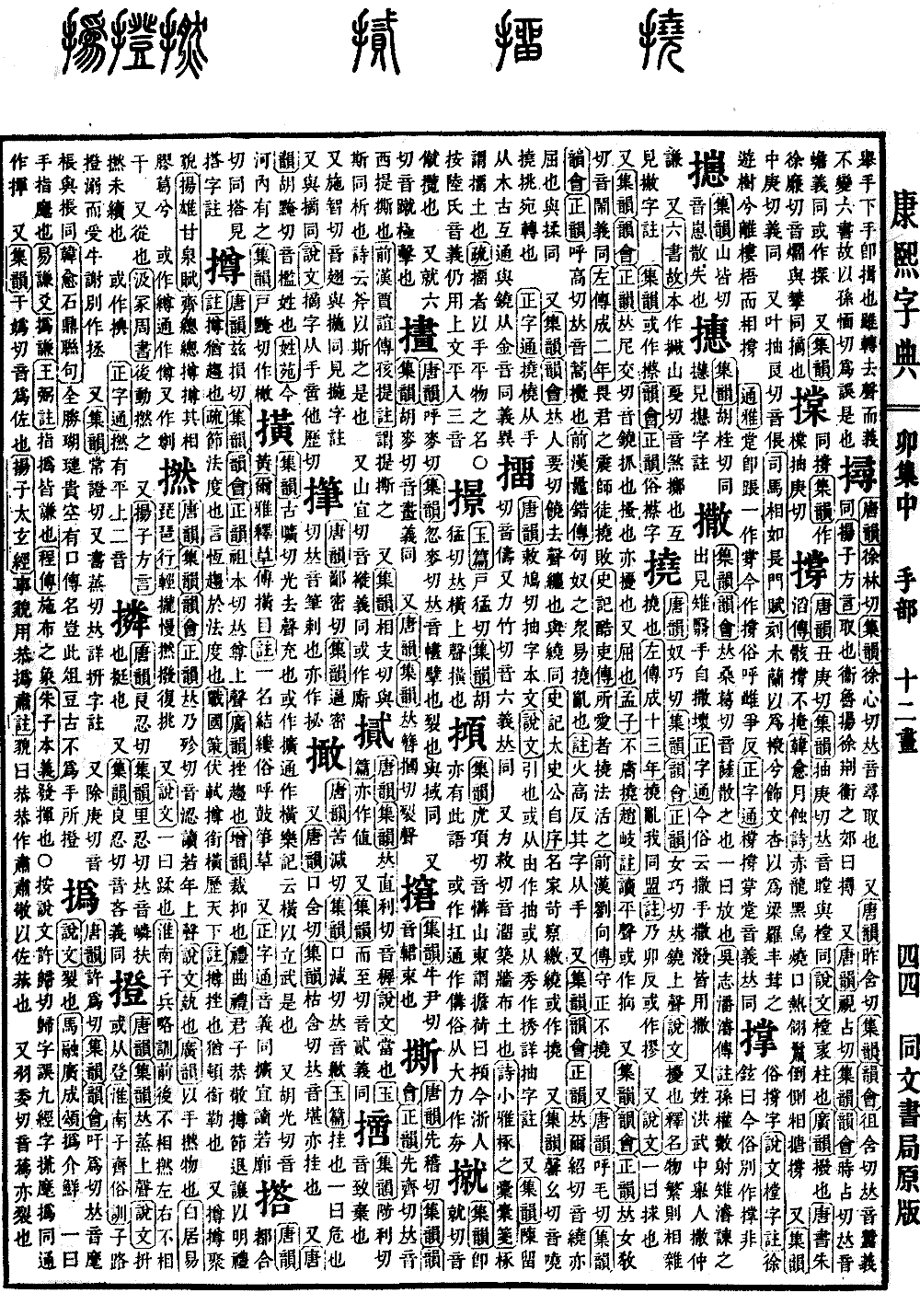
Mao Collection, Middle Volume. Radical: Hand (shǒu). Kangxi strokes: 16. Page 454, Entry 04.
A vulgar form of the character written as cheng. In the annotations for the character cheng in the Explaining Graphs and Analyzing Characters (Shuowen Jiezi), Xu Xuan states that the contemporary vulgar form written as cheng is incorrect.
Cheng. Pronounced cheng (level tone). Pronounced cheng. Pronounced cheng. It is identical to the character cheng. In the Explaining Graphs and Analyzing Characters (Shuowen Jiezi), it refers to a slanting pillar. In the Broad Rhymes (Guangyun), it means to push open. In the History of the Tang (Tangshu), specifically the Biography of Zhu Tao, it describes corpses scattered and unburied. In Han Yu’s Poem on the Lunar Eclipse, it describes the red dragon and black crow with mouths scorched hot, their feathers standing on end as they resist and prop each other up.
Also in the Collected Rhymes (Jiyun), it is pronounced cheng (level tone). The meaning is the same. It also occurs in rhyming context, pronounced chang. In Sima Xiangru’s Rhapsody on the Long Gate (Changmen Fu), it describes carving magnolia to make rafters, and decorating ginkgo wood to serve as beams. The densely arranged and floating pillars, the separated pavilions and paulownia trees prop each other up. In the Comprehensive Elegance (Tongya), it refers to the character written as cheng. It is also written as cheng. Nowadays it is written as cheng. In common parlance, it is pronounced cheng. According to the Correct Meaning of Characters (Zhengzitong), the characters written as cheng, cheng, and cheng are identical in pronunciation and meaning.