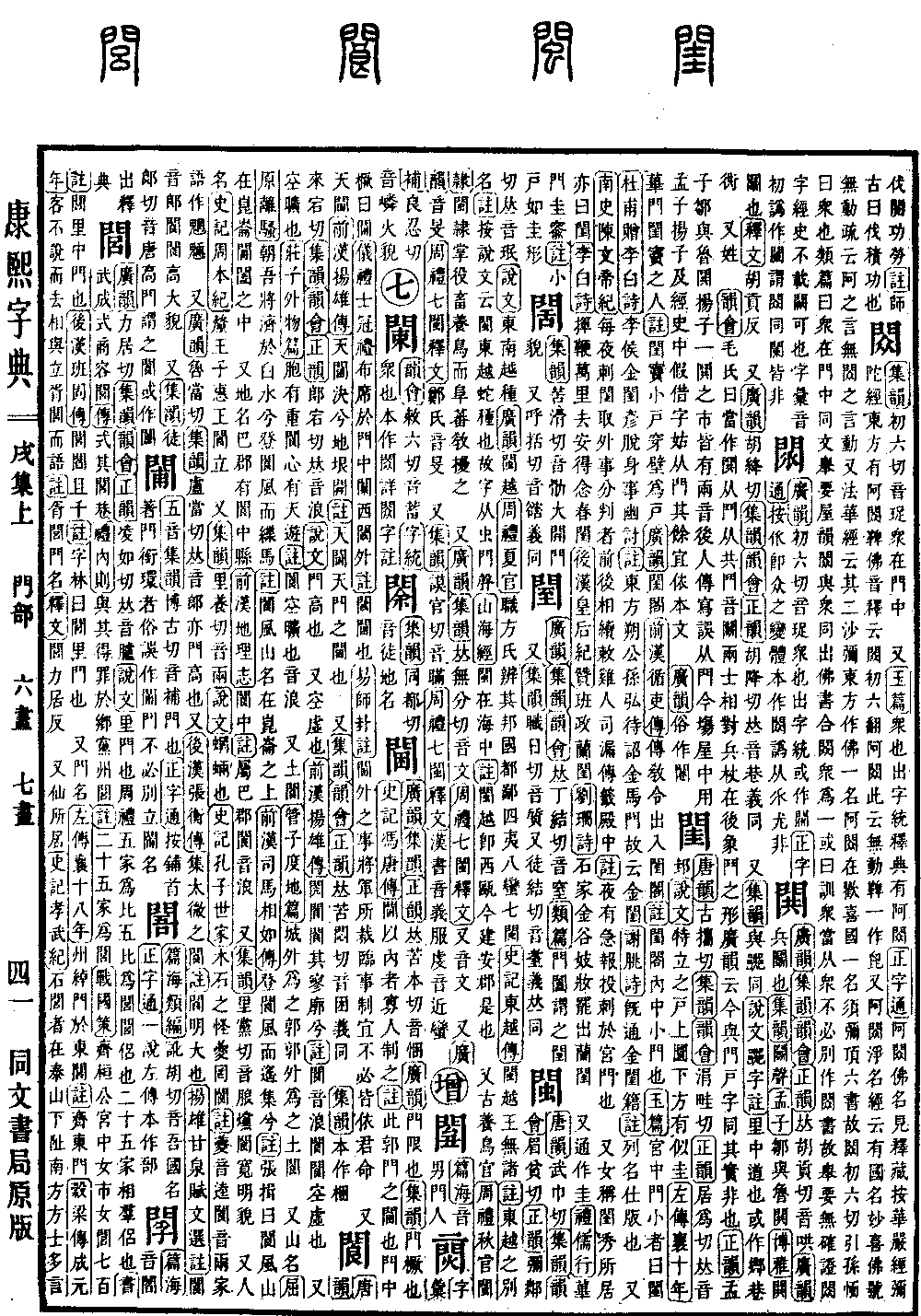
Xu Collection, Upper Volume
Radical: Gate (mén)
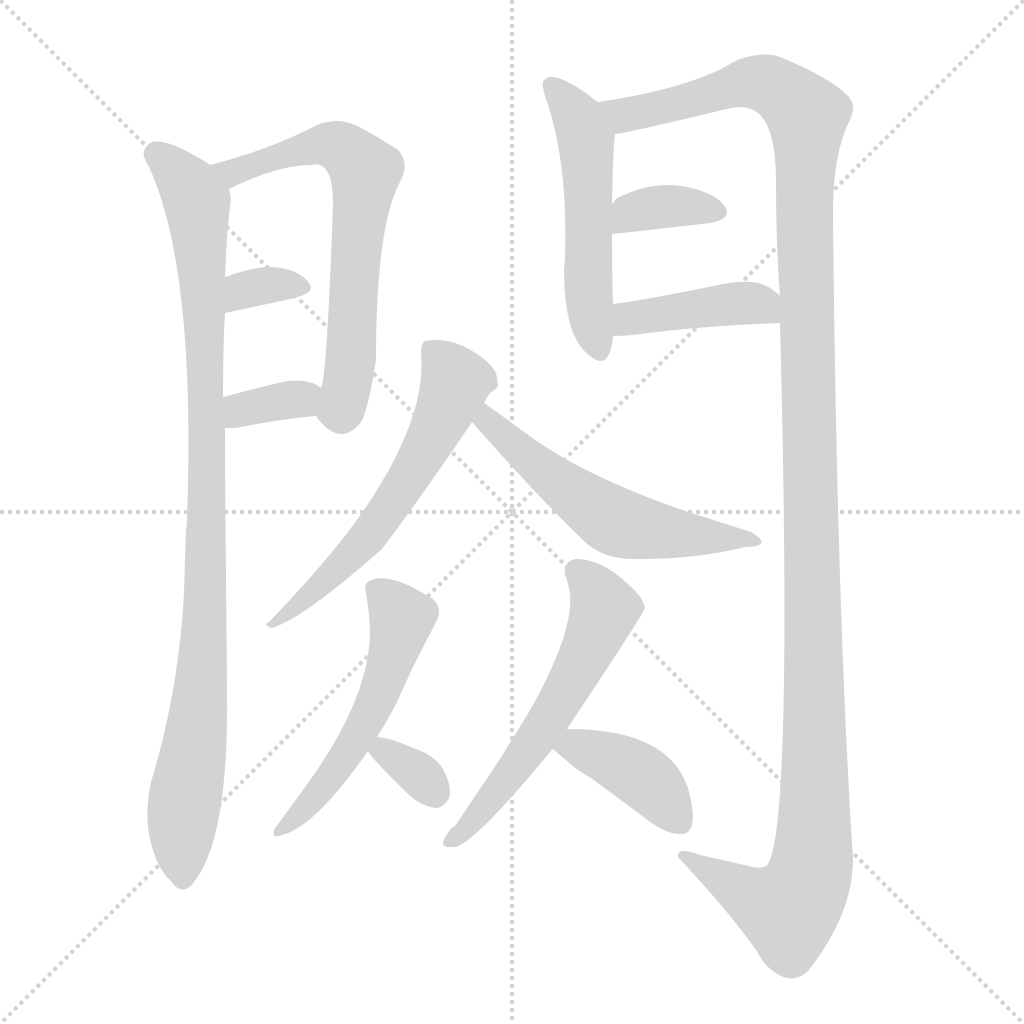
Entry: Chu
Kangxi Stroke Count: 14
Page 1335, Entry 01
Collected Rimes (Jiyun): Pronounced chu. To be many within a gate.
Also, Jade Chapters (Yupian): Many. Taken from the Word Registry (Zitong), Buddhist scriptures mention Akshobhya.
Correct Meaning Guide (Zhengzitong): Akshobhya, a Buddha name. See the Buddhist Canon (Shizang). According to the Flower Adornment Sutra (Huayan Jing) and the Amitabha Sutra (Mituo Jing), in the east there is Buddha Akshobhya. The phonetic commentary says: Chu is pronounced chu. Akshobhya means unmoving.
Also, Akshobhya, Vimalakirti (Jingming). The sutra says: There is a country named Joyous, the Buddha is named Unmoving. The commentary says: A means no, chuo means movement.
Also, Lotus Sutra (Fahua Jing) says: These two novices, in the east became Buddhas. One named Akshobhya, in the Joyous Country. One named Mount Sumeru Peak.
The Six Scripts Explained (Liushu Gu): Chu is pronounced chu. Citing Sun Mian, he says: It means many. The Classified Dictionary (Leipian) says: Many within a gate.
Collected Standards of Characters (Tongwen Juyao), in the house rhyme group: Chu and the character for many are the same. Extracted from Buddhist books, combining Chu and many into one. Some say it defines many. One should follow the character for many, and there is no need to separately create the character Chu. The Six Scripts Explained and the Standards of Characters have no firm proof. The character Chu is not recorded in the classics or histories; it may be omitted.
The Dictionary of Characters (Zihui) mistakenly gives the pronunciation as lan, claiming Chu is the same as lan. Both are incorrect.