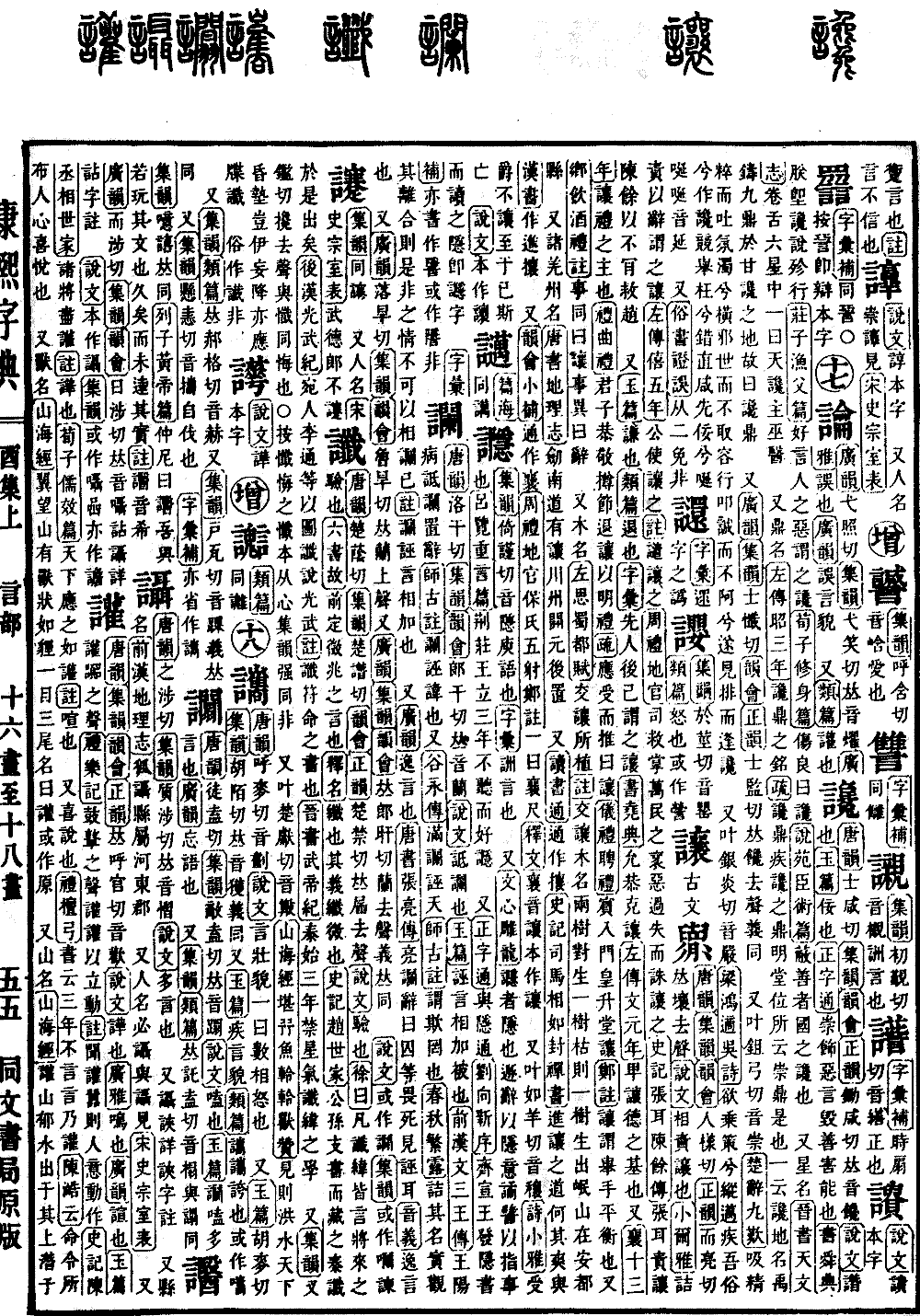
You Collection, Upper Volume
Radical: Speech (yán)
Kangxi Strokes: 24
Page 1187, Entry 09
Pronounced chan.
According to the Explaining Graphs and Analyzing Characters (Shuowen Jiezi), it means to slander. The Jade Chapters (Yupian) defines it as sycophancy. The Correct Meaning of Characters (Zhengzitong) notes it is to embellish evil words to destroy the virtuous and harm the capable.
Book of Documents (Shangshu), Canon of Shun: I detest slanderous talk and wicked conduct.
Zhuangzi, Fisherman: To delight in speaking of others' evils is called slander.
Xunzi, Cultivation of the Self: To harm the virtuous is called slander.
Garden of Stories (Shuoyuan), The Art of Ministers: One who obscures the good is the slander of the state.
Also a name of a star. The Book of Jin (Jinshu), Treatise on Astronomy: Among the six stars of the Rolled Tongue, one is called Celestial Slander, which governs shamans and doctors.
Also the name of a tripod. Zuo Commentary (Zuozhuan), Third Year of Duke Zhao: The inscription on the Slander Tripod. The Commentary notes: The Slander Tripod is a tripod meant to denounce slander; it is what the Book of Rites (Liji), Hall of Distinction (Mingtangwei) refers to as the Venerated Tripod. Another source states that Slander is a place name. Yu cast the Nine Tripods at the place called Ganshan; hence it is called the Slander Tripod.
Also pronounced chan (departing tone). The definition is the same.
Also rhymes with chong. Chu Elegies (Chucí), Nine Laments: Inhaling the pure essence and exhaling the murky vapor, traversing the crooked world without seeking favor. Walking with sincerity and without flattery, yet I am pushed aside and encounter slander.
Also rhymes with yan. Liang Hong, Poem on Journeying to Wu: I wish to ride the strategy and proceed, yet I resent how my customs have become slander. They compete to promote the crooked and discard the straight, all prioritizing the sycophants and babbling.
Also, the popular character form using two instances of the character for escape is incorrect.