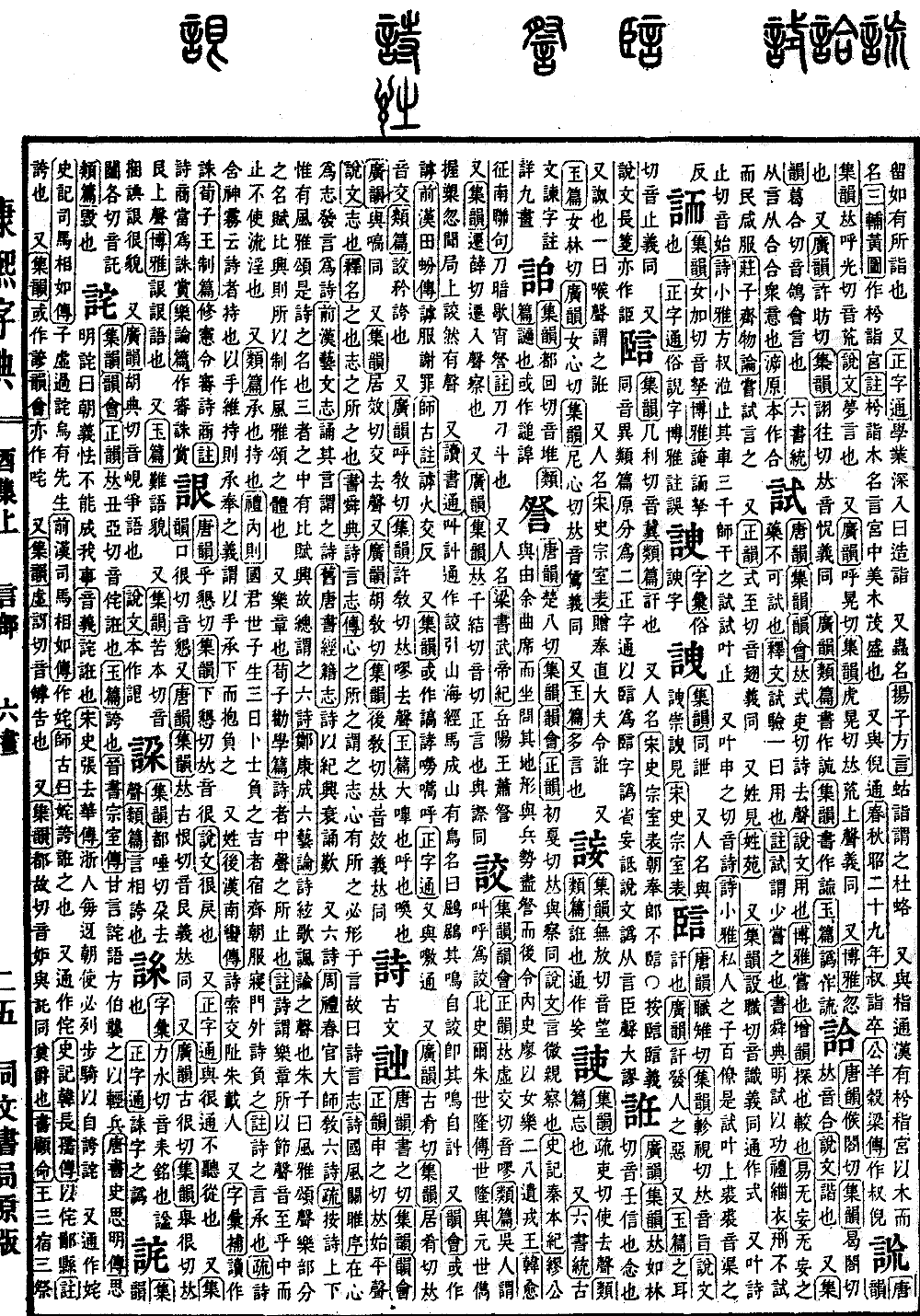
You Collection, Upper Volume
Radical: Speech (yán)
詫
Kangxi strokes: 13
Page 1157, Entry 01
Gathering of Rhymes (Jiyun), Dictionary of Rhymes (Yunhui), and Rectified Rhymes (Zhengyun): Pronounced cha. To deceive.
Jade Chapters (Yupian): To boast.
History of the Jin Dynasty (Jinshu), Biography of the Imperial Clan: Using sweet words and deceptive language, the local officials attacked them with light cavalry.
History of the Tang Dynasty (Tangshu), Biography of Shi Siming: Shi Siming said deceptively: Chaoyi is cowardly and cannot accomplish my great task.
Sound and Meaning (Yinyi): Cha, to deceive.
History of the Song Dynasty (Songshi), Biography of Zhang Quhua: People of Zhejiang, every time they welcomed imperial envoys, would always display infantry and cavalry to boast.
Also written as a variant form (cha).
Records of the Grand Historian (Shiji), Biography of Sima Xiangru: Zixu went to deceive Mr. Wuyou.
History of the Former Han (Qianhan), Biography of Sima Xiangru: Written as (cha).
Shigu says: Cha means to boast and deceive.
Also written as a variant form (cha).
Records of the Grand Historian (Shiji), Biography of Han Changru: Used this to boast to the remote counties.
Commentary: To boast.
Also, Gathering of Rhymes (Jiyun): Sometimes written as (variant form).
Dictionary of Rhymes (Yunhui): Also written as (zha).
Also, Gathering of Rhymes (Jiyun): Pronounced xia. To announce.
Also, Gathering of Rhymes (Jiyun): Pronounced du. Same as (tuo). To place a wine cup.
Book of Documents (Shujing), Testamentary Charge (Guming): The King thrice paused, thrice made a libation, and thrice placed the wine cup.
Explanatory Text (Shiwen): Zha is also written as (zhai). Ma Rong says: Also written as (cha).
Explaining Graphs and Analyzing Characters (Shuowen): Written as (variant form).