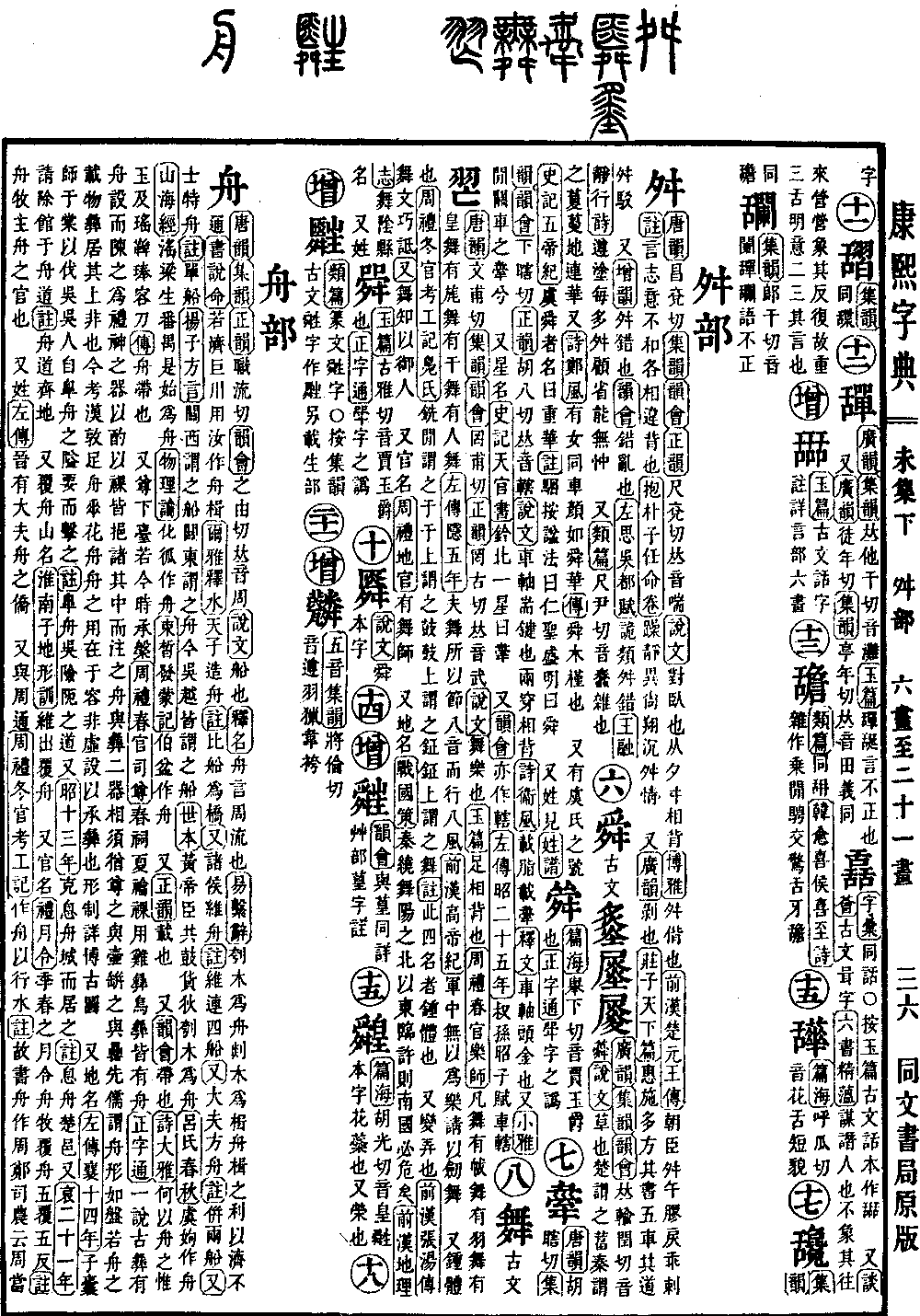
Wei Collection, Lower Volume
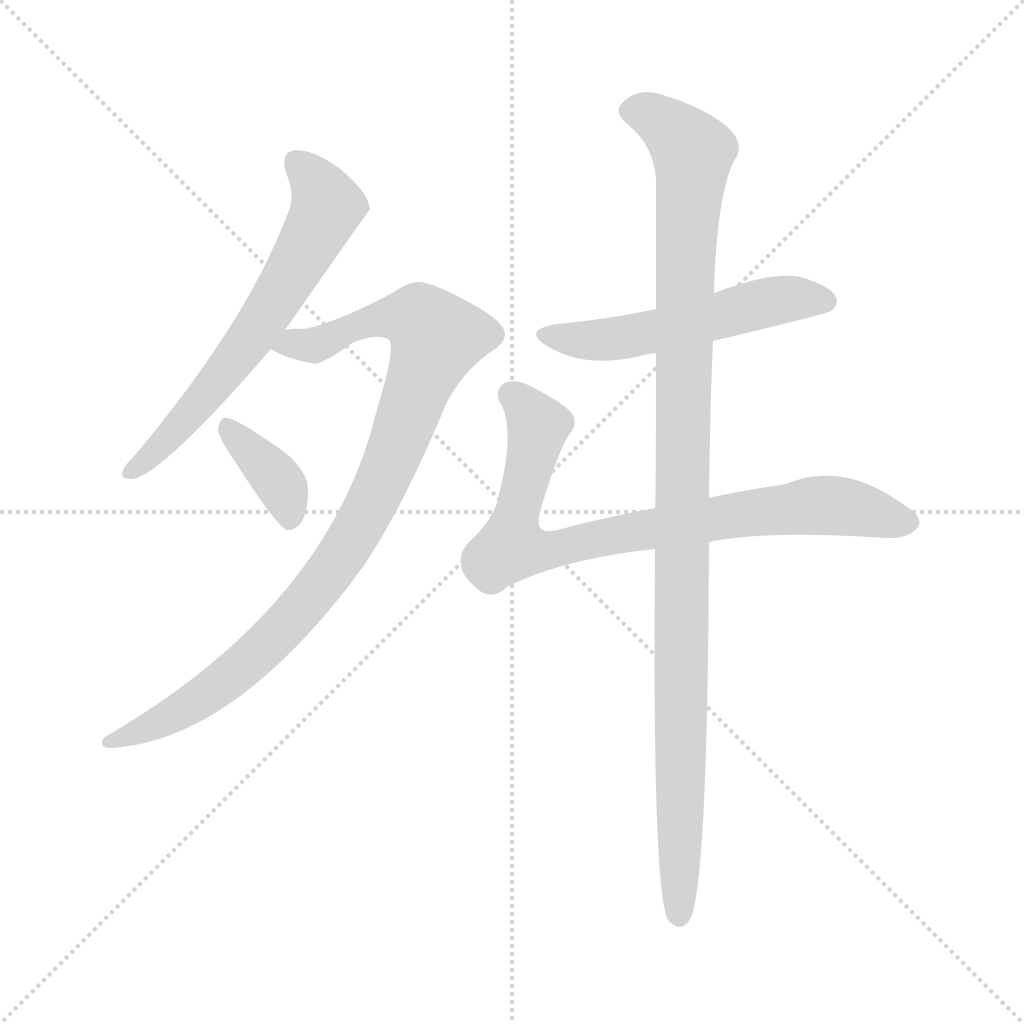
Radical: Perverse (chuǎn)
6 strokes
Page 1008, Entry 09
Pronounced chuǎn (dipping tone). Defined by the Analytical Dictionary of Characters (Shuowen Jiezi) as two people lying opposite each other. The character form is composed of the radical for evening (xī) placed back-to-back. The Elegant Words (Guangya) states that to be perverse means to contradict or go against. The Book of Former Han (Qianhan Shu), Biography of Prince Chu Yuan, records that the court officials held clashing opinions, contradicting and opposing one another. The commentary notes that this signifies minds not in accord, each turning away from the other. The Master Who Embraces Simplicity (Baopuzi), chapter on Appointing Officials, writes that the impetuous and the calm have different preferences, and the high-flying and the deep-diving have conflicting sentiments. Also, the Broad Rhymes (Guangyun) defines this as peeling away or being variegated. The Book of Master Zhuang (Zhuangzi), chapter on the World, mentions that Huishi was broadly learned and his works filled five carts, but his theories were variegated and impure. Additionally, the Expanded Rhymes (Zengyun) states that perverse means chaotic or disordered. The Rhyme Collection (Yunhui) interprets it as disorder. Zuo Si, in his Rhapsody on the Capital of Wu (Wudu Fu), describes strange things as jumbled and interlaced. Wang Rong, in his Poem on Quiet Conduct (Jingxing Shi), writes that the path of travel is often not smooth; reflecting upon this, how could one not be anxious? Furthermore, the Classified Chapters (Leipian) gives the pronunciation as chǔn (rising tone), meaning mixed or blended.