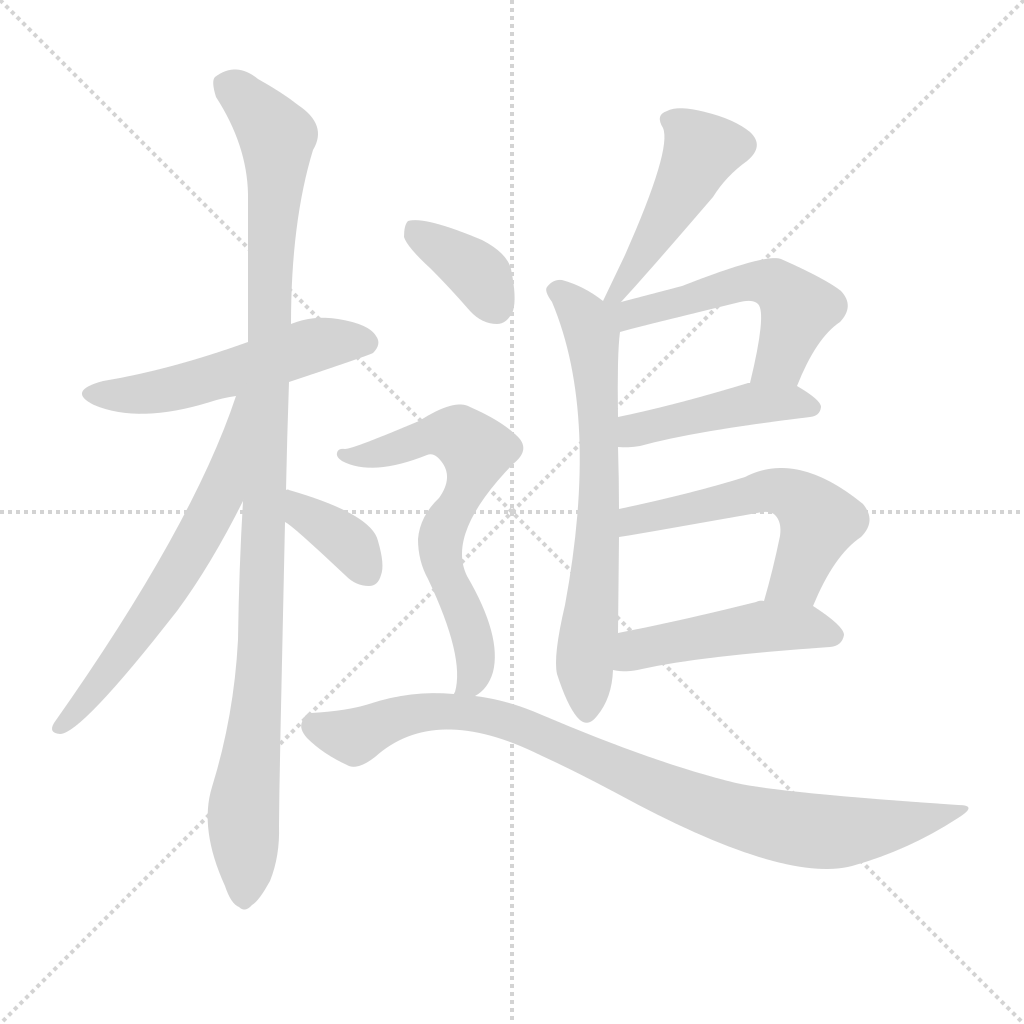
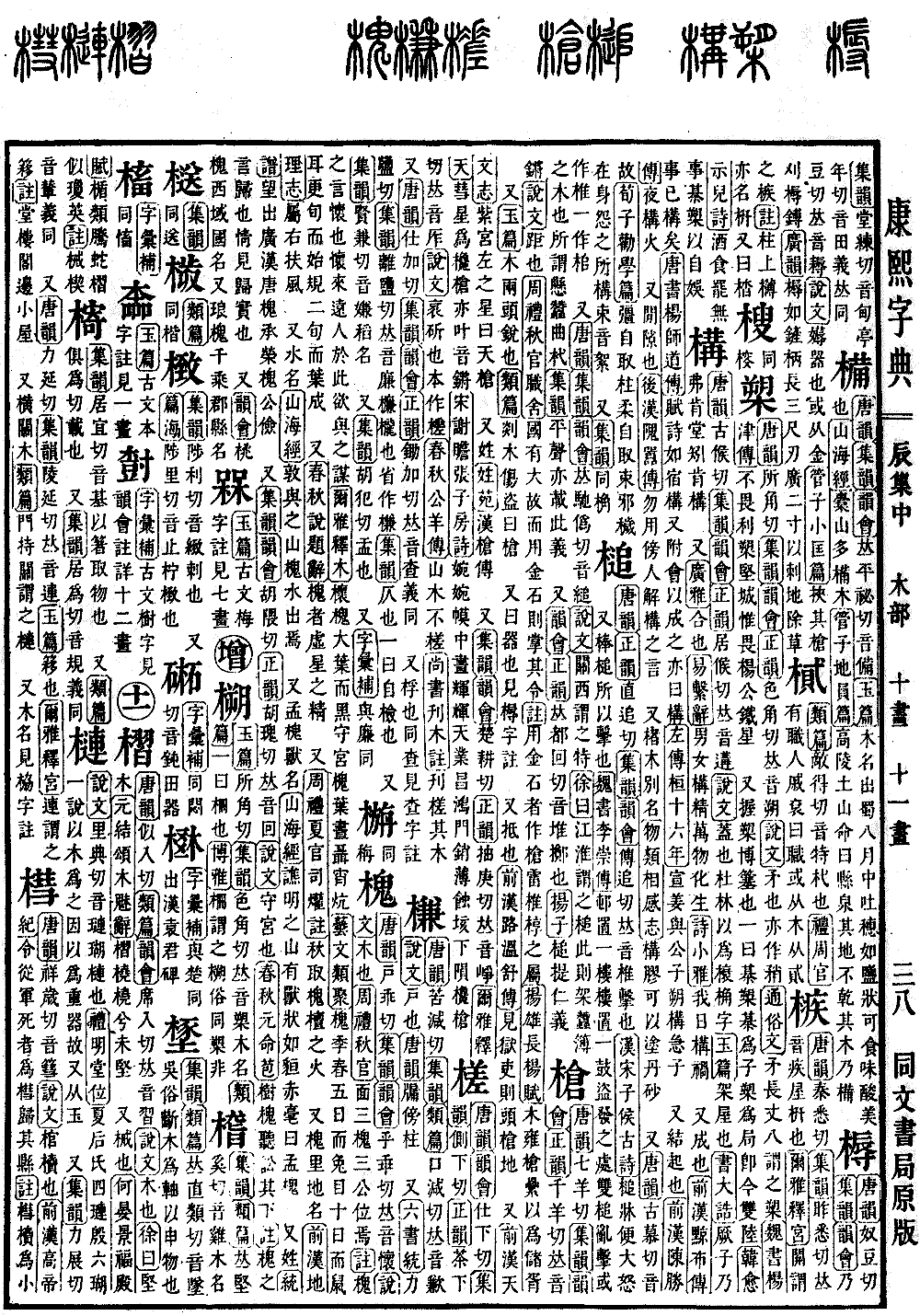
Chen Collection, Middle Volume. Radical: Tree (mù). Kangxi strokes: 14. Page 546, Entry 08.
Pronounced chui. It means to strike or to beat. In the Ancient Poems (Gushi) by Song Zihou of the Han dynasty, it is written, struck the bed in great anger. There is also the term bangchui, which refers to an object used for beating or pounding. The History of the Northern Wei (Weishu), Biography of Li Chong, records: Each village established a tower, and on each tower was placed a drum. In places where thieves appeared, the drums were struck frantically with two beaters. This character is also written as chui. It is sometimes written as chui.
Pronounced zhui. The Explaining Graphs and Analyzing Characters (Shuowen Jiezi) explains: People in the regions west of the pass call it te. Xu states: In the Jianghuai region, it is called chui, which refers to the wood used to erect bamboo mats for raising silkworms, also known as a curved wooden stake for hanging silkworm frames. The Collection of Rhymes (Jiyun) also records this meaning under the level tone.
Pronounced dui. It means to throw. In the Yangzi, it is written, throwing away benevolence and righteousness.