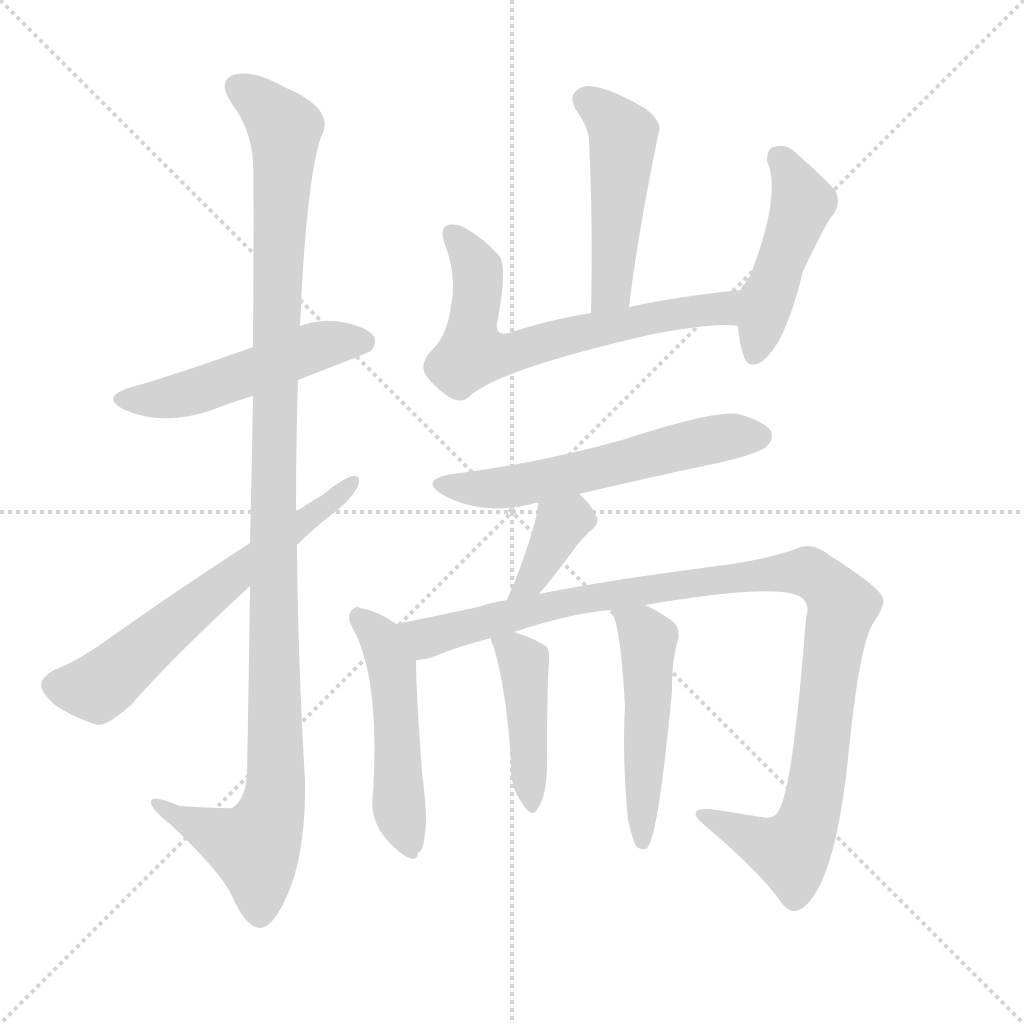
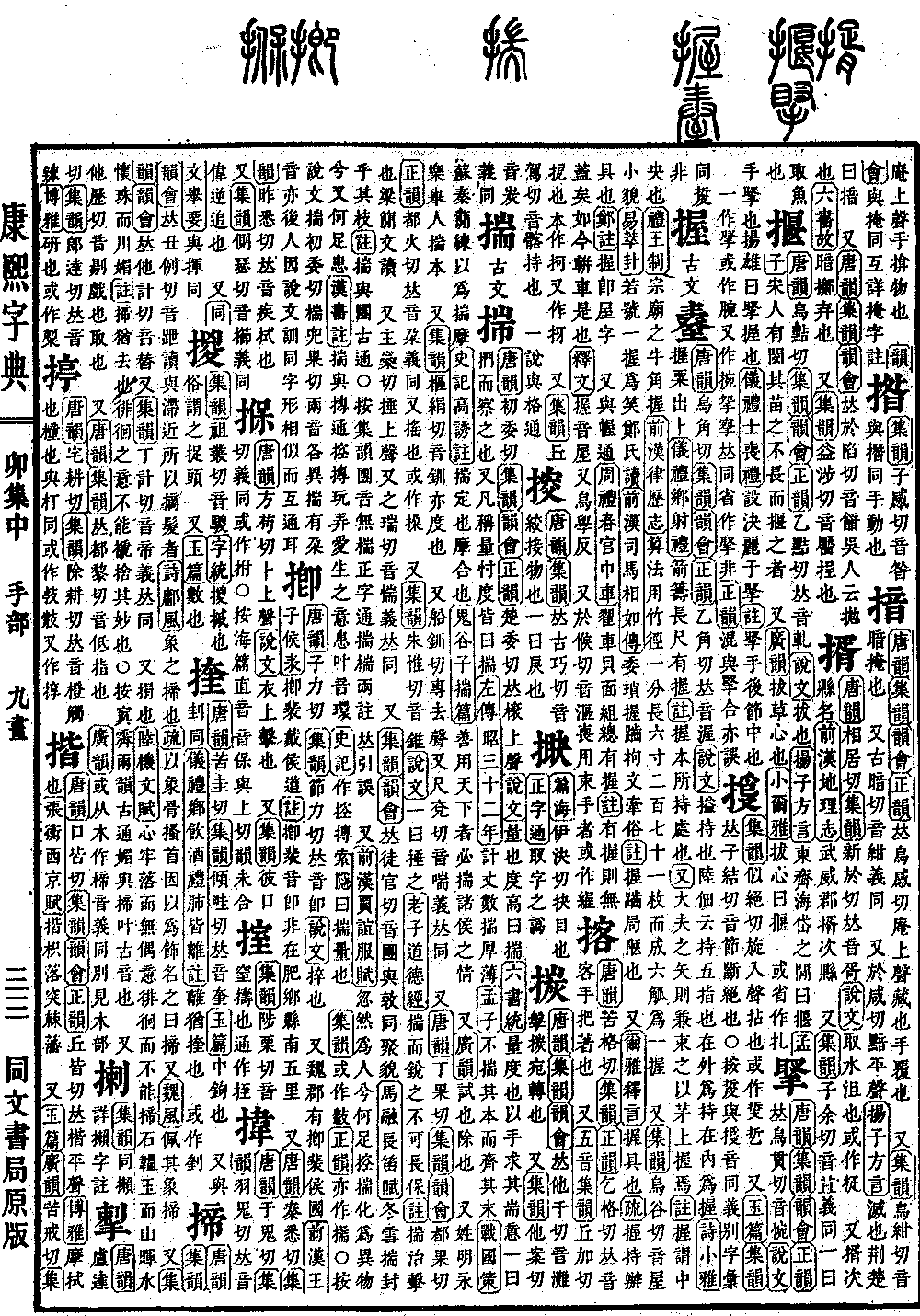
Mao Collection, Middle Volume. Radical: Hand (shǒu). Kangxi strokes: 13. Page 443, Entry 13.
According to the Tang Dynasty Rhyme Dictionary (Tangyun), the pronunciation is chui (rising tone). According to the Collected Rhymes (Jiyun), the Rhyme Assembly (Yunhui), and the Correct Rhymes (Zhengyun), the pronunciation is chui (rising tone). In the Explanation of Graphs and Analysis of Characters (Shuowen Jiezi), it is defined as measuring; measuring height is called chuai. The Six Writings Unification (Liushu Tong) defines it as measuring or estimating. It carries the meaning of using the hand to probe for a clue. Another interpretation is to stroke and observe something. Furthermore, all acts of weighing, pondering, or speculating can be called chuai.
In the Zuo Commentary (Zuo Zhuan), Year 32 of Duke Zhao: Calculating length and estimating thickness. In the Book of Mencius (Mengzi): Not measuring the root, yet wanting to make the tips level. In the Strategies of the Warring States (Zhanguo Ce): Su Qin repeatedly practiced the techniques of measuring and speculating (chuaimo). In the Records of the Grand Historian (Shiji), Gao You Commentary: Chuai means to determine; mo means to fit together. In the Ghost Valley Master (Guiguzi) Chuai Chapter: Those who are skilled at governing the world must always speculate on the circumstances of the feudal lords.
According to the Extensive Rhyme Dictionary (Guangyun), it is defined as trying or removing. It also functions as a surname; Chuai Ben was a recommended scholar (juren) during the Yongle period of the Ming Dynasty. According to the Collected Rhymes (Jiyun), the pronunciation is chuan. It also means to measure. Additionally, the pronunciation is zhuan (departing tone). The meaning is the same. Furthermore, the pronunciation is chuan (rising tone). The meaning is the same. According to the Tang Dynasty Rhyme Dictionary (Tangyun), the pronunciation is duo (rising tone). The meaning is the same. It is also defined as shaking. Sometimes written in a variant form (duo).
According to the Collected Rhymes (Jiyun), the pronunciation is zhui. Another interpretation in the Explanation of Graphs and Analysis of Characters (Shuowen Jiezi) is to hammer or strike. In the Laozi Tao Te Ching: Hammering it to make it sharp, it cannot be maintained for long. Commentary: Chuai means to hammer or refine. Emperor Wu of Liang read it with this pronunciation. Another pronunciation is chui (rising tone). Another pronunciation is zhui (falling tone). The meaning is the same.
According to the Collected Rhymes (Jiyun) and the Rhyme Assembly (Yunhui), the pronunciation is tuan. It is interchangeable with the character dun. It refers to the appearance of gathering. In the Rhapsody on the Long Flute (Changdi Fu) by Ma Rong: Winter snow thickly piled and covered its branches. Commentary: In ancient times, chuai and tuan were interchangeable. According to the Collected Rhymes (Jiyun), the character tuan does not have the sound of duan. The Correct Meaning (Zhengzitong) cites this in the notes for the characters chuai and duan, which is an error.
In the Former Han Dynasty, Jia Yi’s Rhapsody on the Owl (Fu): Accidentally becoming human, why is it worth clinging to or playing with? Transformed into different objects, why is there cause for worry? Han Dynasty History Commentary: Chuai is interchangeable with tuan. Kong tuan refers to playing with or cherishing life. In the rhyme, huan is pronounced as huan (level tone). In the Records of the Grand Historian (Shiji), it is written as kong tuan; the Search for Hidden Meanings (Suoyin) says: Chuai means to estimate. The Collected Rhymes (Jiyun) sometimes writes it as a variant. The Correct Rhymes (Zhengyun) also writes it as a variant. According to the Explanation of Graphs and Analysis of Characters (Shuowen Jiezi), chuai is pronounced chui (rising tone) and duan is pronounced duo (rising tone); these two pronunciations are distinct. Chuai also carries the duo sound. It is likely that later generations treated them as interchangeable due to the similar definitions and similar shapes in the Explanation of Graphs and Analysis of Characters (Shuowen Jiezi).