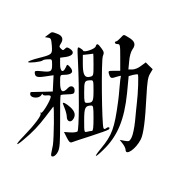
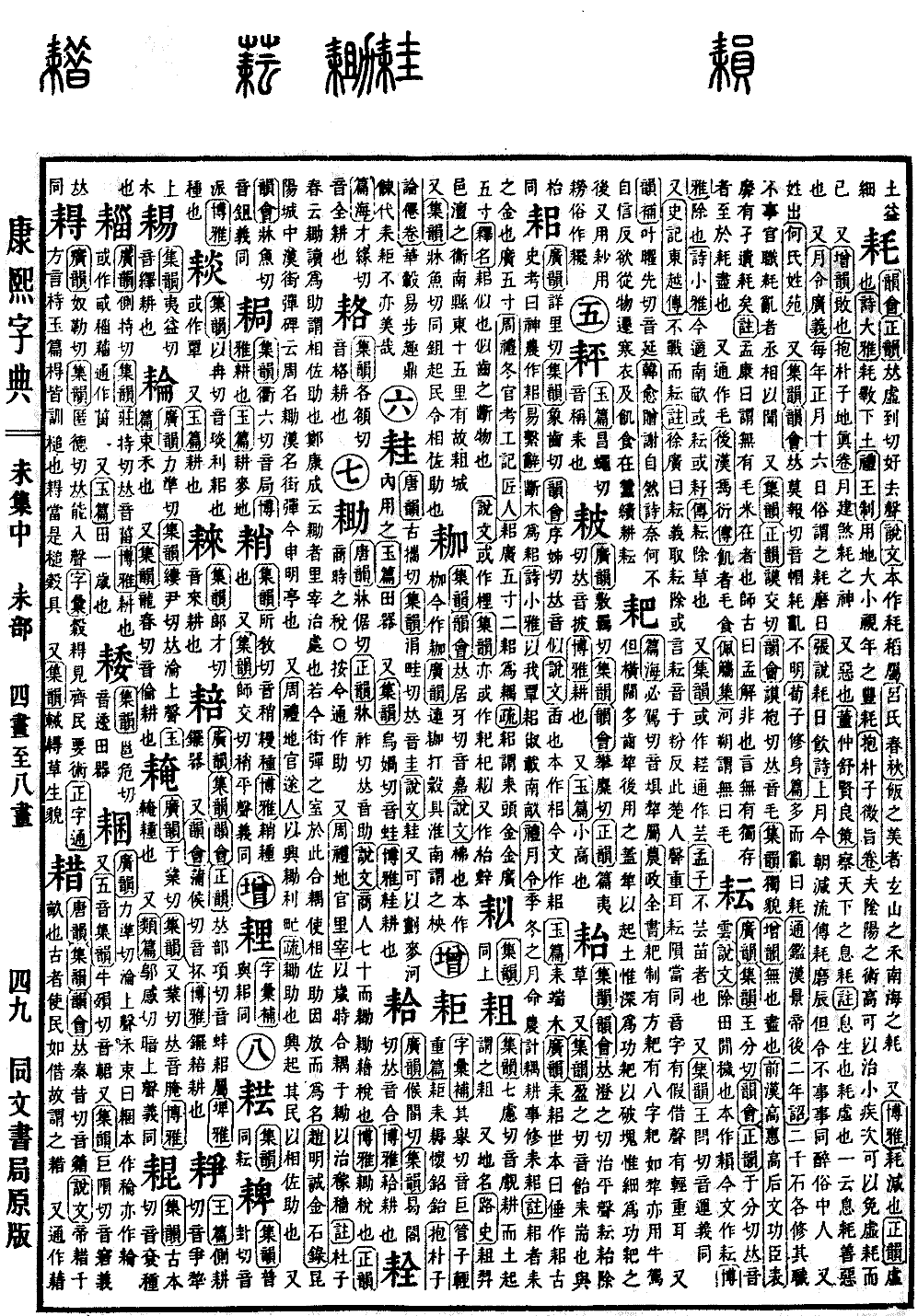
Wei Collection, Middle Volume
Radical: Plow (lěi)
Total strokes: 13
Page 963, Entry 16
Pronounced zhu.
According to the Explaining Graphs and Analyzing Characters (Shuowen), during the Shang Dynasty, seventy-year-olds were required to perform the zhu labor service. Zhu was a tax system involving the borrowing of civil labor for cultivation. The Erudite Expositions (Boya) states that zhu refers to a tax. The Standard Dictionary of Rimes (Zhengyun) defines it as a tax from the Shang Dynasty. Note: It is currently commonly written as the character for aid or assist.
Also, according to the Rites of Zhou (Zhouli), Earth Office, Village Overseer: At the appropriate time each year, organize paired cultivation at the location called zhu to manage agricultural production. The commentary by Du Zichun states: Zhu is pronounced like the character for aid or assist, meaning mutual assistance. Zheng Kangcheng states: Zhu is the place where the village overseer conducts business. It is like the street inspection office of the Han Dynasty, where paired cultivation was organized to encourage mutual help, hence the name was borrowed to designate this location.
According to the Records of Metal and Stone (Jinshilu) by Zhao Mingcheng: The Han Dynasty street inspection stele in Kunyang City records that what was called zhu in the Zhou Dynasty was called a street inspection office in the Han Dynasty, which is the current Shenming Pavilion.
Also, according to the Rites of Zhou (Zhouli), Earth Office, Irrigation Official: Use the policy of promoting zhu to benefit the people. The sub-commentary states: Zhu means to help. It refers to mobilizing the people so that they may help one another.
Also, according to the Collection of Rimes (Yunhui): Pronounced chu. The meaning is the same.