
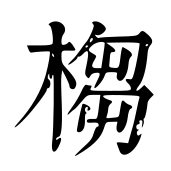
㮲

Pronunciationchōu
Strokes14 strokes

Basic Info

Pronunciation chōu
Five Elements None
Fortune None
Radical
Simplified Strokes 14 strokes
Traditional Strokes 14 strokes
Naming Meaning

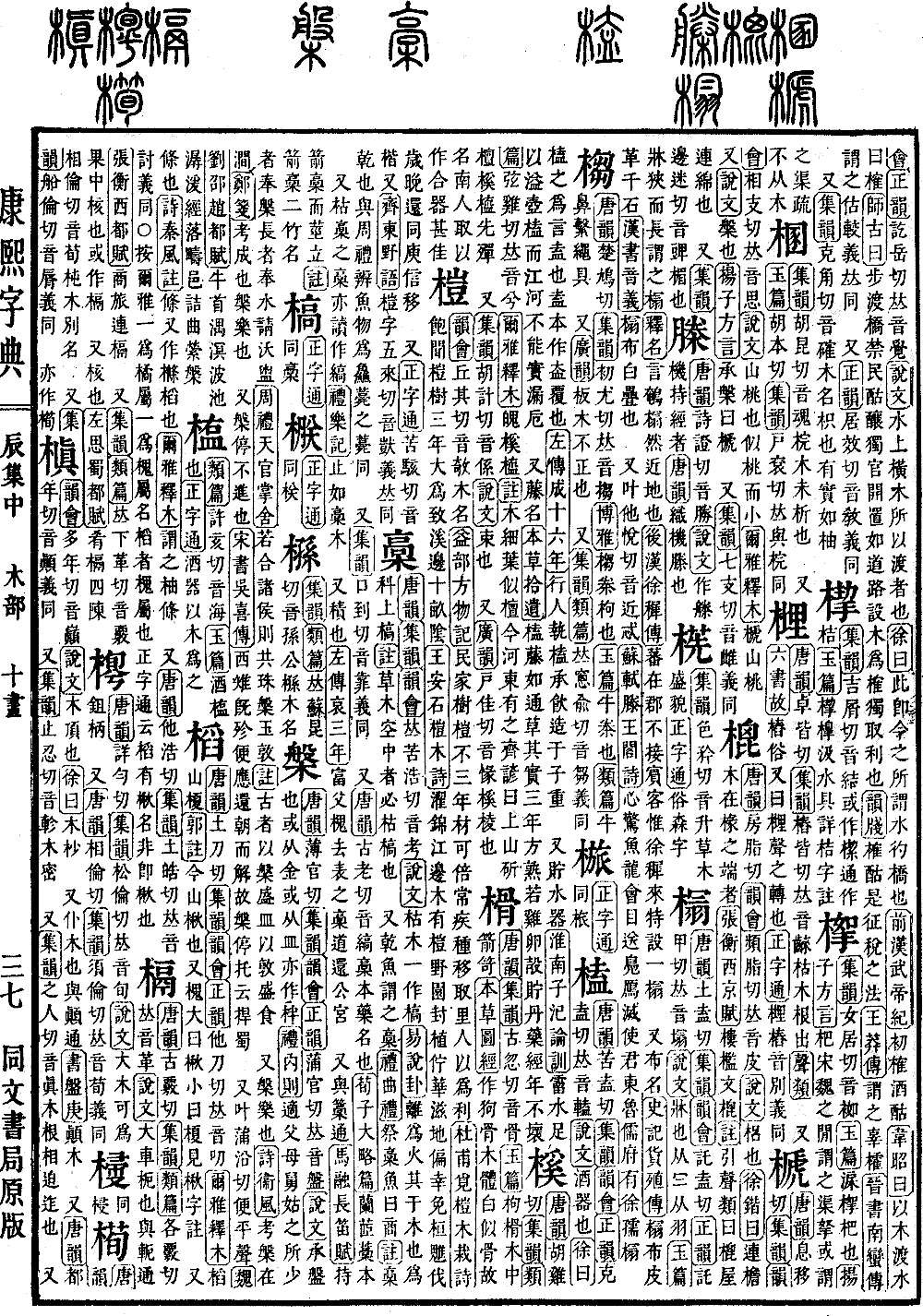
Kangxi Dictionary

View Original Page 545
Zi Collection, Page Position: Upper, Radical: Ox (niú), Page 30, Entry 10 "Yuan" (yuán) is defined as a yoke for oxen. The "Tang Yun" (Tangyun) uses "Chu" (chǔ) and "Jiu" (jiū) for the cut, and the "Ji Yun" (Jiyun) uses "Chu" (chū) and "You" (yóu) for the cut, with the pronunciation the same as "Dou" (dǒu). The "Bo Ya" (Boy Ya) records that "yū" is a yoke. The "Yu Pian" (Yupian) explains it as an ox yoke. The "Lei Pian" (Leipian) states it is a tool for piercing the nose of an ox to attach a rope. Additionally, the "Guang Yun" (Guangyun) records it as meaning an uneven wooden board. Also seen in the "Ji Yun" (Jiyun) and "Lei Pian" (Leipian), using "Chuang" (chuāng) and "Yu" (yú) for the cut, with the pronunciation the same as "Chu" (chú). The meaning is the same.

Kangxi Dictionary Modern Version

扫码使用更多功能

康熙字典小程序

康熙字典小程序

下载 iOS App 下载 Android App
