Wu Collection, Middle Volume
Radical: Sickness (bìng)
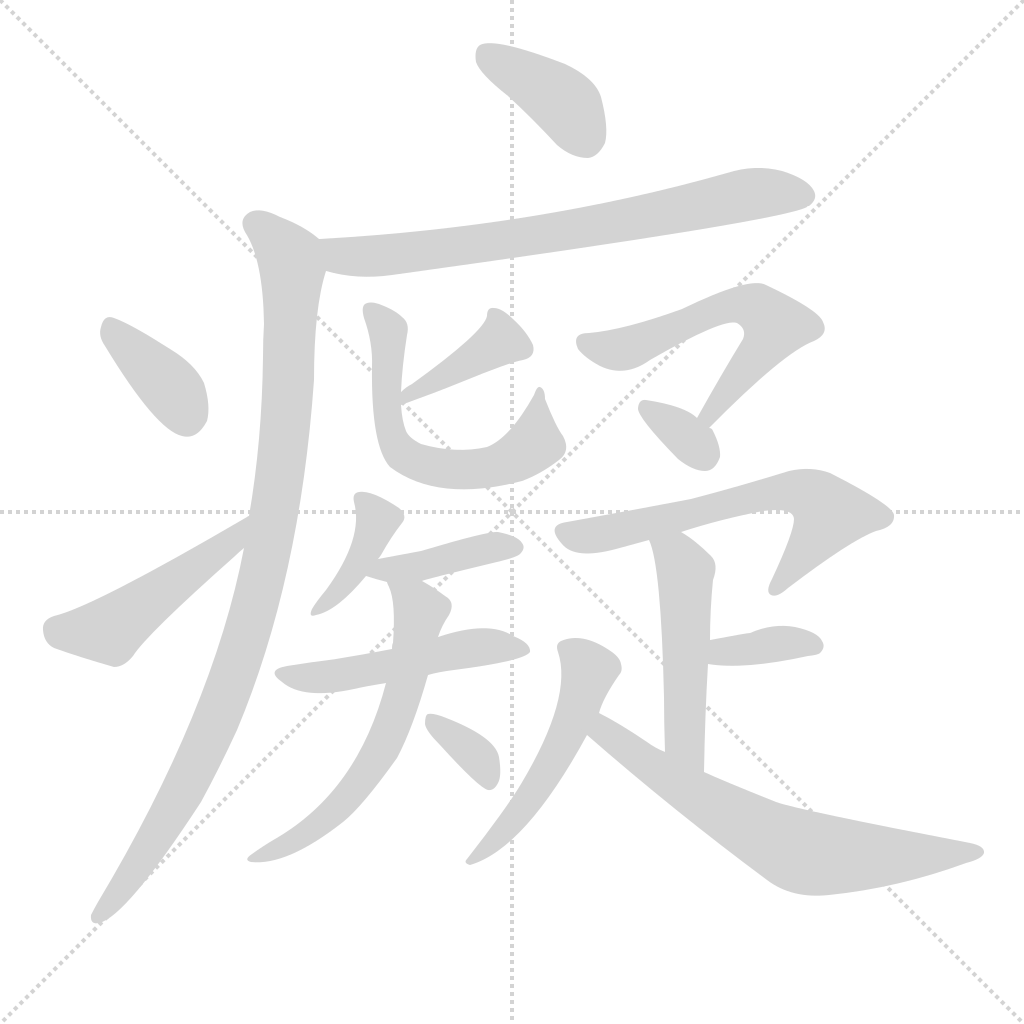
Character: chi
Kangxi stroke count: 19
Page 782, Entry 18
Pronounced chi
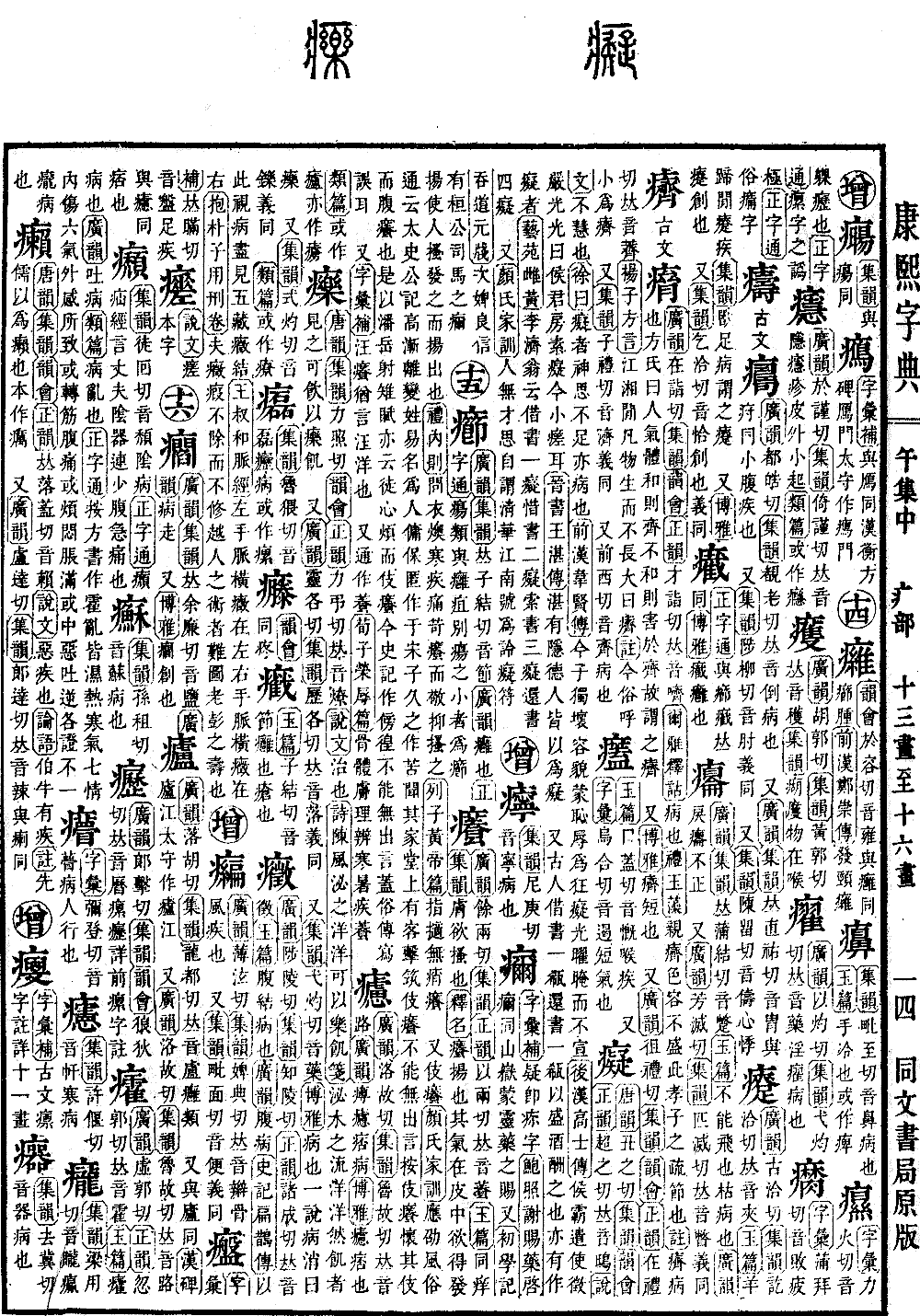
According to the Shuowen Jiezi (Shuowen), it means lacking intelligence. Xu states that one who is chi possesses insufficient spiritual acuity. It also relates to being ill. In the Biography of Wei Xian from the History of the Former Han (Qian Hanshu), it is written: Now you alone ruin your appearance, endure shame and disgrace, and act in a wild and foolish manner, causing your brilliance to be obscured and not revealed. In the Biographies of Eminent Scholars from the History of the Later Han (Hou Hanshu), it is recorded: Hou Ba sent an envoy to summon Yan Guang, and Yan Guang said: Lord Hou Fang was formerly foolish, but is now slightly recovered. In the Biography of Wang Zhan from the Book of Jin (Jinshu), it is written: Zhan possessed hidden virtues, yet people all considered him foolish.
Additionally, in ancient times, when borrowing a book, one would provide a chi (a wine vessel), and upon returning the book, one would provide another chi filled with wine as compensation. It is also written as a variant form (chi). In the Arts Garden Commentary (Yiyuan Cihuang), Li Jiweng stated: To borrow a book is one form of folly, to be stingy with a book is the second form of folly, to demand a book back is the third form of folly, and to return a book is the fourth form of folly. Furthermore, in the Family Instructions of Master Yan (Yanshi Jiaxun), it is noted: A person without talent or intellect who calls himself refined is known in the Jiangnan region as a fool who sells his own stupidity.