You Collection, Upper Volume
Radical: Speech (yán)
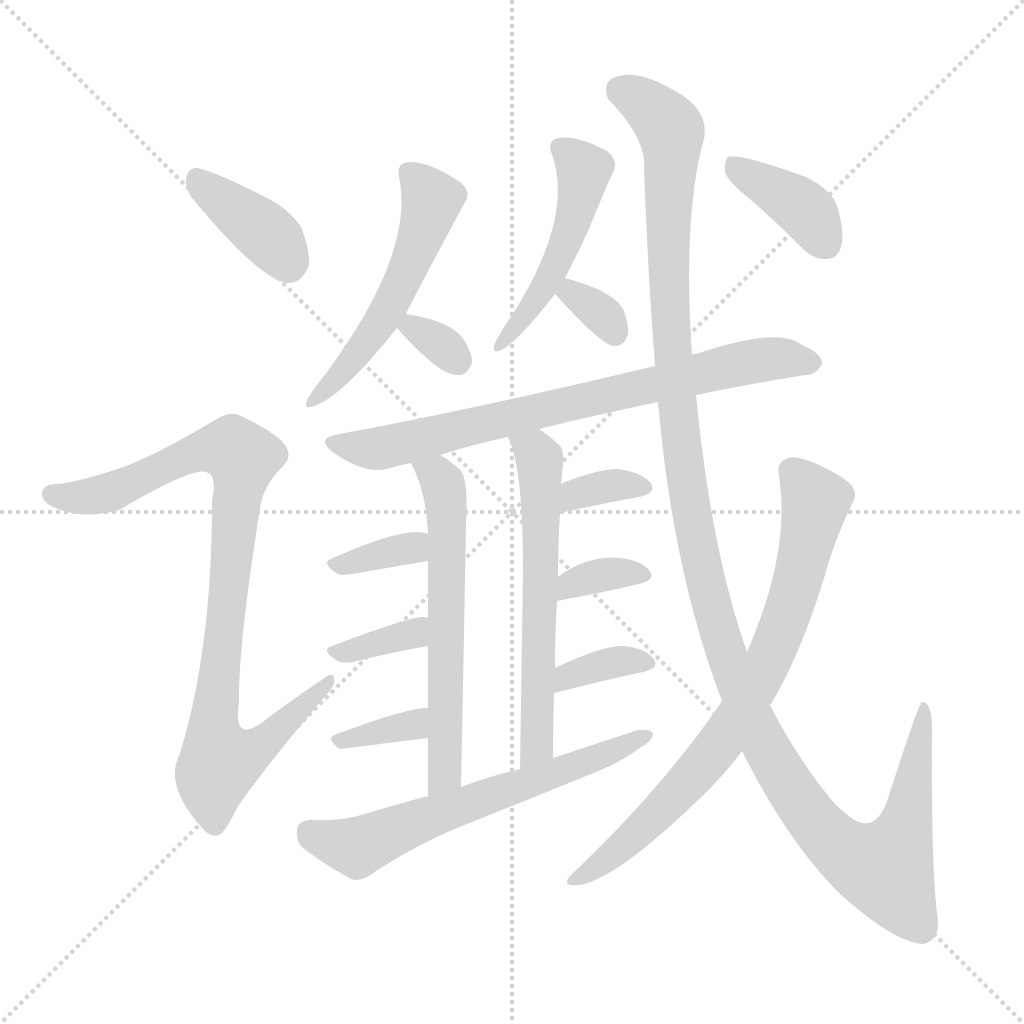
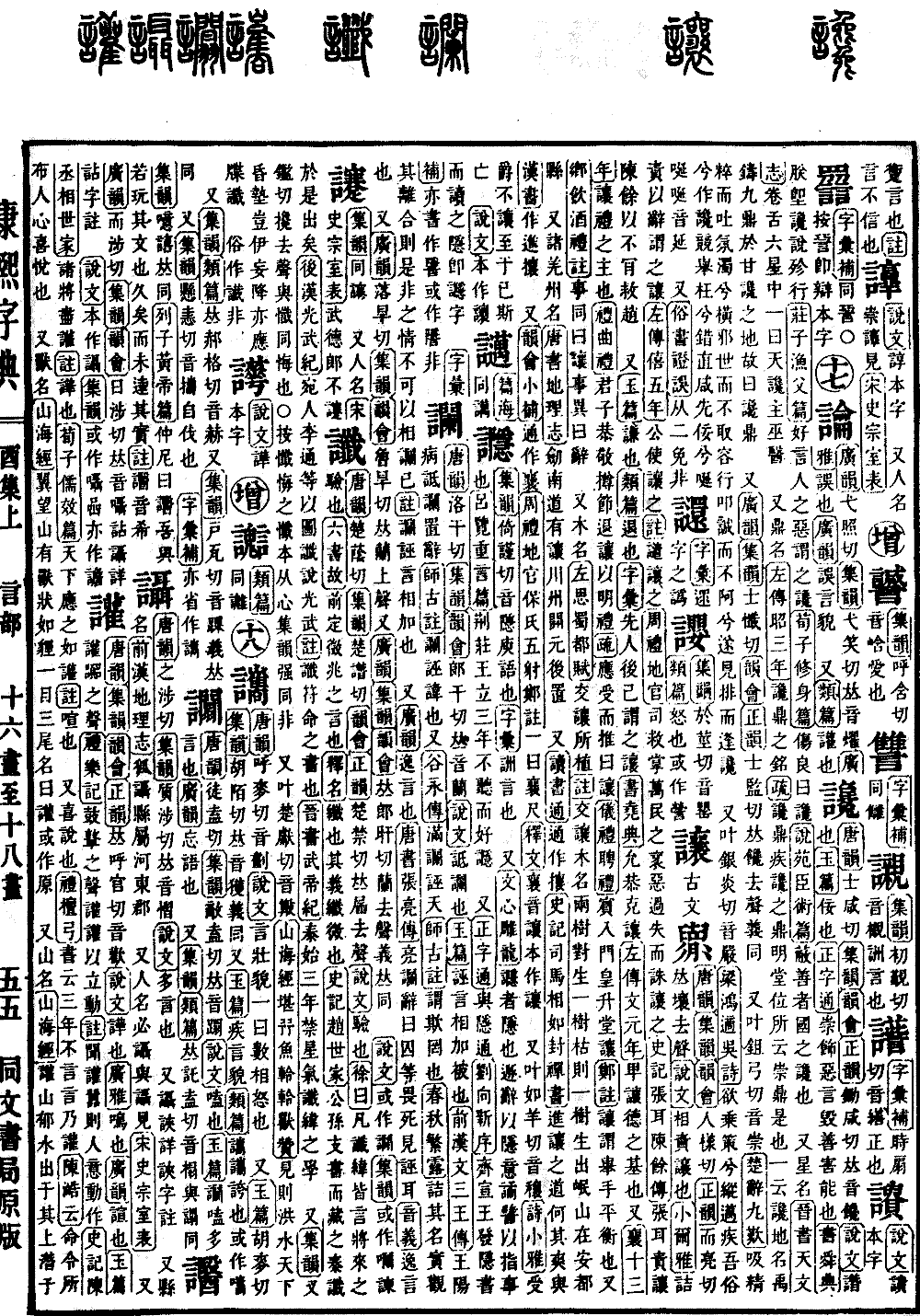
Chen (讖)
Kangxi strokes: 24
Page 1187, Entry 15
Pronounced chen (falling tone).
According to the Shuo Wen Jie Zi (Explaining Graphs and Analyzing Characters), it refers to an omen that will eventually be fulfilled.
Xu states: All prophetic signs are words that speak of future events destined to come to pass.
According to the Liu Shu Gu (Principles of the Six Scripts), it refers to words that predict future signs.
According to the Shi Ming (Explanation of Names), it means subtle; its meaning is very refined.
Records of the Grand Historian (Shiji), House of Zhao: Gongsun Zhi wrote it down and kept it, and thus the prophecies of the Qin state emerged from this.
Book of the Later Han (Hou Hanshu), Annals of Emperor Guangwu: Li Tong, a native of Wan, and others used prophetic diagrams to persuade Emperor Guangwu.
Note: Chen is a type of book that predicts the omens of good or bad fortune.
Book of Jin (Jinshu), Annals of Emperor Wu: In the third year of the Taishi era, the study of astrology, numerical destiny, and the prediction of good and bad omens was prohibited.
Also, according to the Ji Yun (Collection of Rhymes), pronounced chan (falling tone). It is the same as the character for repentance (chan). It means to repent one's sins. Note: The character for repentance originally uses the heart radical; the Ji Yun attempts to equate them, which is incorrect.
Also, rhyming with xian (falling tone), pronounced similarly to xian.
Classic of Mountains and Seas (Shanhaijing), Eulogy for the Kanyu Lingling Beast: When it appears, floods will occur, and the world will fall into chaos. Could it be that its arrival is merely arbitrary? This, too, fulfills the prophecy.
The common variant form is written as 谶, which is incorrect.