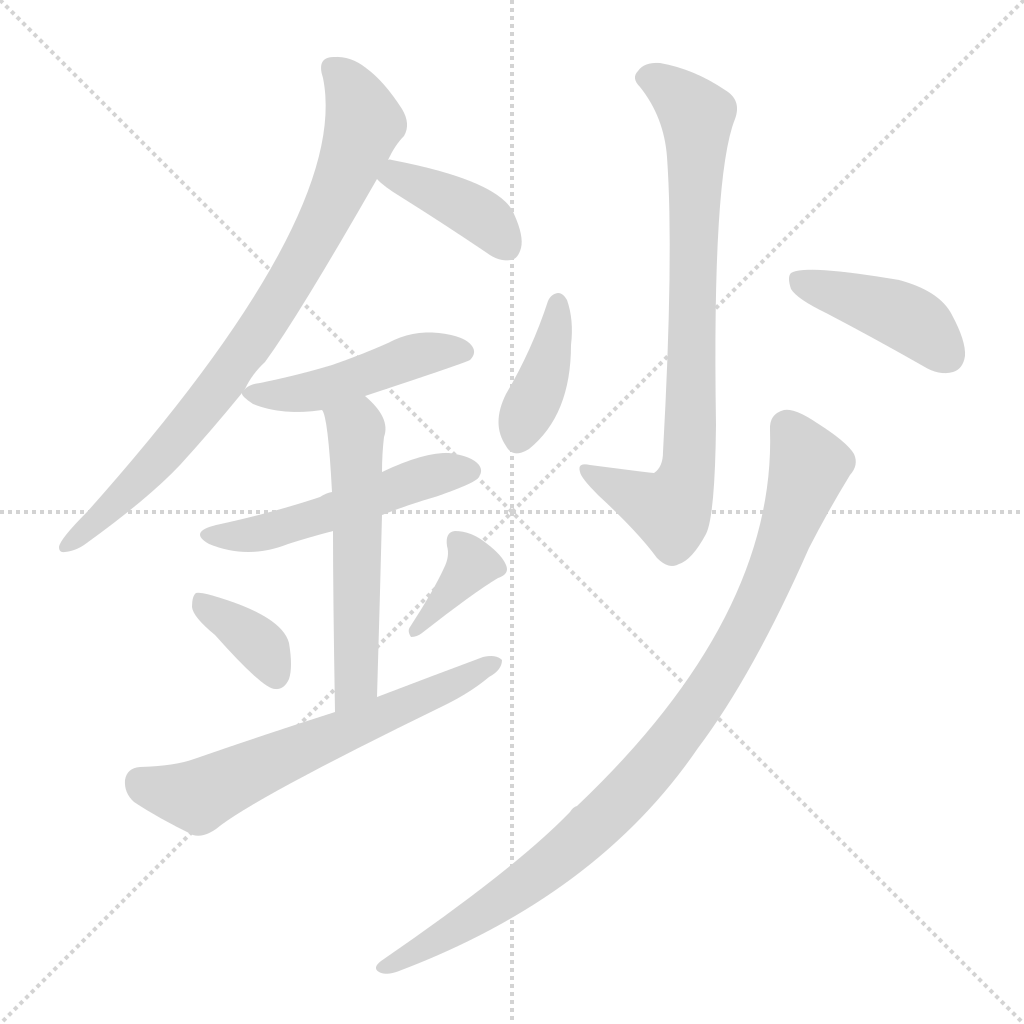
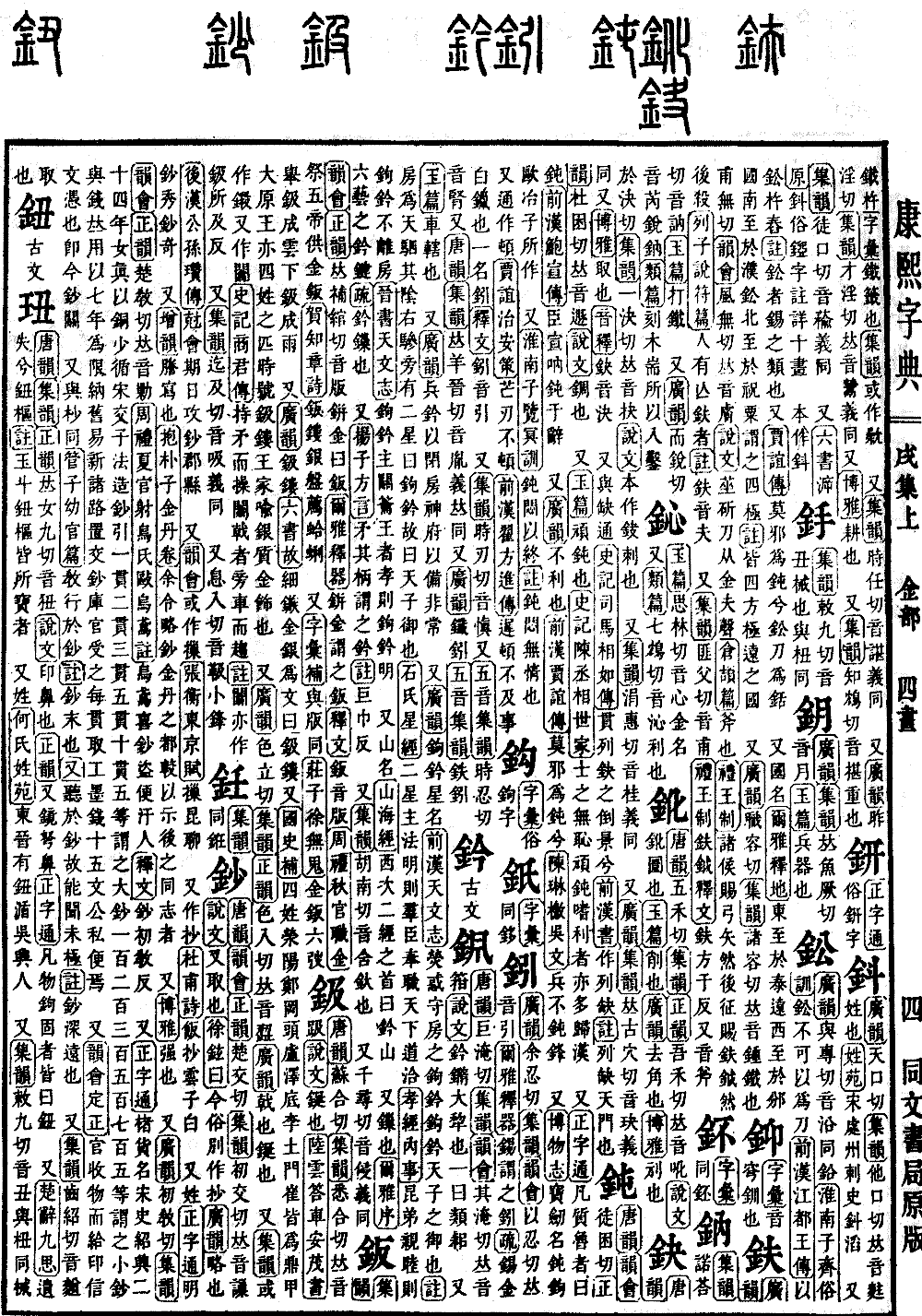
Xu Collection, Upper Volume
Radical: Metal (jīn)
Page 1298, Entry 22
Pronounced chao.
Shuowen Jiezi (Dictionary of Explanations of Characters): To take with a fork.
Xu Xuan says: Currently, the common variant form is written as chao.
Guangyun (Broad Rhymes): To plunder.
Biography of Gongsun Zan, Book of the Later Han (Hou Hanshu): Agreeing on the date and time, they attacked and plundered the commanderies and counties.
Also, according to the Yunhui (Rhyme Collection), it is sometimes written as chao.
Eastern Capital Rhapsody (Dongjing Fu) by Zhang Heng: Plundering Kunliao.
Also written as chao.
Poetry by Du Fu: Scooping up white rice with a ladle.
Also a surname.
Zhengzitong (True Character Guide): Ming dynasty individuals named Chao Xiu and Chao Qi.
Also, according to Zengyun (Augmented Rhymes): To transcribe or copy.
Baopuzi (Master Who Embraces Simplicity): I have commanded that the main points of the Golden Elixir be transcribed, and compared them to show those who share the same aspirations in the future.
Also, according to Guangya (Broad Encyclopedia): To be strong.
Also, pronounced chao.
Rites of Zhou (Zhouli), Summer Official, Commentary on the Shooter of Birds: Crows and kites are skilled at swooping down to steal, and they often defile people.
Shuowen text: Chao is pronounced chao.
Also, according to Zhengzitong (True Character Guide): The name for paper currency. History of Song (Songshi): In the twenty-fourth year of the Shaoxing reign, the Jurchen, having little copper, followed the Song method of jiaozi (exchange notes) and created chao (paper currency) in five denominations: one-guan, two-guan, three-guan, five-guan, and ten-guan, called "large notes." They also had denominations of one hundred, two hundred, three hundred, five hundred, and seven hundred, called "small notes." These were used alongside coins with a seven-year circulation limit, after which old notes were turned in for new ones. Various routes established offices to accept them, collecting fifteen cash per guan for printing costs, which was convenient for both public and private sectors.
Also, according to Yunhui Dingzheng (Corrected Rhyme Collection): Official collection of goods in exchange for a stamped certificate. This refers to the modern tax collection barrier (chao guan).
Also the same as miao (tip or end).
Guanzi (The Book of Master Guan), Youguan Chapter: Teachings are implemented at the end.
Commentary: Chao means the end.
Also: Listen at the end, so one can hear what is not yet extreme.
Commentary: Chao means deep and far.
Also, pronounced chao.
To take.
Textual Verification: In the commentary to the Rites of Zhou, Summer Official, Shooter of Birds section, the text is amended to read: Crows and kites like to swoop and steal, and they often defile people.