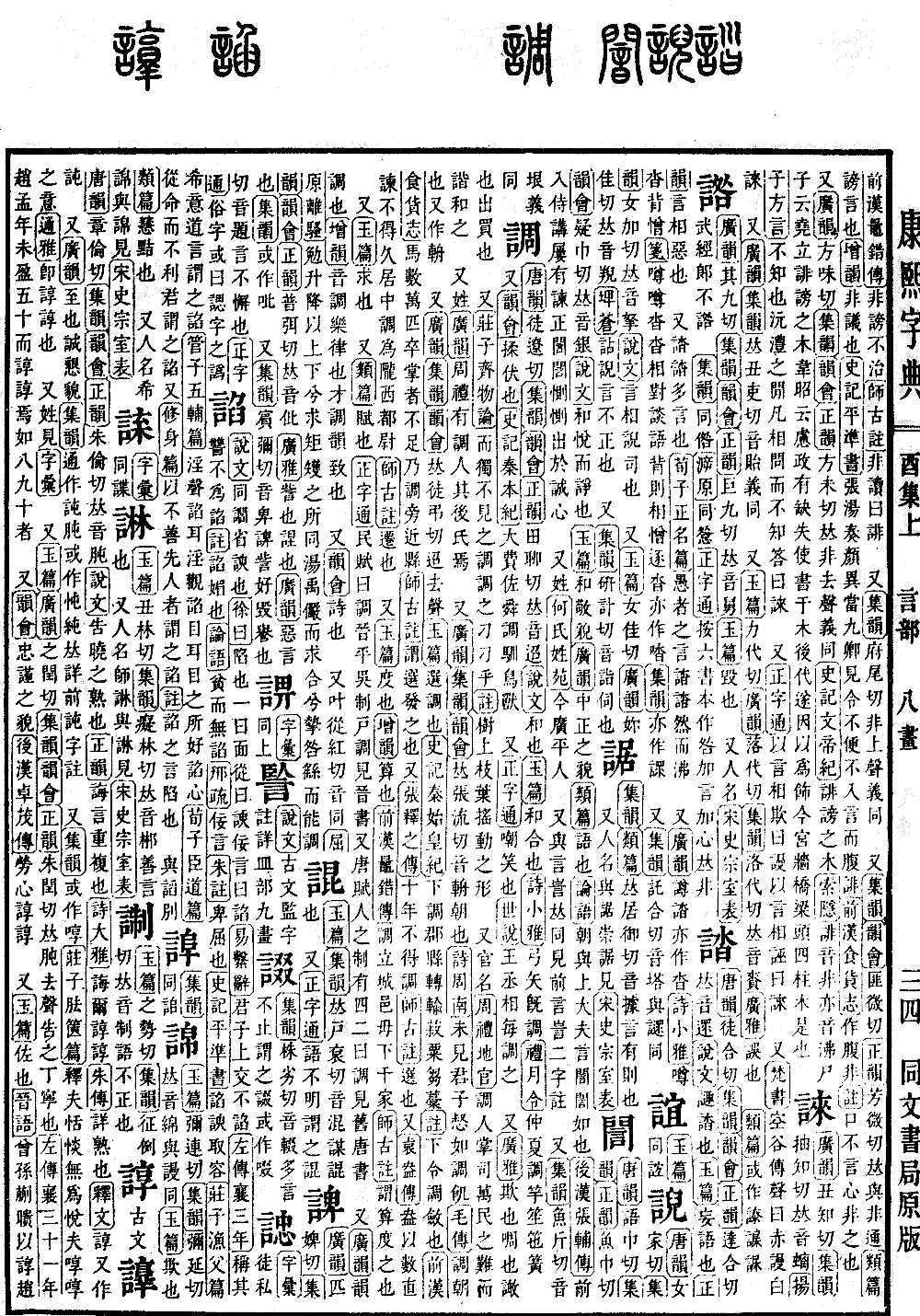
You Collection, Upper Volume
Radical: Speech (yán)
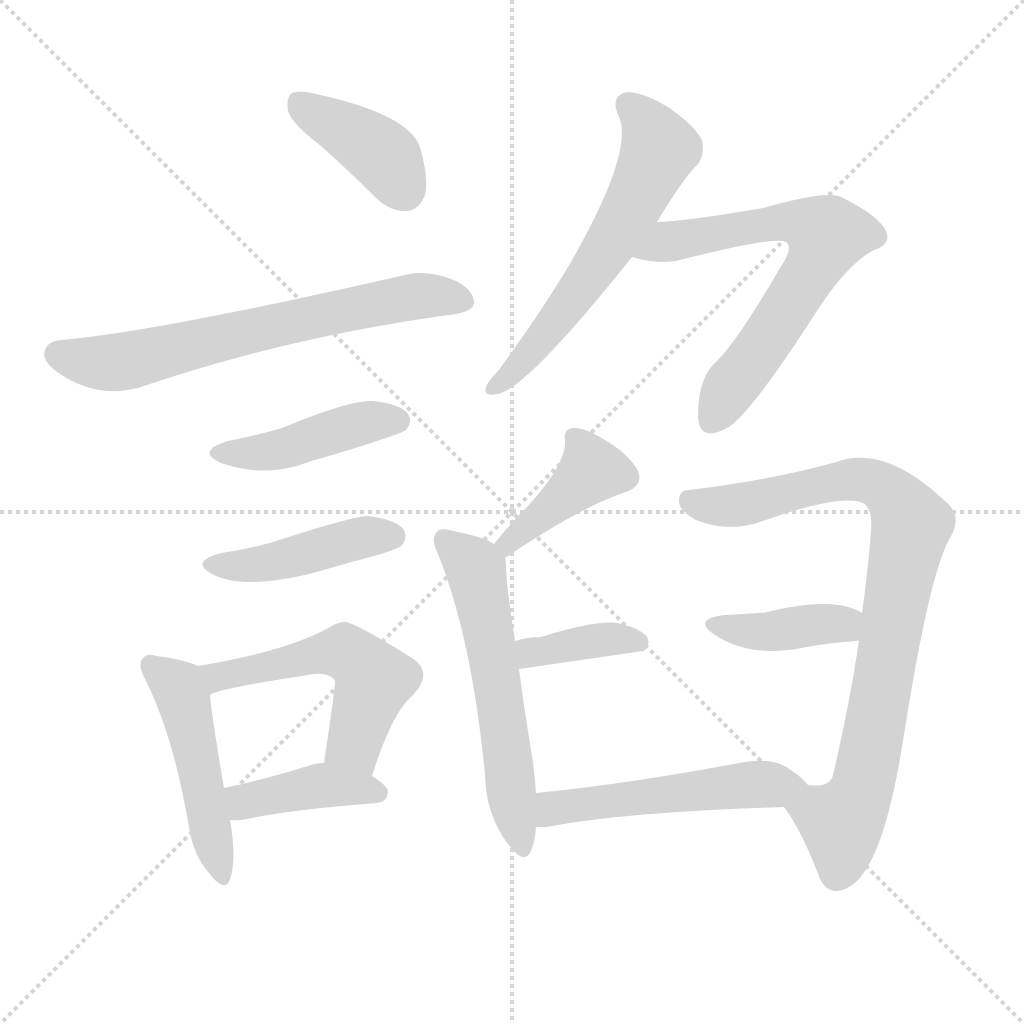
Chan
Kangxi strokes: 15
Page 1166, Entry 15
Shuowen Jiezi (Shuowen) states it is the same as the character pronounced tian, being an abbreviated form. It means to flatter.
Xu states it means to entrap. One definition states that following someone to their face is called flattery (yu), and treacherous speech is called chan.
Book of Changes (Xici): The superior man, in his interactions with those above him, does not use flattery.
Zuo Tradition (Zuozhuan), Third Year of Duke Xiang: To praise one's enemy is not considered flattery.
Annotation: Chan means to fawn.
Analects (Lunyu): To be poor and yet free from flattery.
Xing Commentary: Treacherous speech.
Zhu Commentary: To be base and submissive.
Records of the Grand Historian (Shiji), Treatise on the Balance of Standards: Using flattery and fawning to gain favor.
Zhuangzi, Fishermen Chapter: To anticipate one's wishes and speak accordingly is called flattery.
Guanzi, Five Aids Chapter: Lewd sounds flatter the ears; lewd sights flatter the eyes; what the ears and eyes take pleasure in, the heart uses to flatter.
Xunzi, The Way of the Minister Chapter: To follow orders without benefiting the ruler is called flattery.
Also in the Self-Cultivation Chapter: To lead others with what is not good is called flattery.
Annotation: The word chan implies entrapment. It is distinct from the character pronounced tao.