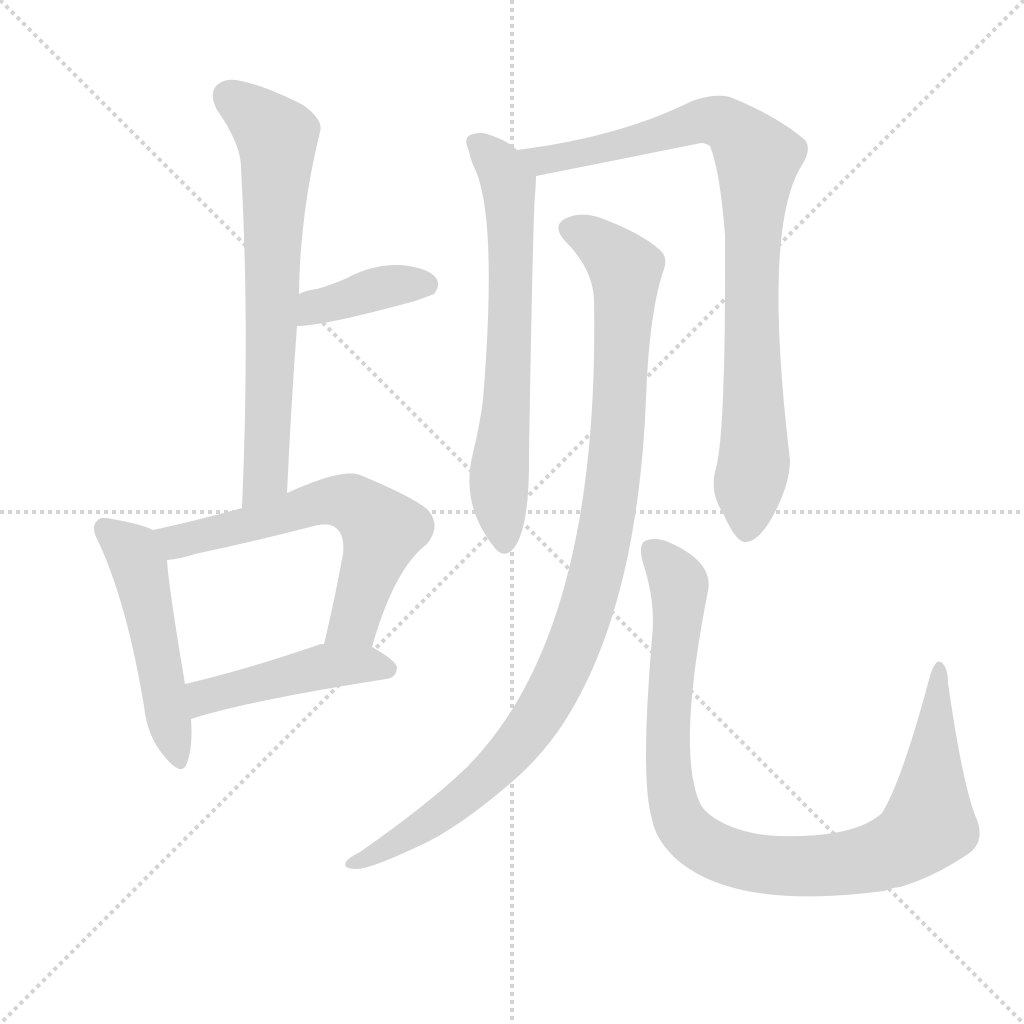
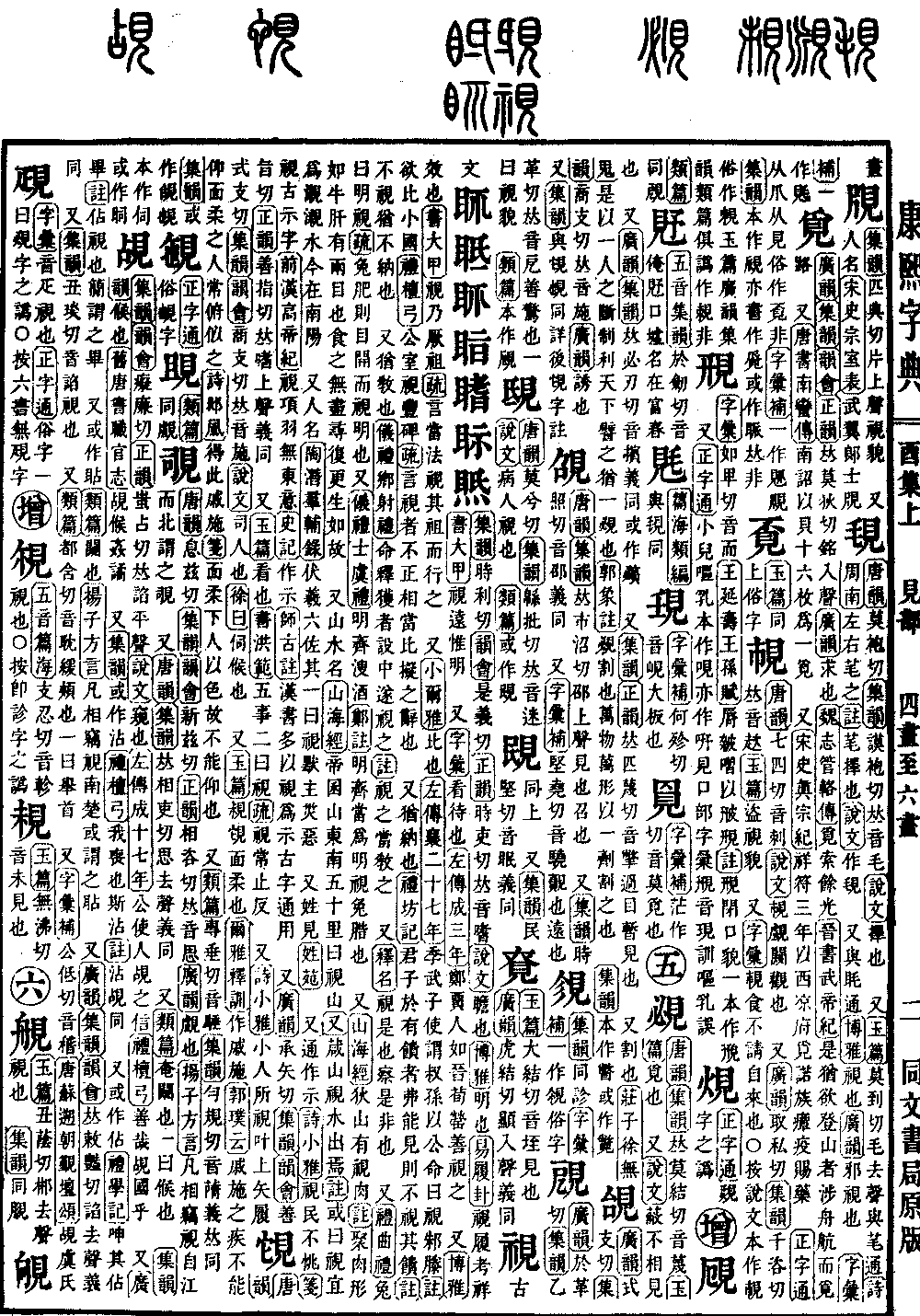
You Collection, Upper Volume
Radical: See (jiàn)
Kangxi Strokes: 12
Page 1134, Entry 01
According to the Collection of Rhymes (Jiyun) and the Compendium of Rhymes (Yunhui), pronounced chān. According to the Correct Rhymes (Zhengyun), pronounced chān, read with an even tone like the character meaning to flatter.
According to the Explaining Graphs and Analyzing Characters (Shuowen), the meaning is to peep or observe.
Left Commentary (Zuozhuan), Seventeenth Year of Duke Cheng: The Duke sent someone to peep, and discovered it was true.
Book of Rites (Liji), Tan Gong: Truly skilled at observing the state of the nation.
Also, according to the Expanded Rhymes (Guangyun), the meaning is to reconnoiter. Old Book of Tang (Jiu Tangshu), Treatise on Official Posts: To reconnoiter treacherous and deceitful matters.
Also, according to the Collection of Rhymes (Jiyun), sometimes written as a variant form (zhān). Book of Rites (Liji), Tan Gong: I managed the funeral rites while being watched by the masses. Commentary: The variant form (zhān) is the same as the current entry.
Also, sometimes written as a variant form (zhān). Book of Rites (Liji), Record of Learning (Xueji): Reading their bamboo slips. Commentary: The variant form (zhān) means to look at. It refers to the bamboo slips.
Also, sometimes written as a variant form (tiǎn). The Classified Categories (Leipian): The meaning is to peep. Master Yang's Dialects (Fangyan): Any act of secretly peeping, in the Southern Chu region, is sometimes called (tiǎn).
Also, according to the Expanded Rhymes (Guangyun), the Collection of Rhymes (Jiyun), and the Compendium of Rhymes (Yunhui), pronounced chàn, read with a departing tone like the character meaning to flatter. The meaning is the same.
Also, according to the Collection of Rhymes (Jiyun), pronounced chǎn. The meaning is to look.
Also, according to the Classified Categories (Leipian), pronounced dān. The meaning is to gently persuade. One source says it refers to lifting the head.
Also, according to the Supplement to the Collection of Characters (Zihuibu), pronounced jī. Su Su of the Tang Dynasty, Ode to the Altar of Court Audiences: Observing the Yu clan.