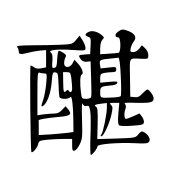
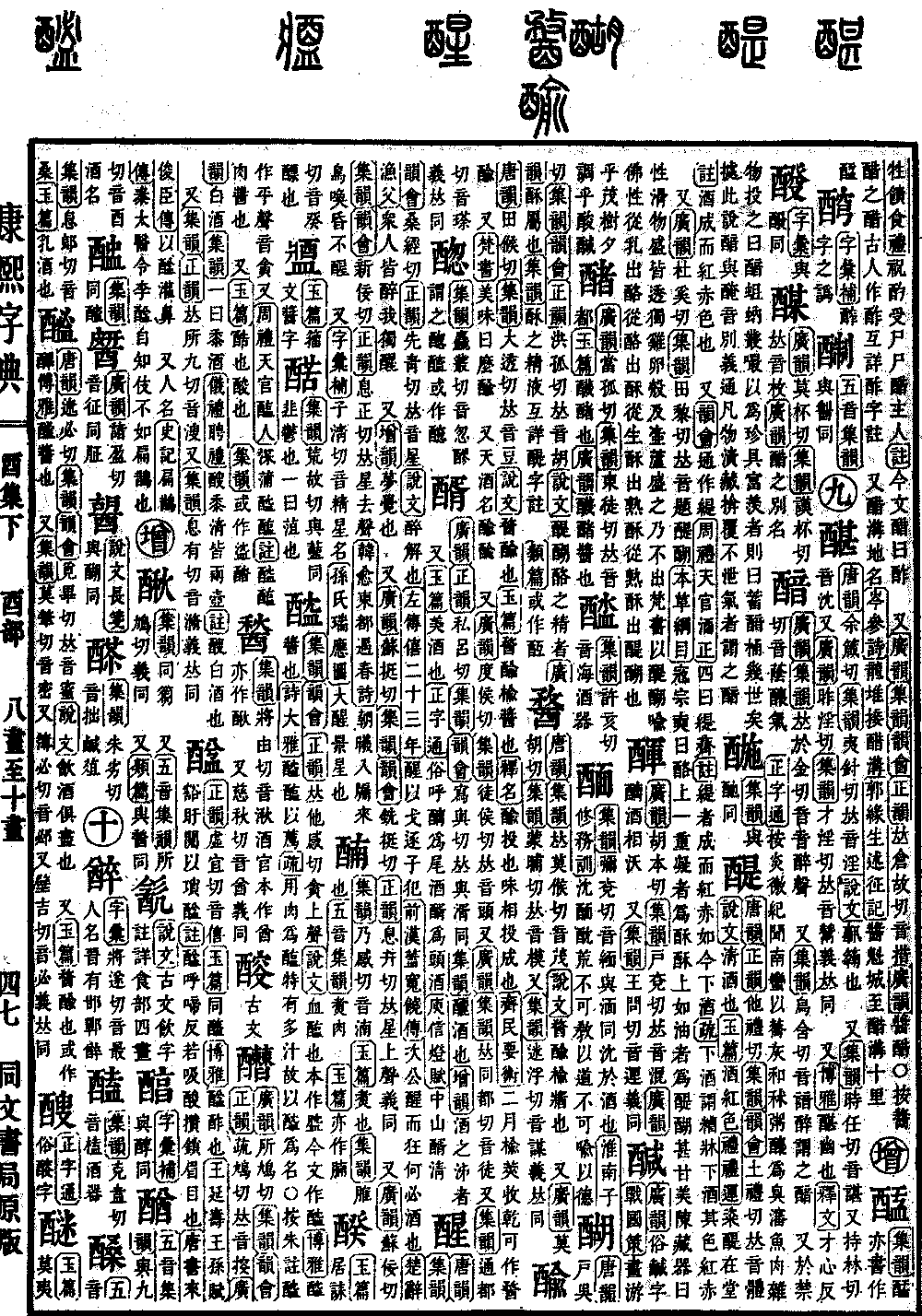
*Tang Yun* (Tangyun) uses the pronunciation *yu* (remaining tone) + *zhen* (entering tone) to read *you*. *Jiyun* (Jiyun) uses the pronunciation *yi* (rising tone) + *zhen* (entering tone) to read *you*, with the same pronunciation as "yin". *Shuowen Jiezi* (Shuowen Jiezi) explains it as the character "ye".
Also, *Jiyun* (Jiyun) uses the pronunciation *shi* + *ren* (entering tone) to read *you*, with the same pronunciation as "chen". Also, it uses the pronunciation *chi* + *lin* (entering tone) to read *you*, with the same pronunciation as "shen".
Also, *Guangyun* (Guangyun) uses the pronunciation *zuo* + *yin* (entering tone) and *Jiyun* (Jiyun) uses the pronunciation *cai* + *yin* (entering tone) to read *you*, with the same pronunciation as "chan". The meaning is the same.
Also, *Boyao* (Boyao) records that *you* means "deep and secluded". *Shiwen* (Shiwen) annotates the pronunciation as *cai* + *xin* (returning tone).