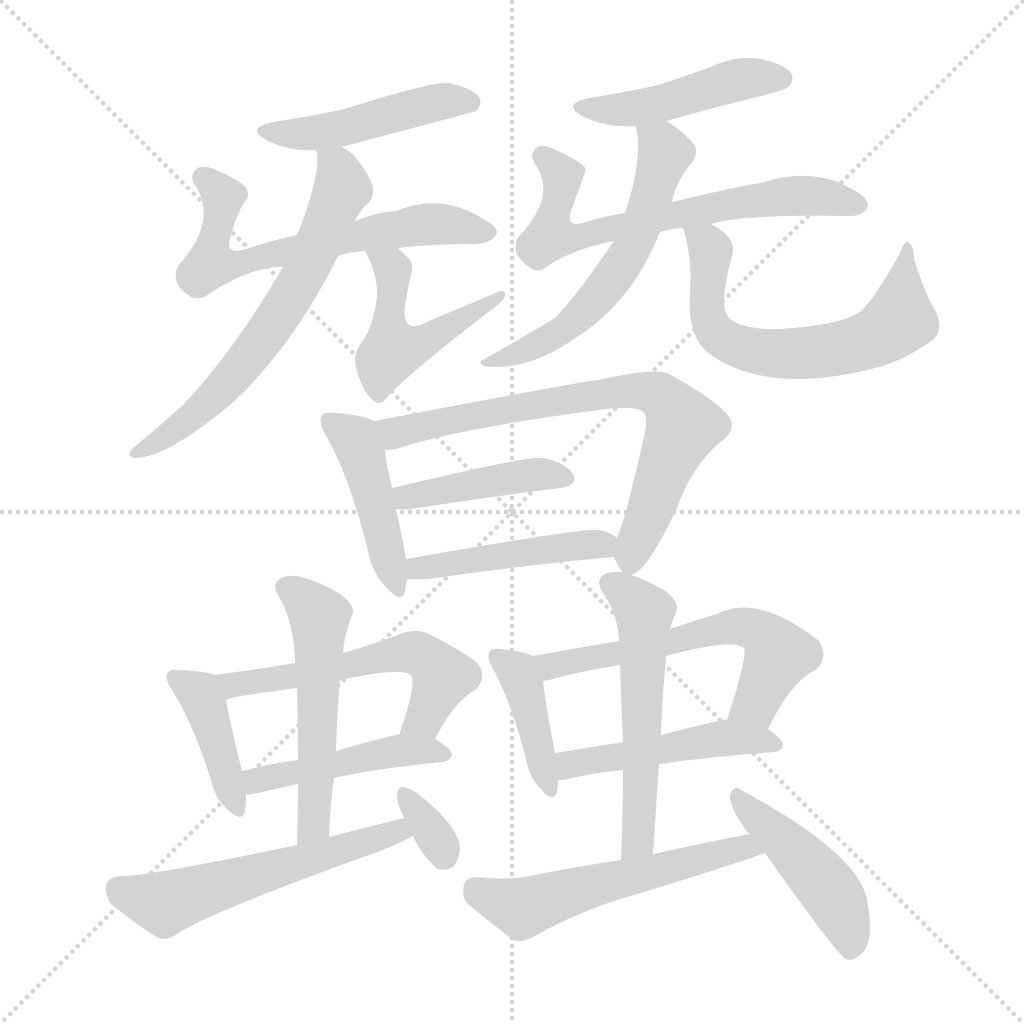
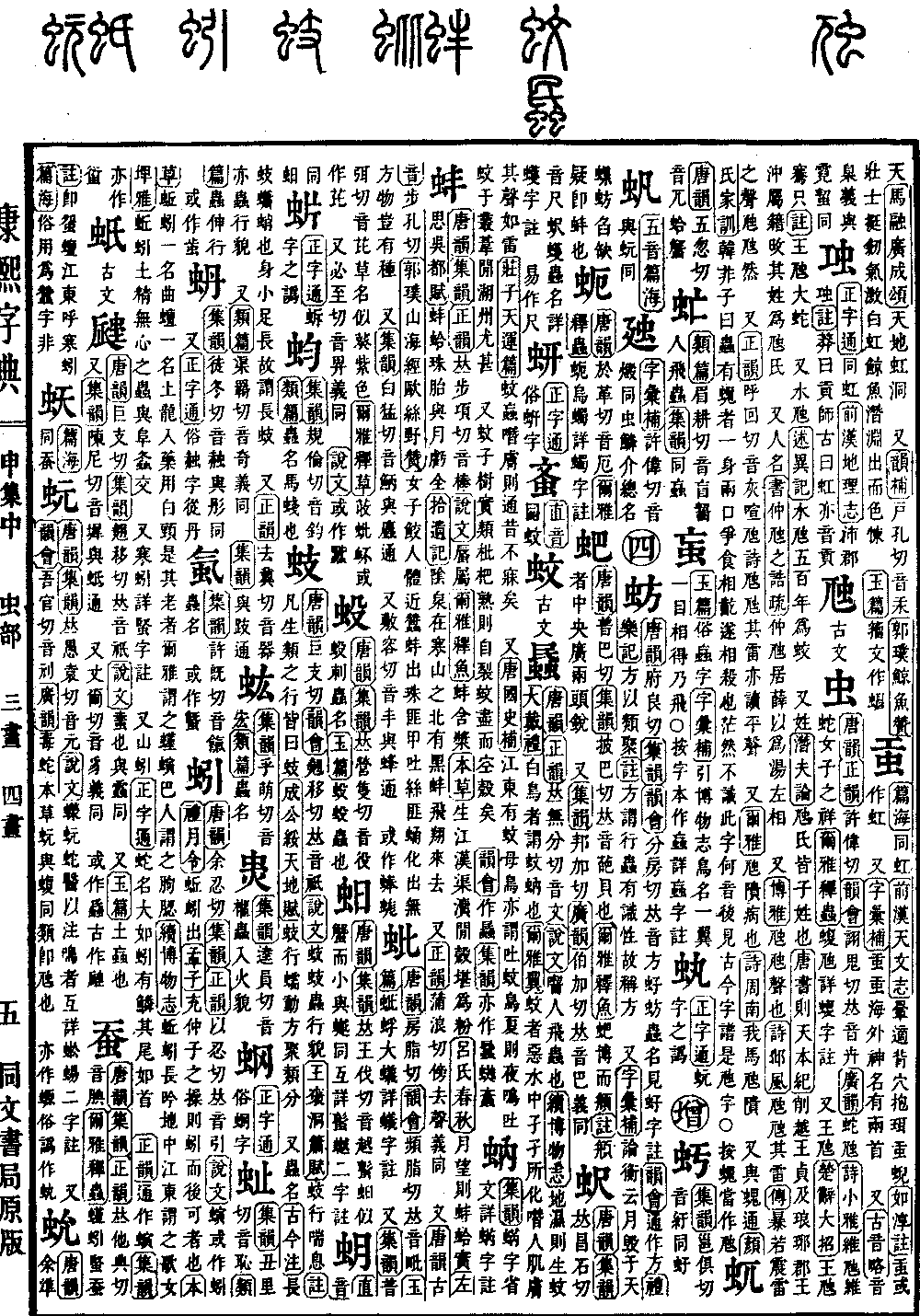
Shen Collection, Middle Volume. Radical: Insect (chóng). Page 1077, Entry 24.
Pronounced cán. A silk-producing worm. According to the Analytical Dictionary of Characters (Shuowen Jiezi), it is a creature that produces silk. According to the Book of Odes (Shijing): In the silkworm month, prune the mulberry trees. According to the Book of Documents (Shangshu): The soil of the mulberry regions is suitable for silkworms. According to the Huainanzi: When the silkworm emits silk, the shang-string of the zither breaks. According to the Record of Investigation of Things (Bowuzhi), the silkworm undergoes three molts, conceiving before mating, and those that do not mate still produce offspring. According to the Wing of the Erya (Eryayi), the silkworm has a mouth that moves rhythmically like a horse, and its body is spotted like a tiger. When newly hatched, they are called hao; they are brushed with hair. Since they are small, they should not be exposed to dew. Mulberry leaves should be kept in the breast to warm them before being cut, so that they receive warmth, which removes various ailments. According to the Miscellaneous Morsels from Youyang (Youyang Zazu), the silkworm eats but does not drink. It is also called the original silkworm. According to the Piya, a silkworm that produces a second time is called an original silkworm, also known as the Wei silkworm; it is now raised on late-season leaves. There is also the red silkworm. When the silkworm feet bend three times and rise three times over the leaves, after twenty-seven days it is mature and turns red, hence it is called the red silkworm. There is also the wild silkworm. According to the History of the Later Han (Hou Hanshu): Wild silkworms formed cocoons, covering the mountains and hills. There is also the flower silkworm. According to the Accounts of Strange Things (Shuyiji), Yuan Ke planted five-colored fragrant herbs and fed them to flower silkworms, obtaining 120 cocoons, each as large as an urn. According to the Materia Medica (Bencao), the stone silkworm, also known as the sand louse, is a small insect in the streams of the eastern valley. There is also the snow silkworm, which lives in the Yin Mountains and Mount Emei; northerners call it the snow maggot. There is also the gold silkworm, which curls like a ring and eats old red silk and brocade as a silkworm eats leaves. Regarding the silkworm room: According to the History of the Jin (Jinshu), the empress would personally ride in a carriage to the silkworm room in the eastern suburban gardens to offer sacrifices to the silkworm deity. Regarding the silkworm deity: According to the Wing of the Erya (Eryayi), the current silkworm deities are the Lady Yu and the Princess Yu, totaling two deities. Regarding person names: According to the Record of Chengdu (Chengduji), the Cancong clan were the lords of the state of Shu. Regarding place names: According to the Former Han Geography Treatise (Qianhan Dilizhi), there is a Silkworm Mound (Canling) in the Shu Commandery. According to the Record of State Names (Guomingji), there is a Silkworm Cliff (Canya) in Zun County of Peng. Regarding silkworm cocoon, it is a plant name. According to the Materia Medica (Bencao), it is used to treat swelling.